



PostgreSQL
Releases
| Release | Date | Announcement |
| 17.2 | 2024-11-21 | PostgreSQL 17.2, 16.6, 15.10, 14.15, 13.18, and 12.22 Released! |
Learning Resources
(2025-09-23T11:36.481Z)
Perplexity Query
(2025-09-23T11:36
.481Z)
Question:
Write a comprehensive one-page article about "Postgres".
Model: sonar-pro
Postgres, formally known as PostgreSQL, is a powerful open-source Relational Database management system (RDBMS) celebrated for its extensibility, reliability, and comprehensive support of the SQL standard.
[o7pk1d]
[nie1dv]
[heibh2]
As mission-critical digital applications increasingly require secure, robust data management, Postgres has become a foundational technology for organizations ranging from startups to global enterprises. Its open-source nature, wide compatibility, and rich features make it both significant and indispensable in today’s data-driven world.
[4i1g21]
[heibh2]
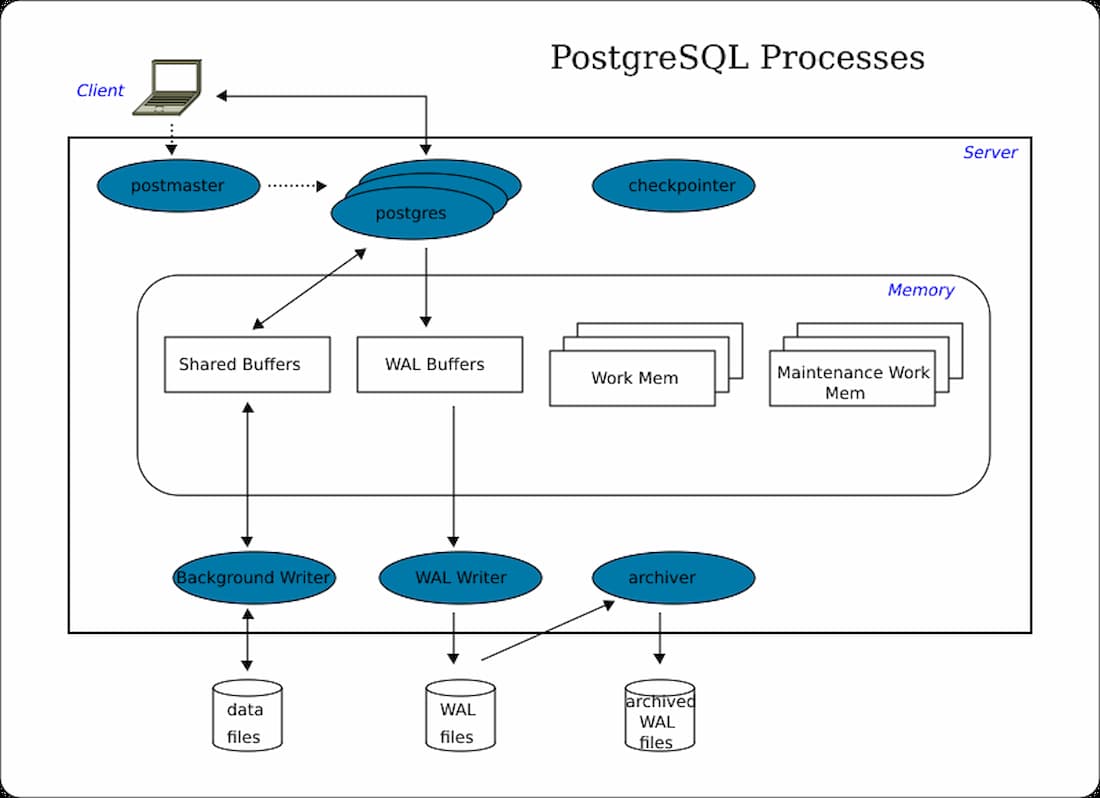
Introduced in the 1980s as the successor to the Ingres project at the University of California, Berkeley, Postgres was envisioned to support complex data types beyond simple tables.
[o7pk1d]
[4i1g21]
[heibh2]
Today, it operates as an object-relational database, which means it handles both structured (relational) and Semi-Structured Data (object-style, e.g., JSON) data with equal finesse.
[nie1dv]
[c8afzt]
Data in Postgres is stored in tables—grids of rows and columns—but the system can also handle arrays, geometric paths, documents, and custom types created by developers.
[nie1dv]
Real-world applications of Postgres are widespread and diverse:
- Geospatial analytics: Extensions such as PostGIS make Postgres ideal for mapping services, logistics, and geographic information systems. [heibh2]
Organizations choose Postgres for several benefits:
- Extensibility: Users can define custom data types, build new functions, and even add logic using multiple programming languages without recompiling the database. [heibh2]
- Strong community and ecosystem: A global community actively contributes enhancements; leading cloud platforms offer fully-managed Postgres-based services. [nie1dv]
However, some challenges must be considered:
- Complexity: Postgres’s advanced features and customization options can make initial setup and ongoing maintenance demanding for teams without dedicated database expertise. [4i1g21]
- Scaling write-heavy workloads: While Postgres scales horizontally for reading, managing high volumes of concurrent write operations requires careful configuration or third-party clustering tools. [heibh2]
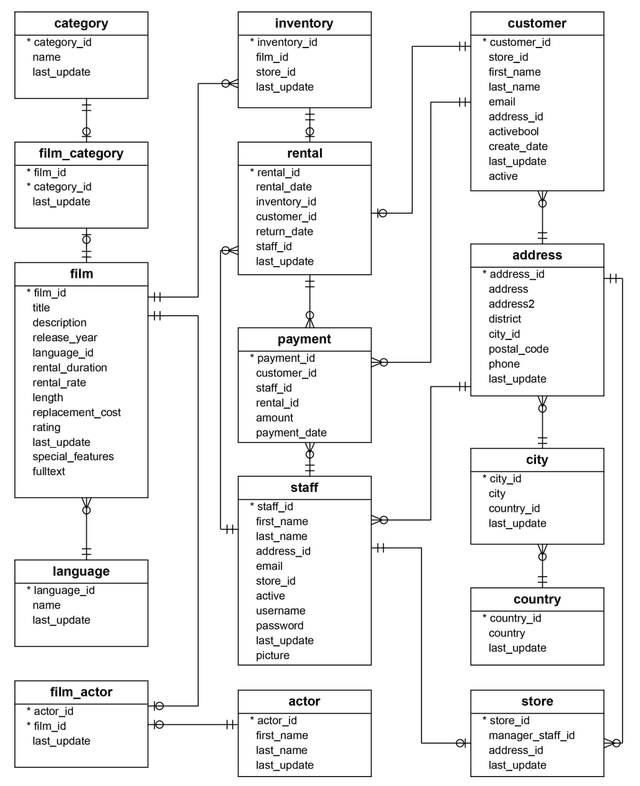
Postgres adoption continues to rise in both the cloud and on-premises environments, alongside key competitors like MySQL and proprietary systems.
[nie1dv]
[4i1g21]
Major cloud providers—including Google Cloud, AWS, and Azure—now offer managed Postgres services, lowering barriers for enterprises seeking robust, scalable data platforms.
[nie1dv]
The open-source community and commercial providers further enrich the ecosystem with extension modules, management tools, and consulting expertise.
[heibh2]
Popular technologies like TimescaleDB (for time-series) and PostGIS (for spatial data) are built directly atop Postgres and have gained significant traction.
[4i1g21]
[heibh2]
Recent innovations focus on deeper cloud-native integration, enhanced performance for analytical workloads, and expanded compatibility with other data engines. The Postgres Global Development Group and the wider ecosystem have recently released advanced features such as improved parallel query execution, stronger JSON processing, and better high-availability options.
[heibh2]
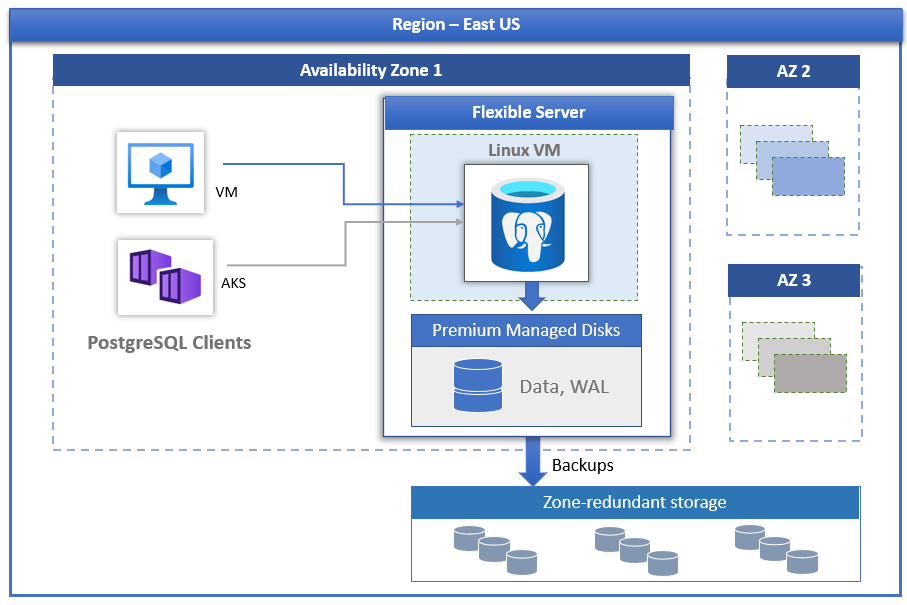
Looking forward, Postgres’s future appears bright as organizations require ever-more adaptable, secure, and performant databases. Ongoing trends toward hybrid and multi-cloud deployments, the rise of AI-powered analytics, and broad adoption of microservices architecture will all drive new use cases and innovations. Postgres’s extensibility and strong community ensure it is positioned to evolve to meet emerging demands, whether as a core transactional store, a foundation for analytical workloads, or a platform for new database paradigms.
[4i1g21]
[heibh2]
Postgres stands as a leading database solution owing to its flexibility, reliability, and the power of its open-source community. As demands on data systems continue to grow, its adaptability will keep it at the heart of digital innovation.
Citations
[o7pk1d] 2025, Sep 19. PostgreSQL - Wikipedia. Published: 2001-08-25 | Updated: 2025-09-19
[nie1dv] 2025, Sep 23. What Is PostgreSQL? Databases Explained | Google Cloud. Published: 2025-09-22 | Updated: 2025-09-23
[4i1g21] 2025, Sep 11. What Is PostgreSQL? | IBM. Published: 2021-10-15 | Updated: 2025-09-11
[heibh2] 2025, Sep 23. About - PostgreSQL. Published: 2025-09-04 | Updated: 2025-09-23
[c8afzt] 2025, Sep 23. Introduction to PostgreSQL - W3Schools. Published: 2025-08-29 | Updated: 2025-09-23
[6]: 2025, Jul 01. . Published: 2023-07-27 | Updated: 2025-07-01
[7]: 2025, Sep 23. PostgreSQL: The world's most advanced open source database. Published: 2025-09-19 | Updated: 2025-09-23
[8]: 2025, Sep 15. Understanding PostgreSQL architecture and attributes - Prisma. Published: 2013-01-01 | Updated: 2025-09-15
[9]: 2025, Sep 17. What is PostgreSQL? | Database Journal. Published: 2023-01-25 | Updated: 2025-09-17