


Geeks For Geeks
Geeks for Geeks
GeeksforGeeks is a large, India‑based computer science and programming education website that consultants tap for fast, example‑driven explanations of everything from data structures to system design.
GeeksforGeeks is a website‑style publication offering “well written, well thought and well explained computer science and programming articles” across topics like algorithms, data structures, DBMS, operating systems, and coding interviews.
[3ls6ay]
It was created by Sandeep Jain, an alumnus of the Indian Institute of Technology (IIT) Roorkee, and has grown into a broad learning portal with articles, practice problems, and videos aimed at students and working developers.
[3ls6ay]
Consultants return to it because it provides quick, code‑level patterns and standard definitions that match how concepts are taught in many technical interviews and university courses.
[x4dl0i]
[3dyuo0]
[3ls6ay]
[h9q8c7]
Type and Format
- Format details
- Content is free to read with optional paid products (such as courses and premium practice content), so the core article library functions without a hard paywall. [3ls6ay]
- It positions itself as “Your All-in-One Learning Portal” for computer science and programming, covering core CS subjects and interview prep. [3ls6ay]
- Where it lives:
The People Behind It
- Founder: Sandeep Jain
- GeeksforGeeks was founded by Sandeep Jain, an alumnus of IIT Roorkee, who started it as a platform to provide well‑structured CS content and interview preparation resources. [3ls6ay]
- Jain’s background as a computer science educator shapes the site’s focus on clear definitions, worked examples, and coding practice aligned to university syllabi and software engineering interviews. [3ls6ay]
- Editorial / contributor base
- The platform also offers video explanations hosted by GeeksforGeeks educators, expanding beyond text tutorials into recorded lessons on topics like ER modeling and DBMS. [3ls6ay]
Catalog of Notable Works
Since GeeksforGeeks is a publication‑style website, this section highlights representative columns / sections / article types that define its utility.
- DBMS Tutorials [x4dl0i] [h9q8c7] — written by GeeksforGeeks editorial team — structured series of articles on database concepts (ER models, data models, normalization) widely used by students preparing for exams and interviews.
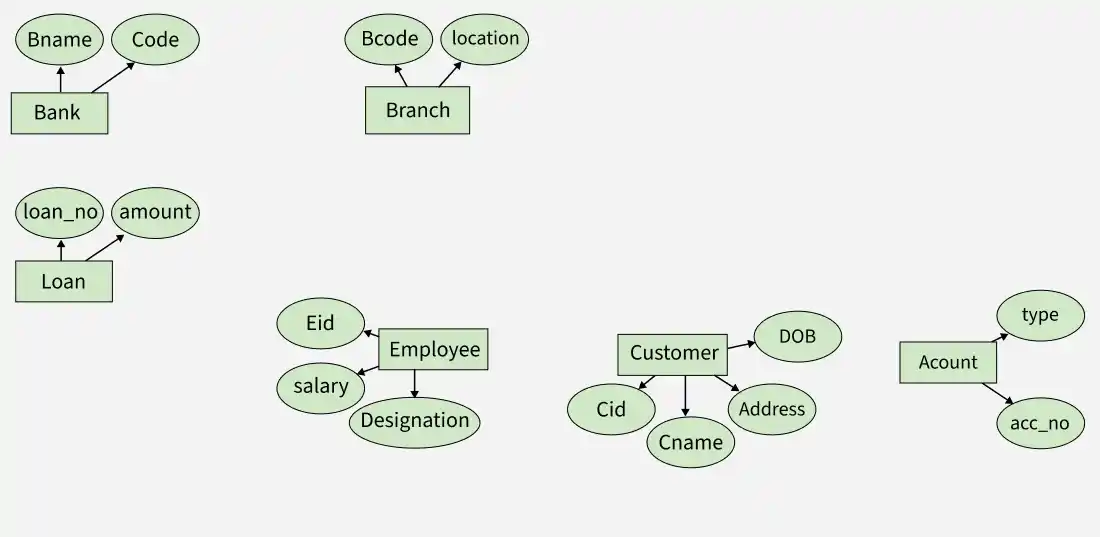
- ER Diagram of a Company [x4dl0i] — written by GeeksforGeeks — walks through a full example ER diagram with entities (Employee, Department, Project, Dependent), attributes, and relationships, giving a canonical pattern for modeling organizations.
- Weak Entity Set in ER Diagrams [3dyuo0] — written by GeeksforGeeks — explains weak vs strong entity sets, partial keys, and representation conventions (double rectangles, double diamonds) with clear bullet‑point definitions and notes.
- Generalization, Specialization & Aggregation in ER Model | DBMS [3ls6ay] — written and recorded by GeeksforGeeks — a video tutorial clarifying three core abstraction mechanisms in ER modeling (generalization, specialization, aggregation) with examples like Person / Student / Teacher.
- Data Models in DBMS [h9q8c7] — written by GeeksforGeeks — outlines conceptual, representational, and physical data models, defining “entity” and explaining how data models give “a transparent picture of data” for database design.
These are exemplars; the site also has extensive catalogs in algorithms, data structures, operating systems, and coding interview questions built in the same style.
[x4dl0i]
[3dyuo0]
[3ls6ay]
[h9q8c7]
Why It Matters to Innovators
- GeeksforGeeks encodes industry‑standard definitions and modeling patterns (e.g., entities, relationships, weak entities, generalization/aggregation) that form the shared language between product, data, and engineering teams designing new systems. [x4dl0i] [3dyuo0] [3ls6ay] [h9q8c7] This helps innovators reason precisely about data architectures underlying new products, tying directly into Data Modeling and System Design.
- Its DBMS and ER‑model content gives ready‑to‑reuse mental templates for modeling organizations, products, and users (for example, ER diagrams of a company with Employee, Department, Projects, Dependents), which can be adapted quickly for new product schemas or analytics environments. [x4dl0i]
- Articles on weak entities, participation constraints, and partial keys implicitly teach how to model dependencies and lifecycle relationships (parent–child, ownership, existence dependencies), which are central to robust Domain-Driven Design in complex products. [3dyuo0]
- Tutorials on generalization, specialization, and aggregation in ER models frame abstraction as a design tool: bottom‑up generalization to identify common capabilities, top‑down specialization for segment‑specific features, and aggregation to treat relationships as first‑class entities — all powerful patterns when architecting modular platforms or APIs. [3ls6ay]
- Because many developers and candidates rely on GeeksforGeeks for interview preparation, its idioms inform how “canonical” solutions are understood in practice; innovators can use this as a calibration point for what typical engineering talent will consider a “normal” approach to problems in data structures, DBMS, and system design. [x4dl0i] [3dyuo0] [3ls6ay] [h9q8c7]
Best Starting Points
- Data Models in DBMS [h9q8c7] — accessible on‑ramp to how GeeksforGeeks explains core concepts, defining entities and major data model types in a short, structured tutorial.
- ER Diagram of a Company [x4dl0i] — concrete example of an end‑to‑end ER diagram that shows entities, attributes, and relationships for a familiar business domain, ideal to see the house style and modeling depth.
- Weak Entity Set in ER Diagrams [3dyuo0] — crisp explanation of weak entities, partial keys, and representation conventions that illustrates how the site handles more nuanced DBMS concepts.
- Generalization, Specialization & Aggregation in ER Model | DBMS [3ls6ay] — a short video capturing the platform’s multimedia approach and how it explains abstraction mechanisms visually and verbally.
Adjacent Sources
- GeeksforGeeks DBMS Tutorials — deeper cataloging of the full DBMS track on GeeksforGeeks as a focused learning path.
- Data Modeling — foundational concept that GeeksforGeeks’ ER and DBMS content operationalizes with concrete diagrams and examples.
- System Design — broader architecture lens that builds on the database and entity‑relationship ideas taught in these tutorials.
- Stack Overflow — complementary community Q&A surface where many of the same CS and programming concepts show up in real‑world problem contexts.
- Khan Academy Computer Science — another educational platform whose CS material can be cross‑referenced for pedagogy and coverage contrasts.