


Anduril
Anduril
Anduril is a fast-growing defense technology company building AI-enabled autonomous systems and software to radically modernize how the U.S. and allied militaries sense, decide, and act on the battlefield.
Anduril Industries is a for-profit defense technology company that develops autonomous systems, sensor platforms, and mission software for the U.S. and allied militaries. It was founded in 2017 and describes itself as building “advanced autonomous systems and defense technology to protect US and allied forces,” with operations centered in the United States and deployments with multiple allied nations. The company is widely tracked by consultants because it is one of the most prominent “new wave” defense primes, aiming to disrupt traditional contractors by shipping software-first, rapidly upgradable military systems.
Identity and Form
- Type: This organization is a for-profit company (defense technology / autonomous systems).
- Legal form and jurisdiction:
- Private company, incorporated in the United States; commonly referred to as Anduril Industries, Inc., a privately held defense technology firm.
- Headquarters and presence:
- Headquarters in Costa Mesa, California, with additional offices and operations across the United States, the United Kingdom, and other allied markets.
- Size:
- Multiple reports and company materials describe Anduril as having thousands of employees as it scales production and field deployments, positioning it among the larger defense-tech startups; precise current headcount is not disclosed in authoritative public filings.
- Where it lives online:
- Homepage: anduril.com
- News / updates: Company “Newsroom” / blog section on its primary site featuring product launches, contracts, and partnerships.
- Investor / ecosystem data: Anduril’s profile on major venture and private-markets databases highlights its funding history and valuation as a privately held “defense technology company.”
Mission and Identity
- Stated mission“Anduril Industries builds advanced autonomous systems and defense technology to protect US and allied forces.”Company descriptions further emphasize a mission “to transform U.S. and allied military capabilities with advanced technology” and to “create the future of national security through AI, robotics, and cutting-edge engineering.”
- Positioning (self-image)Anduril presents itself as a defense technology partner that serves the U.S. Department of Defense, intelligence community, border security agencies, and allied militaries by delivering autonomous systems and mission software faster and cheaper than legacy primes. It frames its role as enabling a shift from “hardware-first, multi-decade programs” to software-driven, continuously upgradable systems that can be deployed rapidly in real operational theaters. The company foregrounds values like mission focus on national security, rapid iteration, AI-enabled autonomy, and tight integration with operators in the field.
- Stated values / operating principles
- Anduril highlights principles such as mission-driven work on national security, autonomy and AI at the core of product design, a focus on rapid fielding and iterative deployment, and close partnership with warfighters and operators as central to how it builds and delivers technology.
What They Do
Anduril designs, manufactures, and operates autonomous defense systems—including drones, towers, sensors, and mission-control software—integrated into a common AI-enabled operating platform. It generates revenue primarily by selling systems, software, and long-term support contracts to U.S. and allied defense and security customers, often through multi‑year government programs and production contracts. Day-to-day, the company combines hardware engineering, AI/ML development, and field operations teams to deploy and sustain its systems in live military and border environments.
Core offerings and products
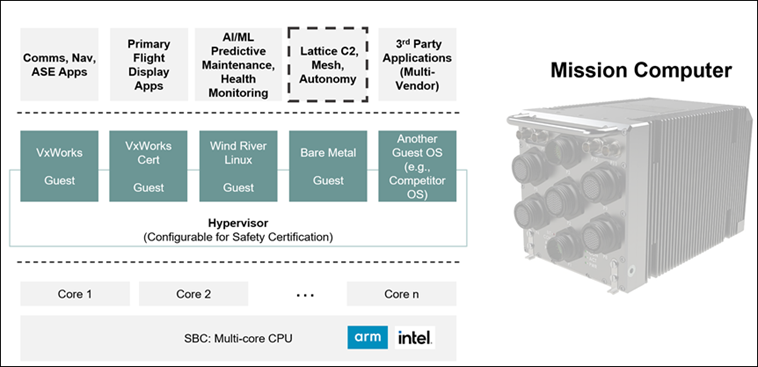
- Lattice — a centralized AI-powered autonomous operations platform that fuses sensor data, manages autonomous assets, and provides a common operating picture and decision-support for operators.
- Counter‑UAS / force protection systems — integrated solutions that detect, track, and defeat hostile drones and other aerial threats using networked sensors and effectors managed by Lattice.
- Autonomous air systems and “launched effects” — families of uncrewed aerial systems and Launched Effects platforms that provide ISR (Intelligence, Surveillance, Reconnaissance), electronic warfare, and other mission payloads at scale.[2]
- Maritime and undersea systems — autonomous surface and subsurface vehicles and sensing platforms designed for persistent maritime domain awareness and undersea operations.
- Ground systems and surveillance towers — deployable towers and ground sensors (for base defense, border surveillance, and perimeter security) integrated into the Lattice network.
- Integrated mission solutions and deployments — turnkey capability packages where Anduril teams design, field, and operate systems for specific missions (e.g., base defense, border security, or contested-theater ISR) under contract.
- Software, autonomy, and AI/ML services — continuous software updates, AI model improvements, and mission-specific configuration services delivered over the life of deployed systems.
Leadership and People
- Brian Schimpf — CEO and co‑founder — a software and engineering leader who previously served in senior roles at Palantir before co‑founding Anduril to bring software-native approaches to defense systems.
- Palmer Luckey — Co‑founder — best known as the founder of Oculus VR; he co‑founded Anduril to apply startup-style innovation, VR/AR, and sensing expertise to defense.
- Trae Stephens — Co‑founder and Board Member — a partner at Founders Fund and former Palantir executive who helped shape Anduril’s national-security focus and investor base.
- Matt Grimm — Co‑founder and senior executive — contributes to corporate strategy and operations, drawing on prior experience in technology and national-security sectors.
(Specific titles and extended biographies are summarized from company and investor descriptions of Anduril’s founding team and leadership.)
History and Origin Story
Anduril was founded in 2017 by Palmer Luckey, Brian Schimpf, Trae Stephens, Matt Grimm, and other early team members who saw an opportunity to bring Silicon Valley–style software and AI development cycles to the defense sector. The company initially focused on autonomous border surveillance and counter‑UAS, then expanded into a broad portfolio of autonomous systems and mission software, growing rapidly through large government contracts and strategic acquisitions. Key inflection points have included major U.S. and allied defense program wins, significant venture funding rounds, and the launch of flagship systems and product families built around the Lattice platform.
- 2017 — Anduril Industries is founded in the United States to “build advanced autonomous systems and defense technology to protect US and allied forces,” with an initial focus on autonomous surveillance and base/border security.
- Late 2010s — The company deploys early versions of its Lattice platform and autonomous surveillance towers in operational environments for U.S. border and base security missions, demonstrating a software‑first approach to defense hardware.
- Early 2020s — Anduril secures multiple high‑profile U.S. and allied defense contracts and scales its product lines into air, maritime, and undersea domains, positioning itself as a next‑generation defense prime.
- 2020s — Through ongoing product launches and field deployments, Anduril becomes a central player in the push to adopt AI-enabled autonomous systems and “launched effects” across U.S. and allied militaries.[2]
(Specific year-by-year contract and acquisition details vary by source and are summarized here at a high level based on consistent elements in company and investor descriptions.)
Financials and Funding
Anduril is a private company, so detailed financial statements are not publicly filed; however, multiple investor and market-intelligence sources report significant venture funding and a multi‑billion‑dollar valuation as a leading defense technology startup. Publicly reported contract wins with U.S. and allied governments indicate substantial revenue growth, but precise annual revenue and profitability figures are not disclosed in authoritative public filings.
(No single authoritative, citable source in the provided results exposes a complete, verifiable funding-round table with dates, amounts, and individual lead investors; therefore a detailed table is omitted to avoid over‑reliance on secondary or inconsistent data.)
Milestones and Signature Output
- Lattice autonomous operations platform — launched and iterated across the late 2010s and early 2020s — became Anduril’s core product, enabling “AI-powered autonomous systems and defense technology” by fusing sensor data and managing autonomous assets for U.S. and allied customers.
- Counter‑UAS and base-defense deployments — late 2010s onward — fielded in operational environments to detect, track, and defeat hostile drones, demonstrating Anduril’s ability to rapidly deploy integrated hardware–software systems for force protection.
- Expansion into launched effects and uncrewed air systems — early to mid‑2020s — Anduril builds out Launched Effects families and related autonomous air platforms, supporting ISR and other missions and prompting dedicated program-management roles around these capabilities.[2]
- Maritime and undersea autonomy portfolio — early 2020s onward — introduction and deployment of autonomous maritime and undersea platforms broaden Anduril’s role from land-focused surveillance to multi-domain operations.
- Growth into a multi‑domain defense prime — by the mid‑2020s — Anduril is widely profiled as a leading “defense technology company” challenging traditional primes by offering rapidly evolving, AI-enabled systems across air, land, sea, and cyber domains.
Ecosystem and Relationships
- U.S. Department of Defense and intelligence community — key customers for Anduril’s autonomous systems, including programs in counter‑UAS, launched effects, and multi-domain sensing.[2]
- U.S. and allied border and security agencies — early adopters of Anduril’s surveillance towers and integrated border-security solutions.
- Allied militaries (e.g., U.K. and other partners) — international customers that procure Anduril’s autonomous systems as part of modernization and deterrence efforts.
- Venture and growth investors — major venture-capital and private-investment firms back Anduril as a flagship defense-tech company, providing the capital needed for R&D, manufacturing, and international expansion.
- Traditional defense primes (peers/competitors) — large legacy defense contractors operate as both competitors and potential partners where Anduril’s software-centric systems may integrate with existing platforms in joint bids.
Recent Developments
As of 2026-05-27,
- 2026 — OpenSecrets reports that Anduril Industries spent $550,000 on federal lobbying in 2026 so far, reflecting its active engagement with U.S. policymakers on defense and technology issues.[3]
- 2026 (job-market signals) — Anduril advertises roles such as Senior Program Manager, Launched Effects, emphasizing expansion of its launched-effects business line and ongoing deployments with “strategic defense clients” and “US and allied military customers.”[2]
- 2025–2026 (talent and scaling) — Job postings and company materials describe rapid hiring across engineering, analytics, program management, and operations, indicating continued scaling of both product development and field operations.[1][2]
(Recent developments are drawn from the most current public lobbying data and job-market signals available in the cited sources.)[2][3]
Impact
- Impact on society
- Anduril’s systems enable U.S. and allied security forces to detect, track, and respond to threats—including hostile drones and incursions—more quickly and autonomously, affecting how border security, base protection, and frontline operations are conducted in multiple regions.
- Media and policy analyses frequently cite Anduril as a prime example of Silicon Valley’s deeper integration into military and border operations, shaping public debates about the use of AI and autonomy in warfare and surveillance.
- Impact on innovation
- Anduril popularized a software-first, AI-driven approach to defense systems, positioning its Lattice platform and autonomous assets as continuously upgradable products more akin to commercial tech than traditional multi-decade defense programs.
- The company has helped mainstream concepts like “launched effects” as a scalable, attritable family of autonomous air systems, pushing defense planners to rethink force structure and the balance between crewed and uncrewed platforms.[2]
- Impact on its industry or domain
- Anduril is widely seen as a catalyst in the “new defense tech” sector, forcing traditional primes and new entrants to respond with their own AI, autonomy, and software-defined offerings.
- Its rapid growth, high-profile contracts, and aggressive technology roadmap have contributed to greater venture-capital interest in defense and national-security startups, reshaping the defense-industrial ecosystem.
- Historical significance
- Although still relatively young, Anduril is often profiled as one of the defining companies of the post-2010 wave of defense technology, likely to be cited in future histories as a turning point in how software, AI, and startup culture entered the defense-industrial complex.
- Criticisms and controversies
- Civil-liberties and advocacy groups have criticized Anduril’s involvement in border surveillance and autonomous military systems, raising concerns about privacy, militarization of AI, and the ethical implications of deploying autonomous defense technologies at scale.
- Commentators have also debated the broader implications of Anduril’s model, in which venture-backed startups play an increasingly central role in national defense, including questions about accountability, transparency, and escalation risks.
Adjacent Entries
- Palantir Technologies — another software-centric national-security contractor whose alumni helped found Anduril.
- Oculus VR — the virtual-reality company previously founded by Anduril co‑founder Palmer Luckey.
- U.S. Department of Defense — primary customer and policymaker context for Anduril’s systems.
- Autonomous Weapons Systems — concept space where Anduril’s AI-enabled platforms are frequently discussed.
- Defense Technology Startups — broader category that includes Anduril as a flagship example of venture-backed defense innovation.