Write a comprehensive one-page article about "dual-use technologies".
Model: sonar-pro
Dual-use technologies are innovations that serve both civilian and military purposes, making them pivotal in sectors ranging from medicine and agriculture to security and defense.
[dp3sj4]
[lez315]
[9wus2u]
[t4kbbv]
Their significance lies in their potential to propel progress in everyday life while simultaneously raising strategic and ethical challenges with global security implications.
[dp3sj4]
[9wus2u]
Understanding Dual-Use Technologies
At their core, dual-use technologies refer to goods, software, or know-how with both peaceful and military applications.
[lez315]
[9wus2u]
[t4kbbv]
Initially designed for civilian research or commercial gain, these technologies can often be adapted for use in defense, intelligence, or weapon systems. For example, the Global Positioning System (GPS) was developed by the U.S. Department of Defense but is now essential for civilian navigation worldwide.
[lez315]
[i09m74]
[8mky2p]
The scope of dual-use items spans a vast array of sectors, regulated by both national and international policy due to their sensitivity.
[ti0egf]
[9wus2u]
[t4kbbv]
Practical Examples and Applications
Artificial Intelligence (AI) enhances healthcare diagnostics, automates financial analysis, powers smart cities, and is harnessed for military surveillance and autonomous weapon systems.
[dp3sj4]
[lez315]
[66mad4]
Biotechnology such as CRISPR gene editing revolutionizes medicine and agriculture but can also be misused in biological warfare.
[dp3sj4]
[66mad4]
Advanced semiconductors are vital components in everything from smartphones to sophisticated military hardware.
[dp3sj4]
Aerospace and satellite systems support GPS, weather forecasting, and communications for civilians, while enabling real-time intelligence gathering and missile guidance for defense agencies.
[dp3sj4]
[66mad4]
Chemicals and materials like ammonium nitrate can be used as fertilizers or as ingredients for explosives, prompting strict global regulatory oversight.
[i09m74]
Advantages and Emerging Use Cases
The most significant benefits stem from accelerating innovation and efficiency. Civilian industries gain access to cutting-edge technologies originally developed for military use, which boosts economic growth and societal benefits—examples include medical imaging breakthroughs and drones used for both agriculture and reconnaissance.
[lez315]
[66mad4]
[i09m74]
For governments and businesses, adopting dual-use solutions can lower development costs by leveraging economies of scale and shared R&D.
[i09m74]
Yet, dual-use advances also create regulatory and ethical challenges. The ease with which technologies can cross the civilian-military boundary complicates export controls, intellectual property protections, and raises concerns about proliferation or misuse in conflict zones.
[9wus2u]
[i09m74]
[t4kbbv]
Policymakers must balance enabling beneficial innovation with safeguarding security and upholding international law.
Current State and Trends
With rapid advancements in fields like quantum technology, AI, autonomous systems, and next-generation wireless networks, adoption is accelerating globally.
[dp3sj4]
[66mad4]
Governments are investing in surveillance, communication, and defense platforms that draw on commercially available technologies, blurring the line between civilian and military sectors further.
[dp3sj4]
[66mad4]
NATO’s Defence Innovation Accelerator for the North Atlantic (DIANA) and private accelerator programs like BLAST are fostering partnerships between deep tech startups and national defense agencies, emphasizing the commercial potential of dual-use breakthroughs.
[66mad4]
Key players include major defense contractors, leading technology firms, and a new wave of startups specializing in AI, quantum sensing, and advanced materials.
[66mad4]
Regulations are evolving, as seen in tighter export controls in the U.S. and EU, to manage security risks while maintaining an innovation-friendly ecosystem.
[9wus2u]
[t4kbbv]
Recent developments include:
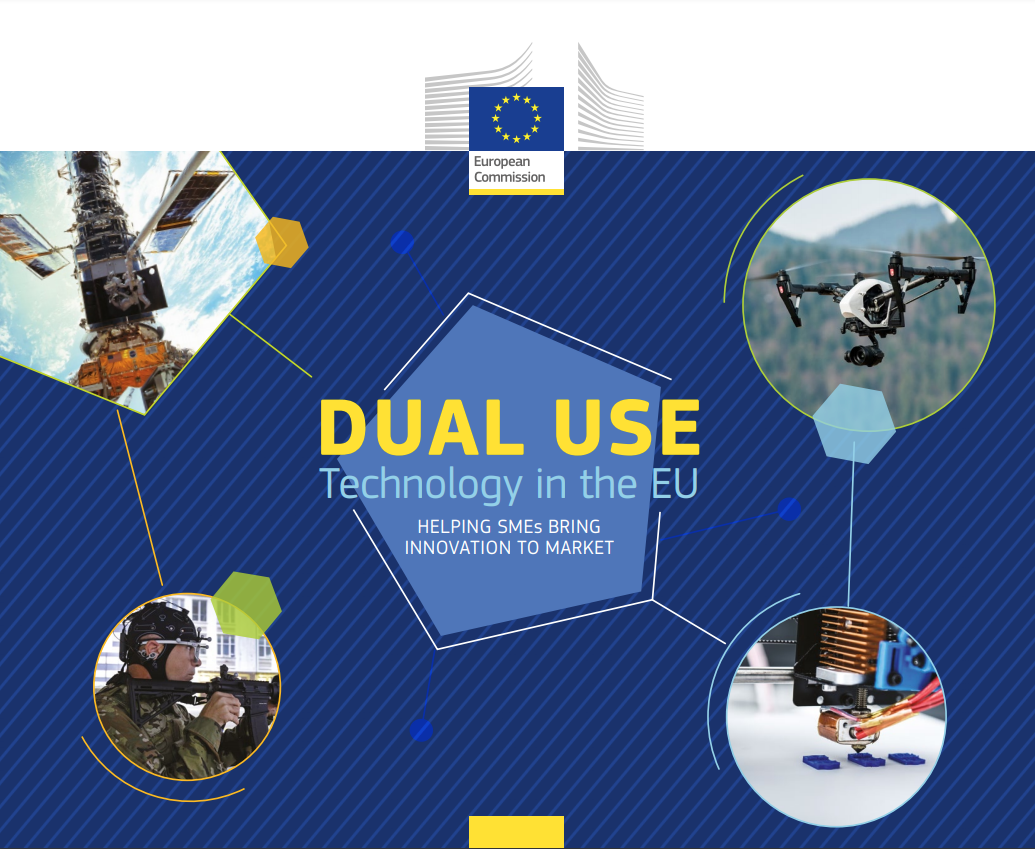
AI-driven drone swarms deployable for crop monitoring or aerial surveillance.
3D printing of aerospace components for both commercial airlines and military jets.
Hypersonic vehicles that can launch satellites or deliver defense payloads.
[66mad4]
Future Outlook
Dual-use technologies are expected to become further integrated across industries, with lines between civilian and military use continuing to blur. Advances in quantum computing, biotechnology, and integrated sensing will transform not only national security but also critical infrastructure, healthcare, and global communications. As regulatory frameworks adapt, the challenge will be to maximize shared benefit and innovation while preventing misuse or destabilization in times of geopolitical tension.
[dp3sj4]
[66mad4]
[9wus2u]
In summary, dual-use technologies are essential drivers of both progress and debate in a connected world, representing promise and risk in equal measure. Their future will be shaped by how society balances innovation, security, and ethical responsibility.