


Product-Led Growth
(2025-11-26T13:33.939Z)
Perplexity Query
(2025-11-26T13:33
.939Z)
Question:
Write a comprehensive one-page article about "Product-Led Growth".
Model: sonar-pro
Product-Led Growth (PLG) is a business strategy where the product itself is the primary driver for acquiring, activating, and retaining customers. Originally thought of as "Growth Hacking",
[gvscm5]
instead of relying heavily on sales teams or marketing campaigns, PLG companies focus on delivering immediate value through their product experience, allowing users to discover its benefits organically. This approach has become increasingly significant in today’s competitive markets, especially in software and digital services, where user experience and rapid onboarding are critical for success.

Main Content
At its core, Product-Led Growth centers on designing products that users can explore, activate, and experience without needing extensive guidance or sales interaction. This often involves offering a freemium model, free trial, or self-serve onboarding, which lowers the barrier to entry and encourages widespread adoption. For example, companies like Slack and Dropbox allow users to sign up and start using their platforms instantly, experiencing core features before deciding to upgrade to paid plans. This hands-on approach not only accelerates user engagement but also builds trust and loyalty, as customers see real value before making a financial commitment.

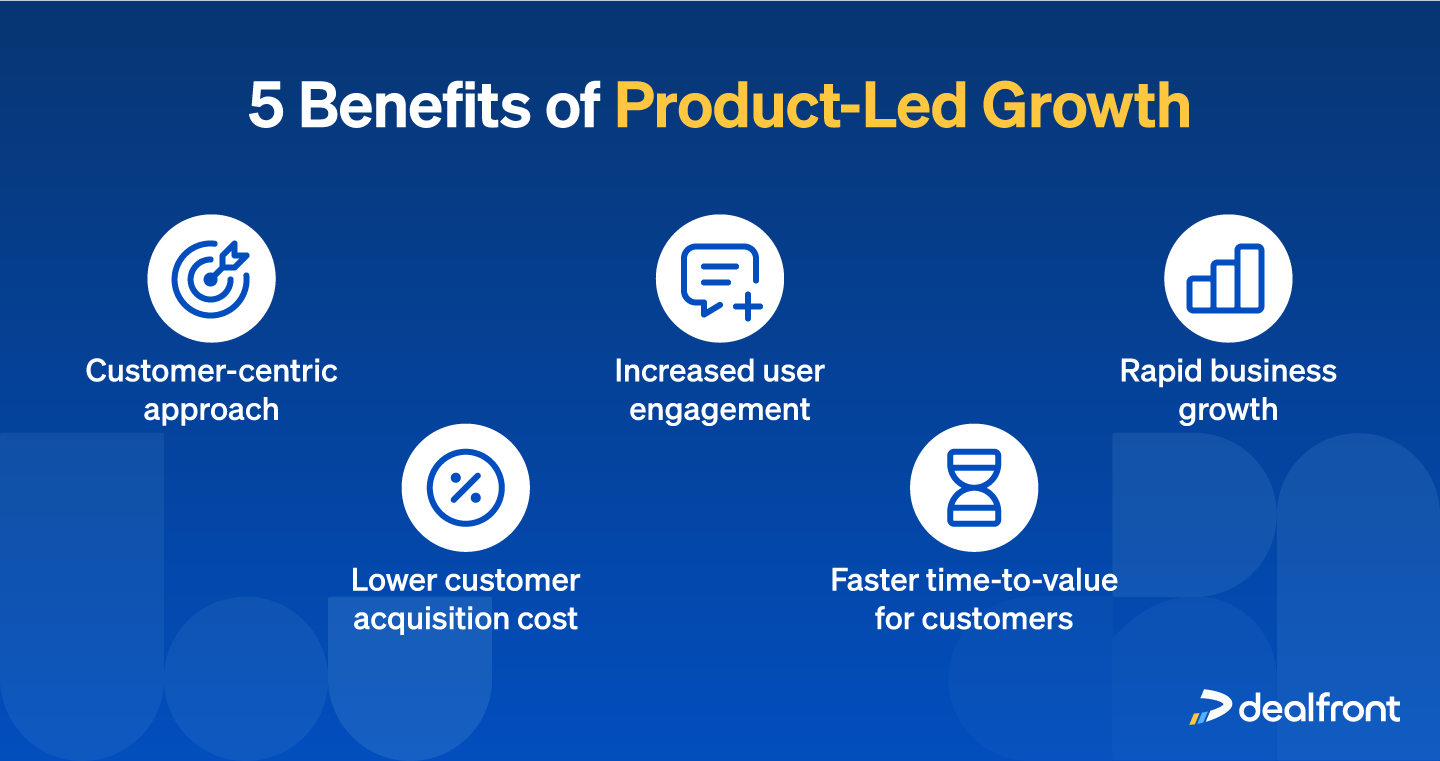
The benefits of Product-Led Growth are substantial. It leads to faster and more efficient customer acquisition, as users can try the product without friction. Retention rates improve because users are more likely to stick with a product they’ve already found valuable. Additionally, PLG reduces customer acquisition costs ( Customer Acquisition Cost ) by minimizing reliance on traditional sales and marketing efforts. Companies like Ahrefs AI have demonstrated that a product-led approach can support significant revenue growth with relatively small teams, highlighting the scalability and cost efficiency of this model. Other advantages include better product-market fit, as continuous user feedback drives rapid iteration and improvement, and higher customer lifetime value ( Customer Lifetime Value ) due to increased engagement and upsell opportunities.
However, implementing Product-Led Growth isn’t without challenges. It requires a strong focus on user-centric design, seamless onboarding, and robust data analytics to track user behavior and optimize the experience. Companies must also balance self-serve growth with strategic sales efforts, especially when targeting enterprise customers or complex product lines. For instance, a company might use PLG to capture small teams or individual users while empowering sales teams to upsell larger accounts. This hybrid approach ensures both grassroots growth and high-value expansion.
Current State and Trends
Product-Led Growth has gained widespread adoption across the tech industry, with companies of all sizes embracing its principles. Key players like Zoom , Notion , and HubSpot have successfully leveraged PLG to drive rapid expansion and market dominance. The rise of cloud-based software and digital platforms has further accelerated this trend, as these technologies naturally lend themselves to self-serve experiences and scalable growth. Recent developments include the integration of AI-powered personalization and predictive analytics, which enhance user engagement and retention by delivering tailored experiences and proactive support.
Future Outlook
Looking ahead, Product-Led Growth is poised to become even more influential as businesses continue to prioritize user experience and data-driven decision-making. Advances in artificial intelligence and machine learning will enable companies to create more intuitive and adaptive products, further reducing friction and increasing value for users. The impact of PLG will extend beyond software, influencing industries such as e-commerce, education, and healthcare, where seamless digital experiences are increasingly important.

Conclusion
Product-Led Growth represents a fundamental shift in how companies approach customer acquisition and retention, placing the product experience at the heart of their strategy. By focusing on immediate value, user-centric design, and continuous improvement, businesses can achieve scalable, efficient, and sustainable growth. As technology evolves and user expectations rise, Product-Led Growth will remain a key driver of innovation and success in the digital age.
Citations
[1]: 2025, Nov 24. Product led growth examples to inspire you - Nulab . Published: 2024-10-09 | Updated: 2025-11-24
[3]: 2025, Sep 30. Product-Led Growth (PLG): What it means, examples, and why it's ... . Published: 2025-08-07 | Updated: 2025-09-30
[4]: 2025, Nov 14. What is Product-Led-Growth? (Explained With Examples) . Published: 2025-08-06 | Updated: 2025-11-14
[5]: 2025, Aug 31. What Is a Product-Led Growth Strategy? A Guide for 2025 . Published: 2025-07-17 | Updated: 2025-08-31
[7]: 2025, Nov 12. What is product-led growth? History & Benefits - DevRev . Published: 2025-06-16 | Updated: 2025-11-12
[8]: 2025, Nov 23. 6 Product-Led Growth Examples: The Companies Doing PLG Right . Published: 2024-10-25 | Updated: 2025-11-23
[9]: 2025, Nov 19. What is product-led growth? Meaning, core principles, and examples . Published: 2023-01-01 | Updated: 2025-11-19
[gvscm5] 2025, Dec 09. " What happened to Growth Hacking? " The VC Corner