Write a comprehensive one-page article about "Customer Acquisition Cost".
Model: sonar-pro
Customer Acquisition Cost: A Comprehensive Guide
Introduction
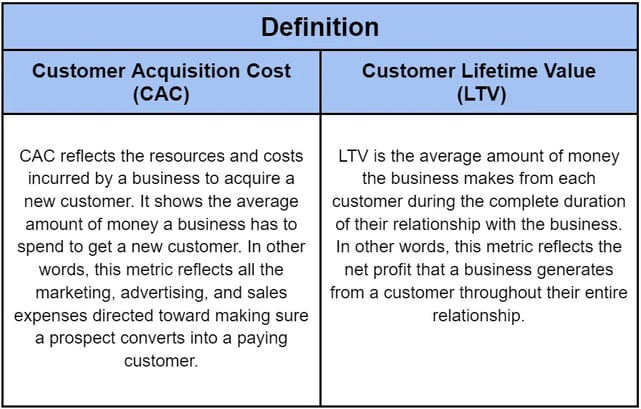
Customer Acquisition Cost (CAC) is a fundamental business metric that measures the total financial investment required to convert a prospect into a paying customer.
[lgf0vz]
This metric encompasses all expenses related to marketing, sales, and other activities directly aimed at attracting and converting new customers.
[3gac4c]
Understanding CAC is essential for businesses across all industries, as it directly influences profitability, helps determine return on investment (ROI), and guides strategic budget allocation decisions.
[k8gxns]
Understanding Customer Acquisition Cost in Detail
Customer Acquisition Cost represents the total expenses a company incurs to gain a new customer, calculated by dividing all acquisition-related costs by the number of new customers acquired during a specific period.
[lgf0vz]
The formula is straightforward: CAC = (Total Cost of Sales + Cost of Marketing) / Number of New Customers Acquired.
[txix3o]
However, the complexity lies in accurately identifying and categorizing all relevant expenses.
The costs included in CAC calculations span multiple categories. Marketing and advertising expenses encompass employee salaries, subscriptions to marketing tools and SaaS platforms, digital advertising costs, content creation, social media management, and traditional campaign expenses.
[k8gxns]
Sales expenses include sales team salaries, commissions, bonuses, training costs, lead generation tools, and travel expenses.
[k8gxns]
Additionally, businesses must account for operational costs such as CRM software, marketing automation tools, customer support infrastructure, and administrative overhead.
[lgf0vz]
Promotional costs like special discounts and incentives also factor into the total CAC.
[lgf0vz]
Consider a practical example: if a company spends $75,000 on sales and $50,000 on marketing in a quarter while acquiring 500 new customers, the CAC would be ($75,000 + $50,000) / 500 = $250 per customer.
[txix3o]
In a more complex scenario involving multiple departments, a company might allocate $255,000 for sales personnel, $75,000 for marketing personnel, $6,000 for marketing programs, $40,000 for tradeshows, and $20,000 for agencies—totaling $396,000—to acquire 300 new customers, resulting in a CAC of $1,320 per customer.
[txix3o]
The significance of CAC extends beyond simple cost accounting. Businesses must analyze CAC alongside other critical metrics like Customer Lifetime Value (LTV), which represents the total revenue a customer generates over their relationship with the company.
[p2voy4]
Industry best practice suggests that the most profitable businesses maintain an LTV that is at least three times higher than their acquisition costs.
[3kkhxz]
This ratio ensures sustainable and profitable growth as companies scale their customer base.
Current State and Market Adoption
Customer Acquisition Cost has become increasingly important in today's competitive business landscape, particularly in the SaaS and digital commerce sectors.
[3xmh0i]
Companies are leveraging integrated CRM and marketing automation platforms to track CAC across multiple channels and touchpoints, providing comprehensive visibility into campaign performance.
[3kkhxz]
Organizations now use sophisticated attribution reporting and multi-channel analytics to identify the most cost-effective customer acquisition channels and optimize budget allocation accordingly.
Businesses increasingly recognize that hidden expenses often inflate true CAC calculations. Companies must account for onboarding resources, technology infrastructure, administrative overhead, and the time investment required to convert prospects into loyal customers.
[3kkhxz]
The emphasis on accurate CAC measurement has driven adoption of advanced analytics tools and customer data platforms that enable real-time tracking and reporting of acquisition metrics.
Future Outlook
As artificial intelligence and predictive analytics continue to advance, businesses will gain increasingly sophisticated capabilities to forecast CAC, identify high-value customer segments before acquisition, and optimize marketing spend in real time. Future CAC strategies will likely emphasize personalization, data-driven decision-making, and omnichannel integration to reduce acquisition costs while improving customer quality and lifetime value.
Conclusion
Customer Acquisition Cost remains a critical metric for evaluating business efficiency and profitability. By accurately calculating CAC and maintaining it at a sustainable ratio to customer lifetime value, companies can make informed decisions about growth investments and ensure long-term business success in an increasingly competitive marketplace.



)