


Customer Lifetime Value
LTV (Lifetime Value) and CLV (Customer Lifetime Value) are most often used interchangeably. Some sources differentiate them by defining CLV as the value of an individual customer and LTV as the average value of all customers.
- CLV (Customer Lifetime Value): Often refers to the value of a specific, individual customer.
- LTV (Lifetime Value): Can be used to refer to an average value across all customers, which is a more general metric for the entire customer base.
Ultimately, the difference is a matter of how a particular business chooses to define and use the terms, as they both aim to measure the total revenue from a customer over their entire relationship with a company.
(2025-12-02T10:31.846Z)
Perplexity Query
(2025-12-02T10:31
.846Z)
Question:
Write a comprehensive one-page article about "Customer Lifetime Value".
Model: sonar-pro
Customer Lifetime Value: Understanding Your Most Valuable Customers
Introduction
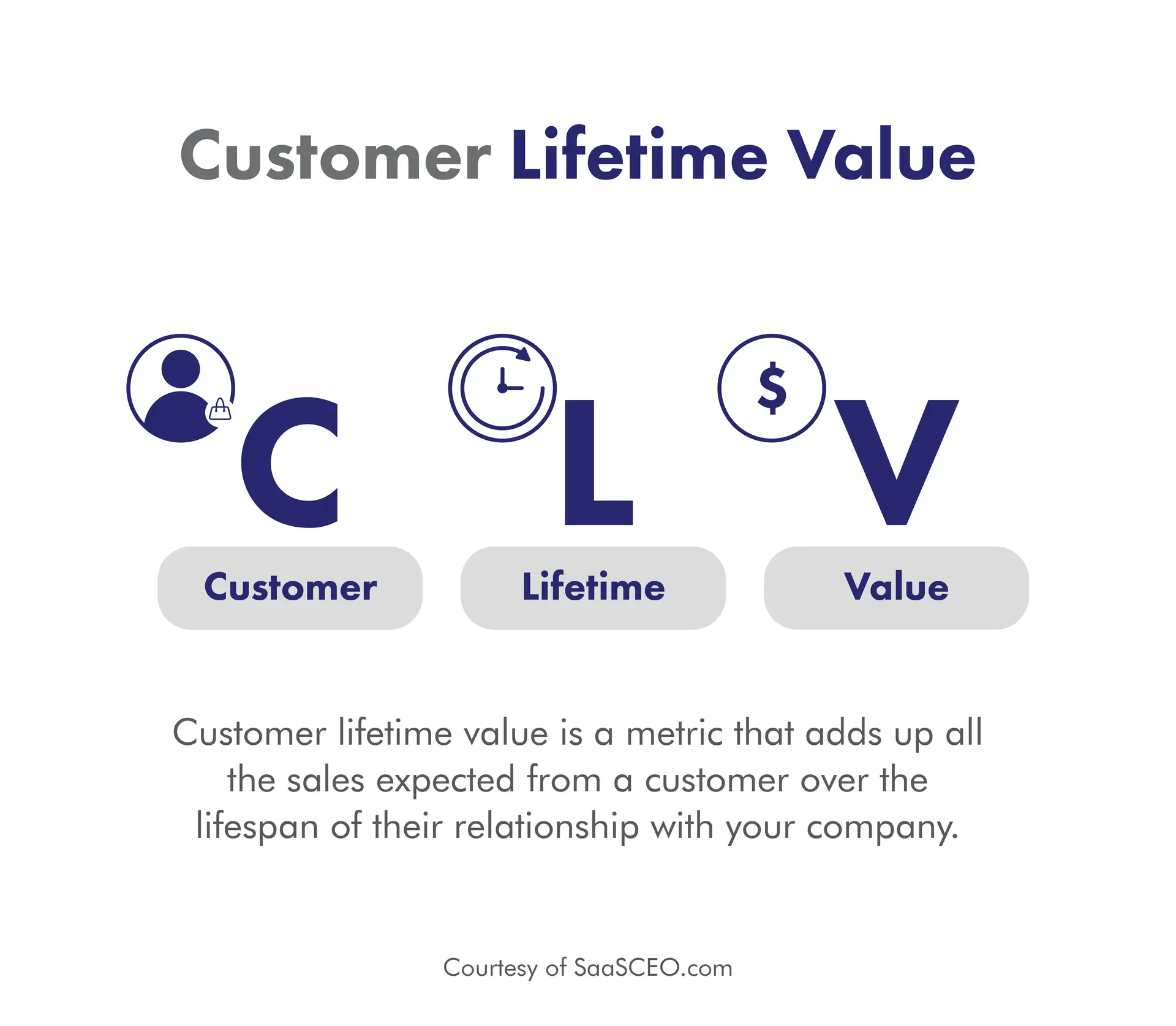
Customer Lifetime Value (CLV), also known as CLTV or LTV, represents the total worth or profit a business can expect from a customer over the entire duration of their relationship.
[rj6en1]
Rather than focusing on individual transactions, CLV provides a comprehensive view of a customer's long-term value to an organization. This metric has become increasingly critical for businesses seeking to shift their focus from short-term quarterly profits to the sustainable health of customer relationships and strategic resource allocation.
[txk8ga]

Main Content
Understanding the Concept
At its core, CLV measures all potential transactions a customer will make throughout their entire relationship with a business.
[rj6en1]
The metric encompasses not just historical spending but also predictive estimates of future purchases based on customer behavior patterns.
[rj6en1]
There are two primary approaches: historic CLV, which examines how much an existing customer has already spent, and predictive CLV, which forecasts future spending based on patterns such as renewal rates, product adoption, engagement levels, and AI-powered insights.
[63x9ps]
The basic CLV formula is straightforward: CLV = (Average Revenue Per Customer × Customer Lifespan) − Total Costs to Serve.
[63x9ps]
For example, if a customer spends $10,000 annually and maintains a five-year relationship with a company, their gross CLV would be $50,000, but after accounting for $15,000 in support costs, their net CLV becomes $35,000.
[63x9ps]
Different industries employ variations of this formula; a subscription service averaging $20 monthly purchases over four years yields a CLV of $960, while a car dealership customer purchasing a $40,000 vehicle every five years over a 15-year span generates significantly higher CLV.
[rj6en1]
Strategic Applications and Benefits
CLV serves multiple critical business functions across sales, marketing, service, and product teams.
[63x9ps]
Organizations can identify high-value customers and prioritize resources accordingly, enabling more targeted sales and marketing efforts.
[63x9ps]
The metric helps uncover upsetting opportunities, spot churn risks early, and guide renewal strategies.
[63x9ps]
For instance, the most valuable customers should receive differentiated service levels compared to one-time buyers, with CLV signals like product usage history and renewal records built directly into customer relationship management (CRM) systems.
[63x9ps]
The metric also provides a crucial upper limit for customer acquisition spending. Understanding CLV helps organizations make informed decisions about how much to invest in acquiring new customers and retaining existing ones—a particularly important consideration since retaining valuable customers proves far more cost-effective than constantly acquiring new ones.
[63x9ps]
Remarkably, 42% of sales leaders now cite recurring revenue from long-term customers as their top revenue source.
[63x9ps]
Current State and Trends
Modern CLV implementations have become increasingly sophisticated through AI and machine learning technologies. Contemporary CRM systems now incorporate AI-powered insights that can automatically identify churn risk, recommend optimal contact timing, flag adoption gaps, and suggest relevant cross-sell opportunities without requiring manual analysis.
[63x9ps]
Organizations are implementing lifecycle tracking approaches that follow customers from initial purchase through expansion or renewal, using revenue lifecycle management software to identify where value increases and where drop-offs typically occur.
[63x9ps]
The adoption of CLV as a shared metric across organizational functions has grown substantially. When sales, service, marketing, and product teams access the same CLV data, decision-making becomes more cohesive and benefits both business profitability and long-term customer relationships.
[63x9ps]
This integration represents a shift from siloed departmental thinking toward customer-centric business models.
[63x9ps]

Future Outlook
As predictive analytics and artificial intelligence continue to advance, CLV calculations will become increasingly accurate and actionable. Organizations will likely develop more granular CLV segmentation, analyzing value by customer cohorts, geographic regions, and product lines. Real-time CLV dashboards powered by machine learning will enable dynamic resource allocation and personalized customer engagement strategies at scale, fundamentally transforming how businesses approach profitability and growth.
Conclusion
Customer Lifetime Value represents a fundamental shift in how businesses evaluate customer relationships, moving beyond transactional metrics to embrace long-term value creation. By accurately measuring and acting upon CLV insights, organizations can build more profitable, sustainable growth while simultaneously strengthening customer relationships and delivering superior experiences.
Citations
[rj6en1] 2025, Dec 01. What is Customer Lifetime Value (CLV)? - IBM . Published: 2024-09-04 | Updated: 2025-12-01
[63x9ps] 2025, Nov 20. What Is Customer Lifetime Value (CLV) and How to Calculate? . Published: 2025-10-13 | Updated: 2025-11-20
[3]: 2025, Dec 02. What Is Customer Lifetime Value (CLV)? - Qualtrics . Published: 2023-09-27 | Updated: 2025-12-02
[4]: 2025, Dec 02. What is customer lifetime value (LTV)? - Stripe . Published: 2023-03-28 | Updated: 2025-12-02
[txk8ga] 2025, Dec 01. Customer lifetime value - Wikipedia . Published: 2004-02-23 | Updated: 2025-12-01
[7]: 2025, Aug 29. . Published: 2022-10-26 | Updated: 2025-08-29
[8]: 2025, Dec 01. What is customer lifetime value (LTV)? Definition, uses, examples . Published: 2024-05-15 | Updated: 2025-12-01