


Edge Computing
https://youtube.com/shorts/rBKRTtV6en0?si=MCRKnEfbu8k3PSMD
Defining and Describing Edge Computing
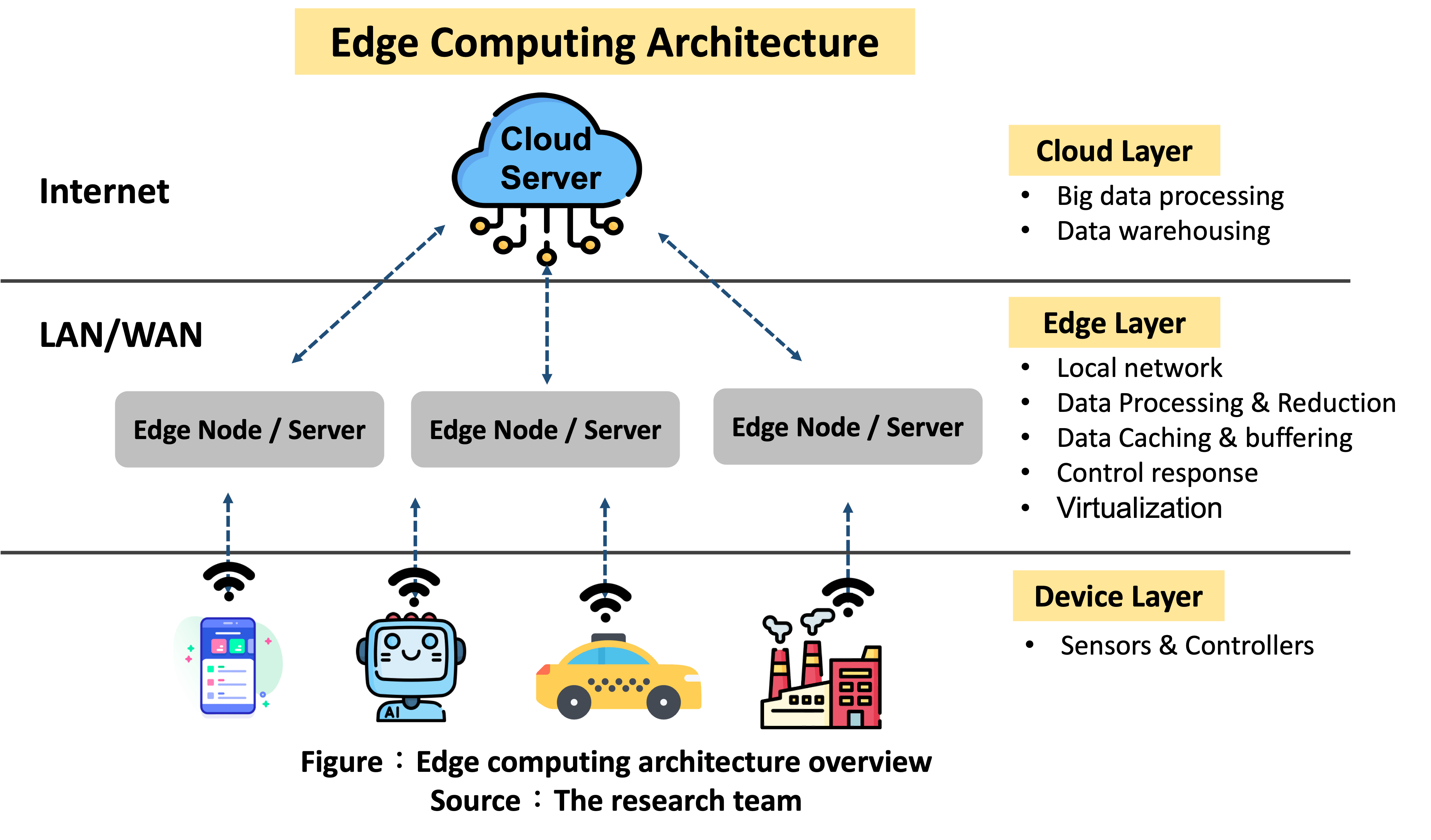
Edge computing is a distributed computing approach where data is processed on or near the devices and locations where it is generated, instead of being sent back to a distant centralized cloud or data center.
[st2acc]
[dsofz3]
[9msmi4]
[8xjef7]
For innovation and startup work, edge computing applies whenever latency, bandwidth, reliability, or data-sovereignty constraints make “send everything to the cloud” a bad default and value is created by processing data closer to users, machines, or physical environments.
[st2acc]
[p3peq9]
[dsofz3]
[9msmi4]
It does not apply to generic SaaS or web apps that can tolerate round-trips to a hyperscale cloud, nor to simple on-prem servers that are not integrated into a distributed edge/cloud architecture.
[p3peq9]
[dsofz3]
[9msmi4]
An innovation consultant cares because edge architectures unlock new product categories (e.g., autonomous systems, real-time analytics, AR/VR, industrial IoT), shift cost structures, and often change partnership and go‑to‑market models around hardware, telecom, and cloud platforms.
[p3peq9]
[dsofz3]
[9msmi4]
Disambiguation
Primary sense — the innovation-consulting sense
Tight definition:In innovation contexts, edge computing is a distributed IT architecture in which compute, storage, and analytics are placed close to where data is produced (devices, sensors, local gateways, 5G sites) to reduce latency, cut bandwidth costs, and enable real-time or resilient applications.
[st2acc]
[p3peq9]
[dsofz3]
[9msmi4]
[s42hff]
[8xjef7]
[mn8jf5]
[22yszb]
- Edge computing involves processing data “closer to the source of data generation, such as sensors, devices, or local gateways, rather than relying entirely on centralized cloud servers.” [st2acc] It is typically implemented through edge devices and local servers that perform computation at or near the network edge. [dsofz3] [9msmi4] [s42hff] [mn8jf5]
- It is distinct from cloud computing, which “focuses on grouping services in large datacenters” with access dependent on wide-area connectivity, whereas edge “enables data to be processed locally, as close as possible to the source,” reducing latency and improving reliability. [p3peq9] [dsofz3] [9msmi4] [8xjef7]
- It is also distinct from fog computing: while both move processing closer to devices, edge nodes are located “directly on or very near to the devices that are generating data,” whereas fog nodes sit between devices and the centralized cloud; edge typically delivers the fastest response times for real-time processing. [s42hff]
Other senses
- Also used in networking and telecom standards (e.g., “multi-access edge computing”) as a formalized architecture for deploying compute at the edge of mobile and fixed networks; for innovation purposes this is usually just a more specific, operator-centric variant of the primary sense. [dsofz3] [s42hff]
- Also used colloquially in marketing to mean anything “modern” or “at the edge of technology”; this usage is vague and not analytically useful in innovation work (better terms: modern infrastructure, low-latency architecture).
Etymology and Origin
- The phrase “edge computing” builds on the networking term “network edge” (the boundary between local networks/devices and the wider internet) and was adapted to describe computation “that brings computation and data storage closer to the sources of data.” [dsofz3]
- In a 2014 IEEE Design Automation Conference keynote and a 2015 MIT Microsystems Technology Laboratories seminar, Karim Arabi characterized edge computing as computing “outside the cloud, at the network's edge,” particularly for applications needing immediate processing, helping crystallize the term in technical circles. [dsofz3]
- The “State of the Edge” community and related reports later popularized a more standardized definition in the late 2010s, focusing on servers located close to end-users and codifying the concept for industry and investors. [dsofz3]
Adjacent Vocabulary
- Synonyms
- On-device Inference in AI / on-device AI – a specific case of edge computing where ML models run directly on devices (phones, cameras, robots) rather than in the cloud. [dsofz3] [22yszb]
- Antonyms
- Thick-client mainframe model (in historical contrast) – almost all compute centralized with minimal local processing, the opposite of pushing intelligence to the edge. [dsofz3]
- Adjacent terms
- Fog Computing – complementary architecture with intermediate nodes between devices and cloud. [s42hff]
- Cloud-Native Computing – often paired with edge in “hybrid edge-cloud” strategies. [p3peq9] [dsofz3] [9msmi4] [8xjef7]
- Real time analytics – core value proposition unlocked by processing data at the edge. [p3peq9] [9msmi4] [22yszb]
- Autonomous Systems – robots, vehicles, and industrial equipment that rely on low-latency, local decision-making enabled by edge compute. [p3peq9] [9msmi4] [22yszb]
Usage in Practice
- TDF, a European infrastructure operator, frames the value proposition in business terms: “edge computing refers to an IT architecture that brings data processing closer to its source, rather than centralizing the process in remote datacenters,” enabling “real-time processing of large volumes of data” and “new uses” like autonomous vehicles and Industry 4.0. [p3peq9]
- Cisco, writing for enterprise buyers, defines it as “a distributed IT architecture that processes data close to its source using local compute, storage, networking, and security technologies,” especially valuable for “applications that require instant decision making, such as industrial automation, smart retail, and telemedicine.” [9msmi4]
- Akamai describes the benefit for modern apps: by “bringing insights and decision-making capabilities closer to devices and end users, rather than relying on centralized clouds,” edge computing reduces latency, optimizes bandwidth, and “allows data to be processed locally, and only sends essential information to the centralized cloud.” [s42hff]
- Mirantis, in a guide aimed at architects, says edge computing “brings computation closer to the source, reducing latency and cutting bandwidth costs,” with core components including edge devices, edge nodes, and often container-based orchestration at the edge. [mn8jf5]
- A software engineering perspective from Arnia emphasizes the product impact: “Edge computing enables real-time software by reducing latency and improving reliability for modern, distributed applications,” particularly where instant responses are critical. [22yszb]
Common Misuses
- Marketing any low-latency cloud region as “edge.”Misuse: Cloud providers or vendors branding a nearby regional data center as “edge” despite it being functionally a traditional cloud region, still far from devices in network terms.Better term: Regional cloud, availability zone, or nearby cloud region. [p3peq9] [dsofz3] [9msmi4] [8xjef7]
- Conflating fog and edge computing.Misuse: Treating fog computing and edge computing as interchangeable, ignoring that fog nodes sit between devices and the cloud, whereas edge nodes are “on or very near” devices.Better term: Use fog computing when describing intermediate aggregation layers, and edge computing when describing computation colocated with or immediately adjacent to devices. [s42hff]
