Write a comprehensive one-page article about "TPUs".
Model: sonar-pro
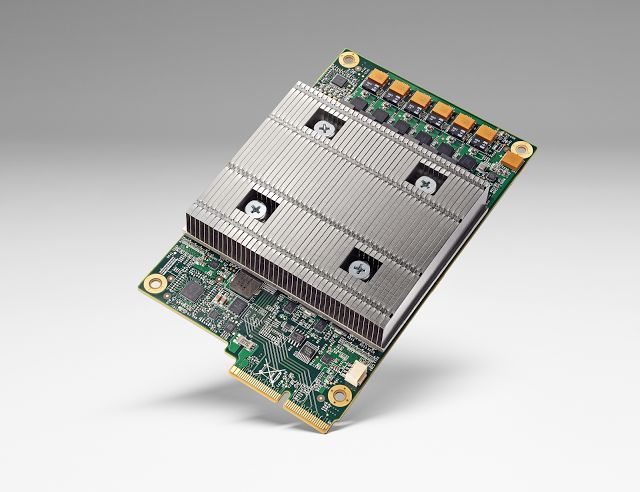
A Tensor Processing Unit (TPU) is a specialized application-specific integrated circuit (ASIC) developed by Google to accelerate machine learning tasks, particularly those involving neural networks.
[fyb3cb]
[w15ozc]
[mktaq8]
TPUs represent a significant leap in AI hardware, designed to make large-scale deep learning and data analytics faster and more efficient than what is possible with traditional CPUs or even GPUs.
[w15ozc]
[3ab4ps]
Their widespread adoption is influencing everything from the efficiency of commercial AI systems to advancements in cloud computing.
https://youtu.be/HgI5RTvJza4?si=sI6A3vEVxg-5axQI
Understanding Tensor Processing Units
At its core, a TPU is engineered to perform the kinds of mathematical operations that underpin modern Machine Learning, such as massive matrix multiplications and vector calculations.
[w15ozc]
[pq630a]
Unlike CPUs, which are optimized for general-purpose computing, or GPUs, which accelerate a broad spectrum of tasks, TPUs are purpose-built to execute machine learning workloads—especially those developed using Google’s TensorFlow framework.
[fyb3cb]
[pq630a]
The architecture of a TPU typically includes thousands of arithmetic logic units (ALUs) capable of multiply-and-accumulate (MAC) operations in parallel, allowing them to process enormous datasets with remarkable speed and energy efficiency.
[w15ozc]
[3ab4ps]
[mktaq8]
In practice, TPUs are pivotal for training and running deep learning models for tasks like image classification, language modeling, speech recognition, and real-time translation.
[fyb3cb]
[3ab4ps]
For example, TPUs have enabled Google Photos to automatically tag millions of images, Google Translate to deliver near-instant translations, and advancements in voice assistants by drastically reducing the time required to process complex speech models.
[w15ozc]
[3ab4ps]
The benefits of TPUs include:
High computational throughput: TPUs can perform tens of thousands of operations simultaneously, resulting in significantly reduced training times for large AI models.
[w15ozc]
[3ab4ps]
Energy efficiency: Their design allows for more operations per watt compared to CPUs or GPUs, which is crucial when running large AI models at scale.
[w15ozc]
Scalability in the cloud: With services like Google Cloud TPU, organizations can access enormous processing power without needing to invest in hardware, democratizing AI development.
[89rgki]
However, there are considerations when deploying TPUs:
They are highly specialized, excelling in matrix-heavy workloads but less suitable for non-ML or highly varied computational tasks.
[w15ozc]
[q1t49h]
Integrating TPUs may require software built or modified for the TensorFlow framework, which can be a barrier for some developers.
[fyb3cb]
Access to physical TPUs is largely dependent on Google’s cloud infrastructure, though smaller versions are now available commercially.
[mktaq8]
[89rgki]
Current State and Market Trends
As of 2025, Google remains the primary developer and vendor for TPUs, both through its Google Cloud Platform and its advanced supercomputing clusters for internal products.
[mktaq8]
[89rgki]
Multiple generations of TPUs have been released, each improving computational density, memory bandwidth, and integration with machine learning workflows. Cloud TPUs have broadened access for researchers and enterprises globally, making large-scale AI projects more feasible.
[89rgki]
Other companies, such as Amazon and Microsoft, have introduced alternative AI accelerators but TPUs remain synonymous with large-scale TensorFlow operations.
Recent developments focus on pushing the boundaries of AI model size and complexity, enabling rapid progress in fields like generative AI, recommendation systems, and computer vision. Market trends indicate growing demand for custom ML accelerators, with TPUs setting the benchmark for performance in cloud-based AI infrastructure.
[w15ozc]
[89rgki]
Future Outlook
The future of TPUs is closely tied to the evolution of AI. As machine learning models grow in scale and sophistication, TPUs are poised to become even more integral to AI infrastructure. Advancements in hardware and software integration will likely make TPUs more accessible, efficient, and adaptable, fueling faster progress in not just AI research but real-world applications across healthcare, robotics, finance, and beyond.
[w15ozc]
In summary, Tensor Processing Units have revolutionized the field of machine learning by offering unprecedented speed and efficiency for Neural Network tasks. Their ongoing development promises to further democratize AI and drive innovations in technology and society.