Write a comprehensive one-page article about "Machine Learning".
Model: sonar-pro
Machine Learning: Transforming Data Into Intelligence
Machine Learning is a branch of Artificial Intelligence (AI) that enables computer systems to learn from experience and data, improving their performance on tasks without being explicitly programmed.
[lzbz95]
[gw13gf]
This capability is significant because it allows software to adapt to new information and automate increasingly complex decisions, fundamentally reshaping industries and daily life.
[k8jv8i]
[0lo3ny]
Machine Learning works by using algorithms to detect patterns within large datasets, drawing insights and making predictions based on the information it processes.
[lzbz95]
[88b021]
Unlike traditional programming, where every rule is manually coded, machine learning systems are trained on example data, learning to perform tasks such as recognizing images, understanding natural language, or predicting future trends. For example, recommendation engines on streaming platforms suggest films based on viewing history, while email clients use machine learning to filter spam by analyzing message patterns.
[gw13gf]
In practical terms, machine learning permeates diverse sectors:
Healthcare: ML analyzes medical records, assists in diagnostic imaging, and supports personalized treatment by learning from patient data, improving efficiency and accuracy in care delivery.
[gw13gf]
[0lo3ny]
[qd75rx]
Finance: Fraud detection systems leverage machine learning to spot unusual transactions, and algorithmic trading platforms optimize investment strategies using real-time market data.
Retail: Recommendation systems provide personalized product suggestions, optimizing sales and customer satisfaction.
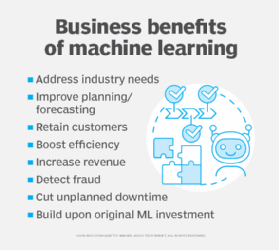
Manufacturing: Predictive maintenance systems anticipate equipment failures, reducing downtime and costs.
[089zyt]
The benefits of machine learning are substantial:
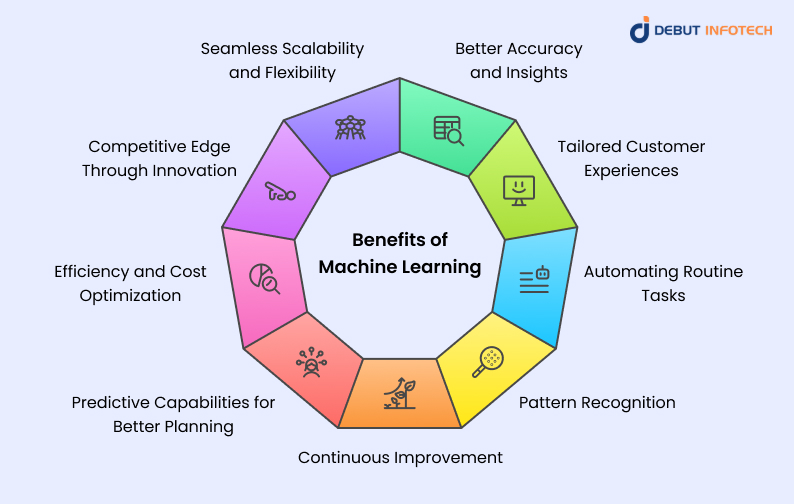
Automation and Scalability: ML models automate repetitive, labor-intensive tasks, like data entry and inventory checks, freeing humans to focus on more complex challenges.
[gw13gf]
[k8jv8i]
[88b021]
Enhanced Decision-Making: By identifying patterns and trends, machine learning enables data-driven decisions, leading to greater accuracy and efficiency across business operations.
[ukxbw8]
[88b021]
Continuous Improvement: ML systems refine their predictions as more data becomes available, adapting to changing environments for sustained relevance.
[k8jv8i]
However, implementing machine learning presents challenges. Models require vast amounts of high-quality data to train effectively, and the risk of bias in training data can produce unfair or inaccurate results.
[k8jv8i]
Interpreting ML models—often described as “black boxes”—may be difficult, raising ethical and regulatory concerns, especially in sensitive fields like healthcare and finance. Additionally, the complexity and cost of integrating ML into legacy systems can slow adoption for some organizations.
[k8jv8i]
[88b021]
Machine Learning Today: Adoption, Key Players, and Trends
Currently, machine learning is achieving rapid adoption across sectors. According to recent industry surveys, over half of organizations have incorporated AI or ML into at least one business function, and the global machine learning market is expected to surpass $100 billion in annual revenue soon.
[ukxbw8]
[k8jv8i]
Major technology providers such as Google, IBM, Amazon, and Microsoft drive innovation through robust ML platforms and cloud-based tools.
[lzbz95]
Recent advances in large-scale language models (such as GPT, BERT, and Claude) are transforming how machines understand and generate human language, leading to unprecedented capabilities in content creation, conversational AI, and translation.
[k8jv8i]
Emerging concepts like “transfer learning”—where models trained in one domain are adapted to new tasks with minimal additional data—are making machine learning more accessible and versatile, enabling innovation in areas with previously limited labeled data.
[k8jv8i]
Looking Forward: The Future of Machine Learning
Future developments in machine learning are expected to bring increasingly sophisticated automation, more transparent and ethical AI systems, and wider adoption in domains such as healthcare, climate science, and creative industries.
[qd75rx]
As computational power grows and research advances, machine learning will become foundational in solving global challenges—optimizing resource use, personalizing services, and enabling scientific discoveries—while simultaneously raising important questions around data privacy, ethics, and the evolving relationship between humans and intelligent systems.
[k8jv8i]
In summary, machine learning is a driving force behind the technological transformation of the modern world, delivering remarkable gains in efficiency and insight. As the field matures, its impact will only deepen, opening new possibilities for innovation across society.