


Situational Awareness
(2025-11-26T14:29.231Z)
Perplexity Query
(2025-11-26T14:29
.231Z)
Question:
Write a comprehensive one-page article about "Situational Awareness in AI and for AI Models".
Model: sonar-pro
Situational Awareness in AI and for AI Models
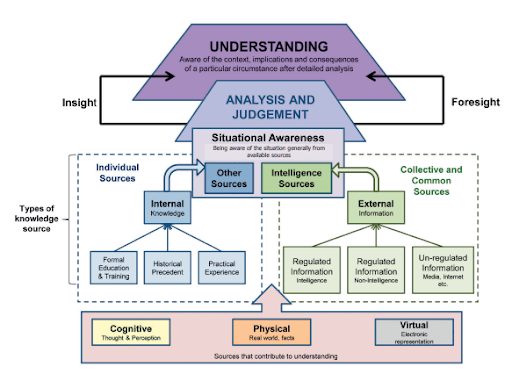
Situational awareness refers to the ability to perceive, comprehend, and project the state of an environment, making informed decisions based on real-time and predictive insights. In the context of artificial intelligence (AI), situational awareness is both a capability that AI systems can possess and a critical skill for humans managing or interacting with AI. As AI becomes more integrated into complex systems—from cybersecurity to autonomous vehicles—understanding and leveraging situational awareness is essential for safety, efficiency, and strategic advantage.

Main Content
Situational awareness in AI involves three core stages: perception, comprehension, and projection. Perception is the collection of data from various sources—sensors, logs, user inputs, or external feeds. Comprehension involves interpreting this data to understand relationships, identify threats or opportunities, and assess the current state. Projection uses this understanding to anticipate future events, such as predicting a cyberattack or forecasting market trends.
For AI models, situational awareness means being able to adapt to changing environments and contexts. For example, an AI-powered cybersecurity system can monitor network traffic, detect anomalies, and correlate events to identify potential threats. It can then project the likely next steps of an attacker and recommend defensive actions. In healthcare, AI models can combine real-time patient data with threat intelligence to predict and prevent security breaches in medical devices.
Practical applications are widespread. In Autonomous Vehicles, situational awareness enables the AI to perceive its surroundings, understand traffic patterns, and predict the behavior of other vehicles and pedestrians. In marketing, AI-driven situational awareness unifies data from social media, news, and search trends to anticipate shifts in consumer behavior and optimize campaigns in real time.
The benefits of situational awareness in AI include improved decision-making, enhanced security, and the ability to seize emerging opportunities. However, challenges remain. Ensuring data quality, managing information overload, and addressing ethical considerations are critical. AI models must be transparent and accountable, especially when making high-stakes decisions.

Current State and Trends
Today, situational awareness in AI is being adopted across industries. Key players include cybersecurity firms like SentinelOne, which leverage AI for real-time threat detection and response. Marketing agencies use AI to unify data streams and provide actionable insights. Technologies such as machine learning, natural language processing, and predictive analytics are at the forefront of this trend.
Recent developments include the integration of AI with advanced simulation models, which continually update predictions with real-time data. For instance, in disaster response, AI systems can track the progress of a hurricane and project its path, helping authorities make informed decisions. The market for AI-driven situational awareness solutions is growing rapidly, driven by the need for real-time insights and proactive risk management.
Future Outlook
Looking ahead, situational awareness in AI will become even more sophisticated. Advances in Artificial General Intelligence (AGI) will enable machines to think and reason at levels comparable to humans, further enhancing their ability to perceive, comprehend, and project complex situations. The integration of AI with the Internet of Things (IoT) and edge computing will provide richer data streams and faster response times.
The potential impact is vast. From smarter cities to personalized healthcare, situational awareness in AI will transform how we interact with technology and make decisions. As AI continues to evolve, the ability to maintain situational awareness will be a key differentiator for organizations and individuals alike.
Conclusion
Situational awareness in AI and for AI models is a critical capability that enables better decision-making, enhanced security, and strategic advantage. As technology advances, the importance of situational awareness will only grow, shaping the future of AI and its applications across industries.
Citations
[1]: 2025, Nov 23. What is Situational Awareness? - SentinelOne. Published: 2025-10-15 | Updated: 2025-11-23
[2]: 2025, Nov 15. The Importance Of AI In Creating Situational Awareness - edgeTI. Published: 2023-07-24 | Updated: 2025-11-15
[3]: 2025, Oct 30. Situational Awareness - AI Alignment Forum. Published: 2025-06-06 | Updated: 2025-10-30
[4]: 2025, Nov 22. Situational awareness is the key to relevance in the AI era - DEPT®. Published: 2025-05-06 | Updated: 2025-11-22
[6va2gm] 2024, Jun. Aschenbrenner, Leopold. "SITUATIONAL AWARENESS: The Decade Ahead," Accessed at https://situational-awareness.ai/
[7]: 2025, Mar 22. A Situation Awareness Perspective on Human-AI Interaction. Published: 2023-10-01 | Updated: 2025-03-22