
Private Markets


ℹ️(2025-11-26T12:49.752Z)
Perplexity Query
(2025-11-26T12:49
.752Z)
Question:
Write a comprehensive one-page article about "Private Markets".
Model: sonar-pro

Private Markets: Unlocking Opportunity Beyond the Public Exchange
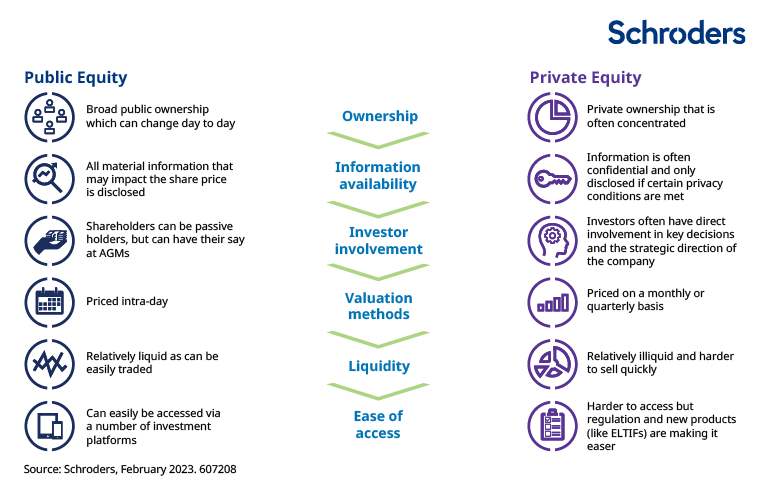
Private markets refer to investments in assets—such as private companies, real estate, infrastructure, or private debt—that are not traded on public exchanges. [5urtjy] [c9j4yi] [3e14nn] As an increasingly significant part of global finance, private markets matter because they provide both investors and companies with access to opportunities, capital, and diversification beyond what’s found in the public market. [5urtjy] [im80z0]

Understanding Private Markets

At their core, private markets encompass investments made directly into privately held businesses or assets, bypassing the scrutiny and regulatory requirements of public exchanges. [5urtjy] [c9j4yi] [3e14nn] This includes two major categories: private equity (acquiring stakes in private businesses to drive value over time) and private debt (providing loans or credit to companies outside traditional bank lending channels). [3e14nn] [i3h69i] [yutxm2]
Examples include:
  • Private Equity: A buyout fund acquires a fast-growing technology firm, injects capital and management expertise, and later sells the business for a profit, either back to the market or to another investor. [yutxm2]
  • Venture Capital: Early-stage investors provide funding and guidance to innovative startups—like how venture capitalists fueled companies such as Uber and Airbnb in their infancy. [yutxm2]
  • Private Debt: Non-bank lenders offer loans to mid-sized manufacturing firms that may not qualify for traditional credit, often at higher interest rates but higher risk. [i3h69i]
  • Real Assets: Investments in infrastructure projects (like airports or toll roads) or large-scale real estate developments offer long-term value and potential inflation protection. [5urtjy] [pna75v]

Benefits and Applications

  • Higher return potential: Private markets often aim for better returns than public markets, in part because investors take on additional risk and provide capital where it is less readily available. [5urtjy] [c9j4yi] [i3h69i]
  • Portfolio diversification: Private assets behave differently from public stocks and bonds, often cushioning portfolios during market turbulence. [8tmtig]
  • Access to unique opportunities: Investors can participate in early-stage growth stories or infrastructure projects that are unavailable in public markets.
  • Capital for business growth: Private markets supply critical funding and expertise that helps companies grow, innovate, or restructure when public listing is impractical. [5urtjy] [im80z0]

Challenges and Considerations

  • Limited liquidity: Private market investments can seldom be sold quickly, often requiring commitments of 5–10 years. [c9j4yi] [yutxm2]
  • Opaque valuations: Unlike public market prices, private asset values are not updated daily and rely on periodic appraisals.
  • Restricted access: Traditionally, only institutional or very wealthy investors have participated, due to regulatory hurdles, high minimum investments, and complex fund structures. [i3h69i]
Today, private markets are expanding rapidly worldwide, fueled by institutional investors such as pension funds, endowments, and insurance companies seeking alternatives to low-yielding public assets. [5urtjy] [i3h69i] Industry titans—including Blackstone, KKR, and Carlyle—manage hundreds of billions in private market capital. [yutxm2]
Recent trends include:
  • Democratization: Platforms and regulatory shifts are slowly opening private market investing to a broader audience, including high-net-worth individuals and, increasingly, retail investors. [i3h69i]
  • Innovation in asset classes: Growth in private credit, infrastructure equity, and real assets—often linked to sustainability or digital transformation—is diversifying the private market ecosystem. [8tmtig]

Future Outlook

Looking forward, private markets are expected to keep expanding, with continued innovation increasing investor participation and deal-making. [5urtjy] [8tmtig] Advances in financial technology, data transparency, and fund structures may further democratize access, while global economic shifts—such as the rise of sustainable infrastructure—could reshape investment opportunities.

In Conclusion

Private markets represent a dynamic engine for investment and business growth, offering compelling benefits—and unique risks—for investors and companies alike. As access broadens and innovation accelerates, private markets are poised to play an ever-greater role in shaping the future of finance.

Citations

[5urtjy] 2025, Nov 25. Private Markets – A Growing, Alternative Asset Class. Published: 2024-12-17 | Updated: 2025-11-25

[im80z0] 2025, Nov 17. What are the private markets - A Guide to .... Published: 2024-01-05 | Updated: 2025-11-17

[c9j4yi] 2025, Nov 26. Private Markets Investing Explained. Published: 2025-07-25 | Updated: 2025-11-26

[3e14nn] 2025, Nov 23. PRIVATE MARKETS. Updated: 2025-11-23

[i3h69i] 2025, Nov 25. What Are Private Market Investments?. Published: 2025-10-13 | Updated: 2025-11-25

[yutxm2] 2025, Nov 25. Alternative Investing | Private Markets Explained - BlackRock. Published: 2024-11-06 | Updated: 2025-11-25

[pna75v] 2025, Nov 15. Private Markets. Published: 2025-07-03 | Updated: 2025-11-15

[8]: 2025, Nov 24. Investing in private markets. Published: 2025-05-16 | Updated: 2025-11-24

[8tmtig] 2025, Nov 16. Investing in private markets. Published: 2025-10-09 | Updated: 2025-11-16