Write a comprehensive one-page article about "Neural Networks".
Model: sonar-pro
Enabling computers to learn from data.
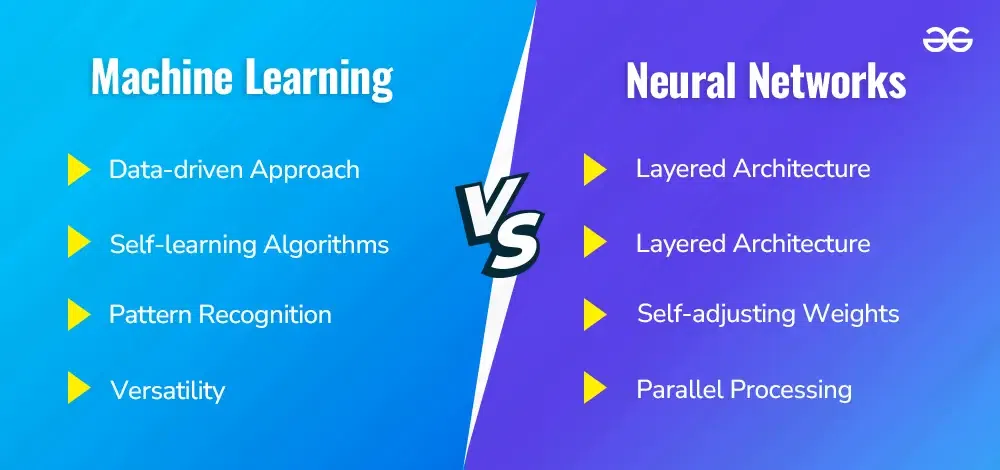
Neural networks are a class of artificial intelligence systems designed to mimic the structure and function of the human brain, enabling computers to learn from data, recognize patterns, and make decisions without explicit programming.
[b0p7j5]
[tx7isg]
[2hkh8f]
Their architecture is foundational for modern machine learning and AI, powering applications from image recognition to language translation.
Main Content
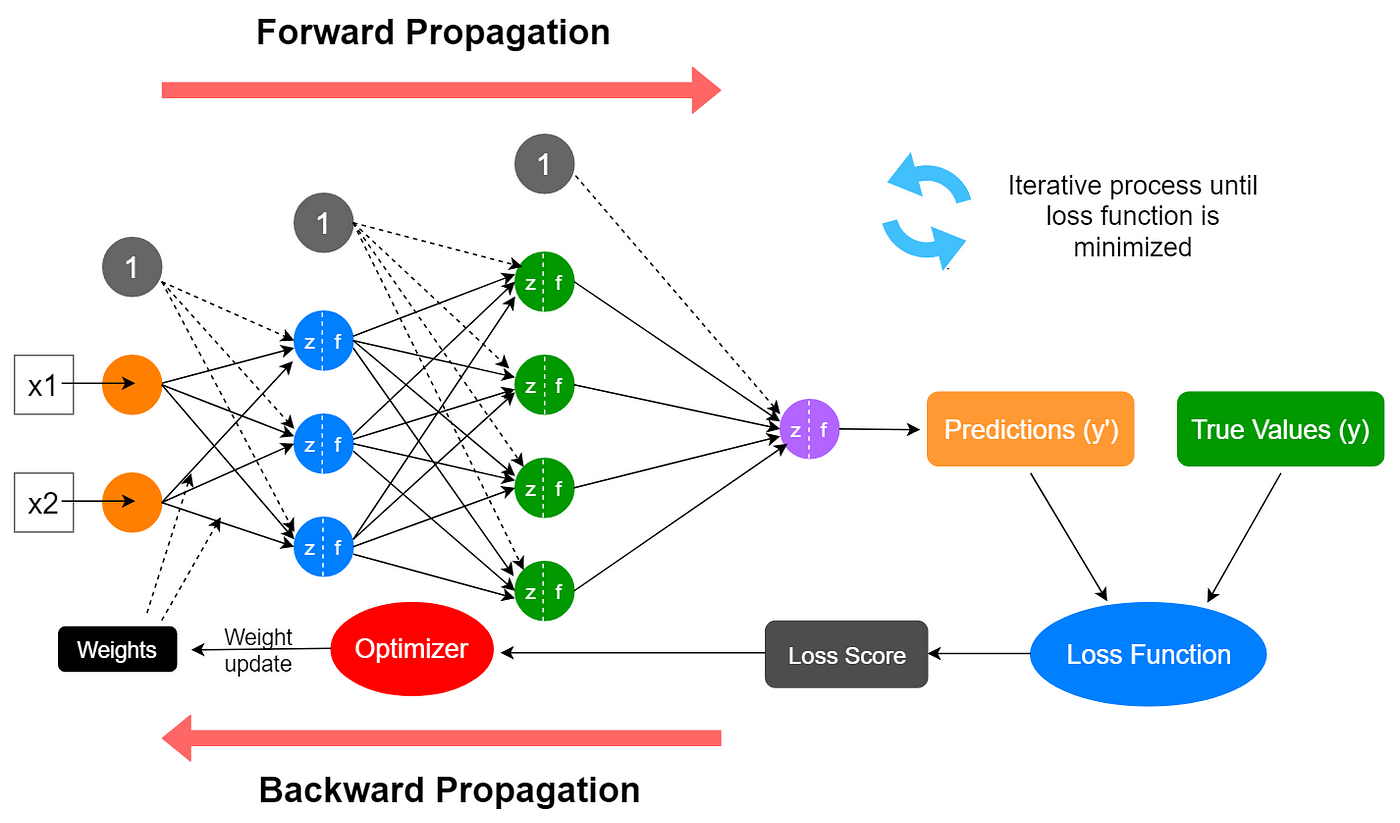
At their core, neural networks consist of interconnected layers of artificial neurons, or nodes, organized into three main parts: the input layer, one or more hidden layers, and an output layer.
[b0p7j5]
[oxm45i]
Each neuron processes incoming data, applies an activation function, and passes results to the next layer.
[oxm45i]
The connections between neurons are weighted, and the network learns by adjusting these weights based on experience, typically through exposure to vast amounts of training data.
[cuhwh4]
A neural network “learns” by analyzing examples and iteratively updating its internal parameters to minimize errors—much like how humans refine skills with practice. For example, in facial recognition, a network is shown thousands of labeled images and gradually learns to associate patterns in the pixel data with specific identities or emotions.
[tx7isg]
[cuhwh4]
Convolutional Neural Networks (CNNs) excel at image processing, powering systems behind smartphone face unlock features and medical imaging diagnostics.
[oxm45i]
Recurrent Neural Networks (RNNs), including LSTM variants, handle time-series and sequential data, as seen in language translation and speech recognition.
[oxm45i]
Neural networks are transformative because they:
Identify complex, nonlinear patterns in data that traditional statistical methods often miss.
[2hkh8f]
[t7xk2h]
Drive automation in areas like self-driving cars, fraud detection, and predictive maintenance.
[oxm45i]
[ukb3t9]
Enable adaptive learning, improving accuracy with increased exposure to new data.
[tx7isg]
[oxm45i]
Support natural language processing, recommendation systems, and robotics.
[2hkh8f]
[oxm45i]
However, their complexity creates challenges:
They often require large datasets and substantial computational resources for training.
[tx7isg]
[ukb3t9]
Their decision-making process can be difficult to interpret (the "black box" problem).
[b0p7j5]
Overfitting—when a network memorizes training data rather than generalizing—remains a common concern.
[oxm45i]
Current State and Trends
Neural networks are now ubiquitous in both academic research and industry products. Key players such as Google, IBM, Microsoft, and Amazon have heavily invested in neural network-powered platforms, integrating these technologies into cloud services, consumer electronics, and business solutions.
[tx7isg]
[2f3r4m]
Major advances in infrastructure—including GPUs and specialized chips—enable the rapid development and deployment of deep learning models.
Cutting-edge models, such as transformers and ResNet architectures, have achieved breakthroughs in tasks from natural language understanding to image classification.
[ukb3t9]
Recent developments focus on increasing interpretability, reducing training data requirements, and boosting computational efficiency through innovation in network design and optimization algorithms.
[ukb3t9]
[t7xk2h]
Open-source libraries (TensorFlow, PyTorch) and cloud AI services allow even small organizations access to leading-edge neural network capabilities.
Future Outlook
Going forward, neural networks are poised to become ever more central to technology and society. Research is pushing the boundaries with models that learn from fewer examples, use less power, and offer greater transparency. Applications are likely to expand into autonomous systems, personalized healthcare, intelligent infrastructure, and creative fields. As these systems become more robust and interpretable, their societal impact—on industry, daily life, and global problem-solving—could be transformative.
Conclusion
Neural networks are revolutionizing the way computers learn and interact with data, driving rapid progress in artificial intelligence. As research and adoption accelerate, their influence on innovation and daily life will continue to deepen, shaping the future of technology in profound ways.