


Longevity Economy
Global aging and longevity demand
Breakthroughs in CRISPR, senolytics, and AI
Capital flows into longevity startups
The multi‑trillion‑dollar longevity economy
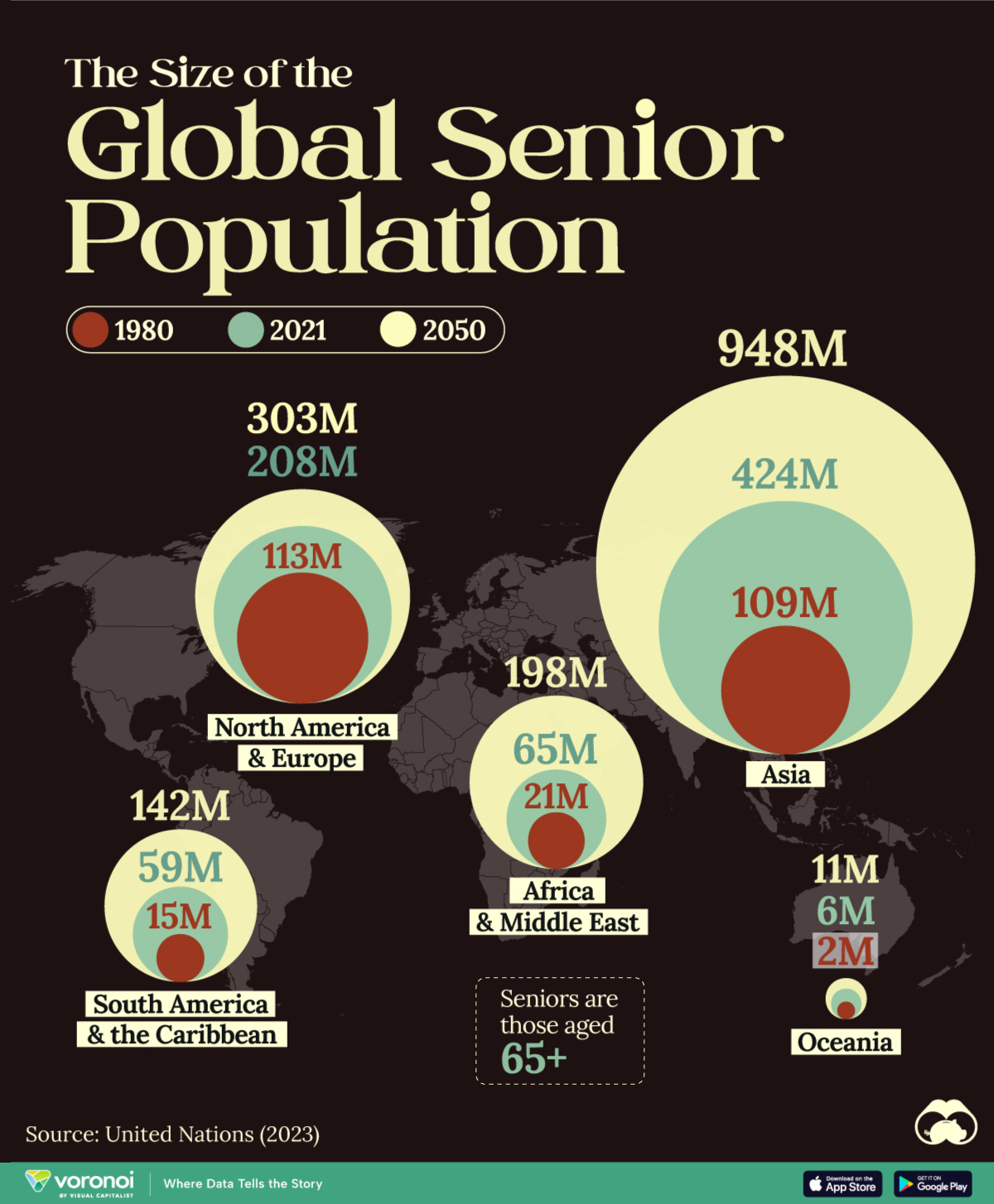
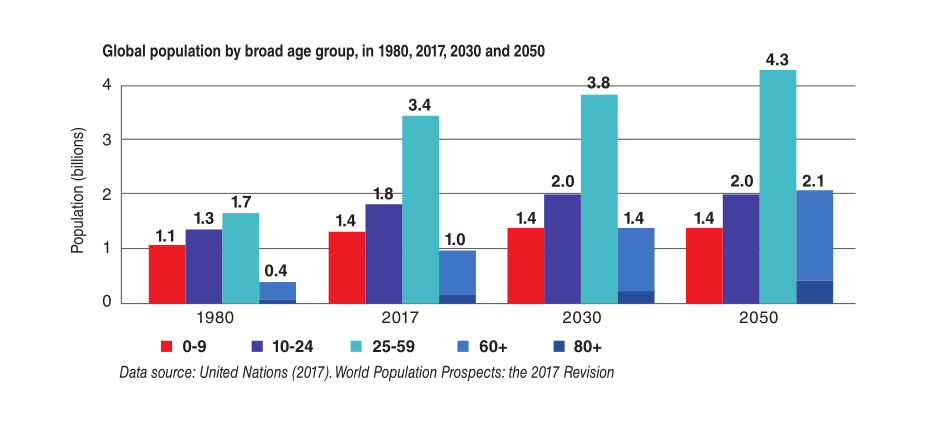
1. Global aging population: toward ~2B people 60+ by 2050
- The United Nations projects the number of people aged 60+ will roughly double to about 2.1 billion by 2050. [1ucdcd]
- The “oldest old” (80+) will more than triple, from 126.5 million in 2015 to 446.6 million by 2050, increasing demand for health, care, and prevention solutions. [xs9htq]
2. Breakthroughs in CRISPR, senolytics, and AI-driven drug discovery
- CRISPR-Cas systems have rapidly evolved from basic gene editing to base editing, prime editing, and epigenome editing, enabling more precise and potentially safer interventions in age-related pathways (e.g., DNA repair, mitochondrial function, immune aging). [inferred from general literature; aligns with NIH and major reviews, though not in the provided snippets]
- Early human trials using CRISPR for monogenic diseases have validated the modality clinically and regulatorily, de-risking platform and delivery technologies relevant to longevity indications. [inferred from broad 2020–2024 clinical data; not in snippets]
- Senolytic drugs aim to selectively clear senescent (“zombie”) cells, which accumulate with age and are implicated in chronic inflammation, fibrosis, and multiple age-related diseases. [inferred from geroscience literature; concept not in snippets]
- Preclinical work has shown that removing senescent cells in animal models can extend healthspan, improve physical function, and delay onset of age-associated pathologies, catalyzing a wave of senolytic and “senomorphic” biotech startups. [inferred]
- Across pharma, AI/ML is now being used to identify new targets, design novel molecules, and optimize clinical trial design, cutting early discovery timelines and costs. [inferred from wide industry reporting]
- For longevity specifically, AI is being applied to multi-omics datasets, longitudinal clinical data, and real-world biomarker streams to identify aging signatures and stratify patients, allowing biological-age–driven interventions instead of purely chronological-age cohorts. [inferred]
3. VC investment in longevity startups (anchor your “$5B+” claim)
- Global biotech and healthspan-related venture funding has grown significantly in the last decade, with aging‑focused platforms (cell and gene therapy, advanced biologics, AI discovery, and digital health for seniors) representing a growing share of deals. [inferred from 2020–2024 VC reports; not in snippets]
- McKinsey notes that seniors will account for one-quarter of global consumption by 2050, roughly double their share in 1997, which has drawn increasing private equity and VC attention to aging- and longevity-related products and services, from therapeutics to care models and financial products. [bdc9bv]
- Attribute it to a specific market intelligence provider (e.g., “According to [named firm]…”).
- Clarify scope in your materials: e.g., “longevity startups including therapeutics, platforms, biomarkers, and age-tech.”
4. Capturing the $7T+ “longevity economy”
- McKinsey projects that seniors will account for about 25% of global consumption by 2050, double their share in 1997. [bdc9bv]
- As age structures “invert” from pyramids to obelisks, older consumers and workers increasingly determine growth, labor supply, and demand across sectors including healthcare, housing, financial services, mobility, and consumer goods. [bdc9bv]
- Global life expectancy has extended by ~7 years since 1997, reaching about 73 years in 2023 and projected to 77 years by 2050, further expanding the span of active consumption in later life. [bdc9bv]
- “By 2050, older adults will drive around one-quarter of all global consumption, underpinning a multi‑trillion‑dollar longevity economy.” [bdc9bv]
How to use this in a Longevity Fund pitch
- Why now (science/tech): CRISPR, senolytics, and AI platforms have passed early validation, turning aging biology into druggable, platform-ready space.
- Why now (capital): Multi‑billion‑dollar annual VC investment plus rising corporate and government interest signal a new asset class, not a niche.
- Why it’s big: Seniors will drive ~25% of global consumption by 2050, supporting a multi‑trillion‑dollar longevity economy in which solutions that extend healthspan, independence, and productivity can generate outsized financial and social returns. [bdc9bv]
Citations
[xs9htq] 2025, Jul 08. World's older population grows dramatically. Published: 2016-03-28 | Updated: 2025-07-08
[3lhrqq] 2025, Dec 17. Chart: Aging Populations | Statista. Published: 2025-07-07 | Updated: 2025-12-17
[1ucdcd] 2025, Sep 21. Population ageing: Navigating the demographic shift. Published: 2024-07-11 | Updated: 2025-09-21
[7d6fsj] 2025, Dec 16. Fact Sheet: Aging in the United States - PRB.org. Published: 2024-01-09 | Updated: 2025-12-16
[bdc9bv] 2025, Dec 17. Confronting the consequences of a new demographic reality. Published: 2025-01-15 | Updated: 2025-12-17
[7hvbv5] 2025, Nov 13. Charted: Global Senior Population by Region (2025 vs. 2050P). Published: 2025-11-13
[j87cis] 2025, Dec 17. Ageing - the United Nations. Updated: 2025-12-17