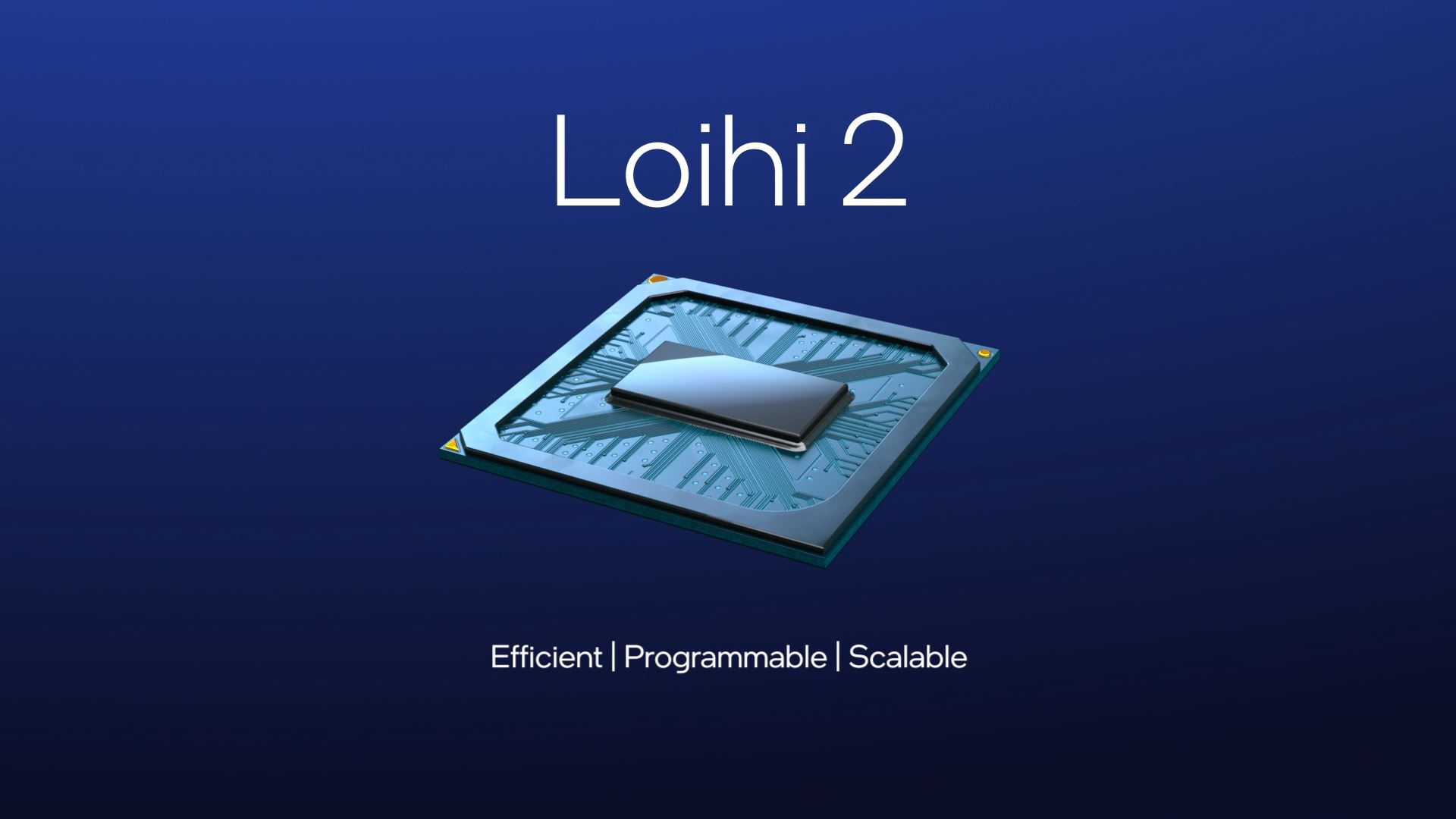
Intel Loihi Chip
Defining and Describing Intel Loihi Chip
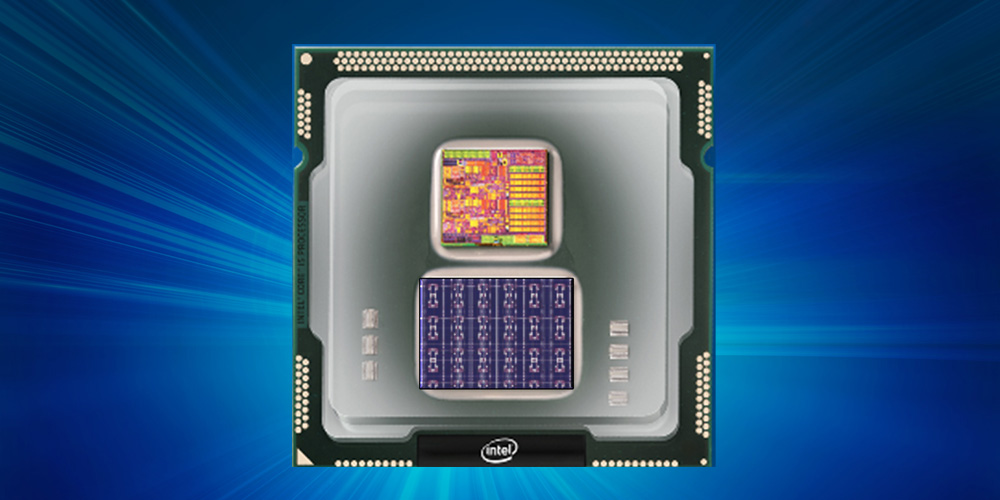
“Intel Loihi chip” refers to Intel’s family of neuromorphic processors designed to run spiking neural networks with radically lower power and latency than conventional CPUs/GPUs, aimed at next‑generation edge AI and adaptive systems.
[p684lj]
[zpp1aa]
[1bus08]
In innovation and startup contexts, the term applies when you are talking about brain‑inspired hardware that executes spiking neural networks (SNNs) in an event‑driven, massively parallel way for energy‑constrained, real‑time applications like robotics, autonomous systems, and continual‑learning AI.
[p684lj]
[zpp1aa]
[1bus08]
It does not refer to generic AI accelerators (e.g., Nvidia GPUs) or standard Intel CPUs, but to a separate research/product line within Intel’s Neuromorphic Computing Lab.
[zpp1aa]
[1bus08]
An innovation consultant cares about Loihi because it changes the feasibility frontier for certain products (battery‑powered, latency‑sensitive, always‑on intelligent devices) and may alter architectural and go‑to‑market choices for startups operating at the edge, in robotics, defense, or ultra‑low‑power AI.
[wuwh3r]
[zpp1aa]
[1bus08]
Disambiguation
Primary sense — the innovation-consulting sense
Intel Loihi chip (neuromorphic processor family) — Intel’s series of digital, asynchronous neuromorphic chips (Loihi, Loihi 2, and the announced Loihi 3) that implement scalable spiking neural networks using an event‑driven architecture for ultra‑low‑power, low‑latency AI.
[p684lj]
[wuwh3r]
[zpp1aa]
[1bus08]
- Loihi 2 integrates up to 128 neuromorphic cores, each hosting thousands of programmable spiking neurons and up to hundreds of thousands of synapses, connected via a 2D on‑chip mesh for routing spike “events.” [p684lj]
- Compared with traditional GPUs, neuromorphic chips like Loihi can use up to 100× less energy on certain tasks because neurons and synapses only consume power when they spike, making them attractive for real‑time robotics, computer vision, optimization, and signal processing. [x4fdm3] [r1z6jw] [1bus08]
Other senses
- Also used informally to refer generically to “Intel’s neuromorphic project” or the broader Loihi neuromorphic systems and development platforms (multi‑chip boards, research clusters, and software tools built around the chips); in innovation contexts, these are usually encompassed under the primary sense. [wuwh3r] [1bus08] [am5d6p]
Etymology and Origin
- The original Loihi chip preceded Loihi 2, which was launched in 2021 as a second‑generation neuromorphic processor “building upon the original Intel Loihi,” supporting ~1 million neurons and 120 million synapses. [zpp1aa]
- A third‑generation chip, Loihi 3, was announced in 2025 by Intel neuromorphic lead Mike Davies and is described as likely the first Intel neuromorphic chip to be commercialised, marking a key transition from lab hardware to market‑facing product. [wuwh3r]
Adjacent Vocabulary
- Synonyms / near‑synonyms
- Antonyms / conceptual opposites
- Adjacent terms (vault links)
Usage in Practice
- HCLTech, writing for enterprise buyers, frames Loihi 2 as a cutting‑edge neuromorphic platform:
![QUOTE]
“Intel Loihi 2: Launched in 2021, this second-generation neuromorphic chip builds upon the original Intel Loihi. It supports 1 million neurons and 120 million synapses and emphasizes learning and adaptation, making it suitable for real-time AI applications.”
[zpp1aa]
- The Intellionaire newsletter, analyzing Intel’s roadmap, highlights commercialization and strategic importance: “The most important thing about Loihi 3 is that it will be the first Intel neuromorphic chip that is commercialised… Loihi 2, which was released in 2021…” [wuwh3r]
- An academic paper on continual learning uses Loihi 2 as a concrete efficiency benchmark: “We present… CLP-SNN… and its implementation on Intel’s Loihi 2 chip… CLP-SNN delivers transformative efficiency gains: 70× faster… and 5,600× more energy efficient… than the best alternative OCL on edge GPU.” [r1z6jw]
- A technical explainer for practitioners emphasizes architecture and benefit: “Loihi 2 is a digital, asynchronous neuromorphic processor that supports scalable spiking neural networks through energy-efficient, event-driven computation… advancing applications in AI, robotics, and bio-realistic simulations.” [p684lj]
- A YouTube technical breakdown aimed at engineers summarizes the advantage: “Loihi’s event-driven architecture uses up to 100 times less energy than traditional GPUs for certain tasks as neurons only consume power when spiking… [and] excels in robotics, computer vision, optimization problems, and real-time signal processing.” [x4fdm3]
Common Misuses
- Using “Loihi chip” as a synonym for any Intel AI hardware.
- Describing Loihi as just “a faster GPU for deep learning.”
- Marketing Loihi‑style neuromorphic systems as “drop‑in replacements” for existing CPU/GPU infrastructure.
- Equating any low‑power edge AI chip with Loihi.