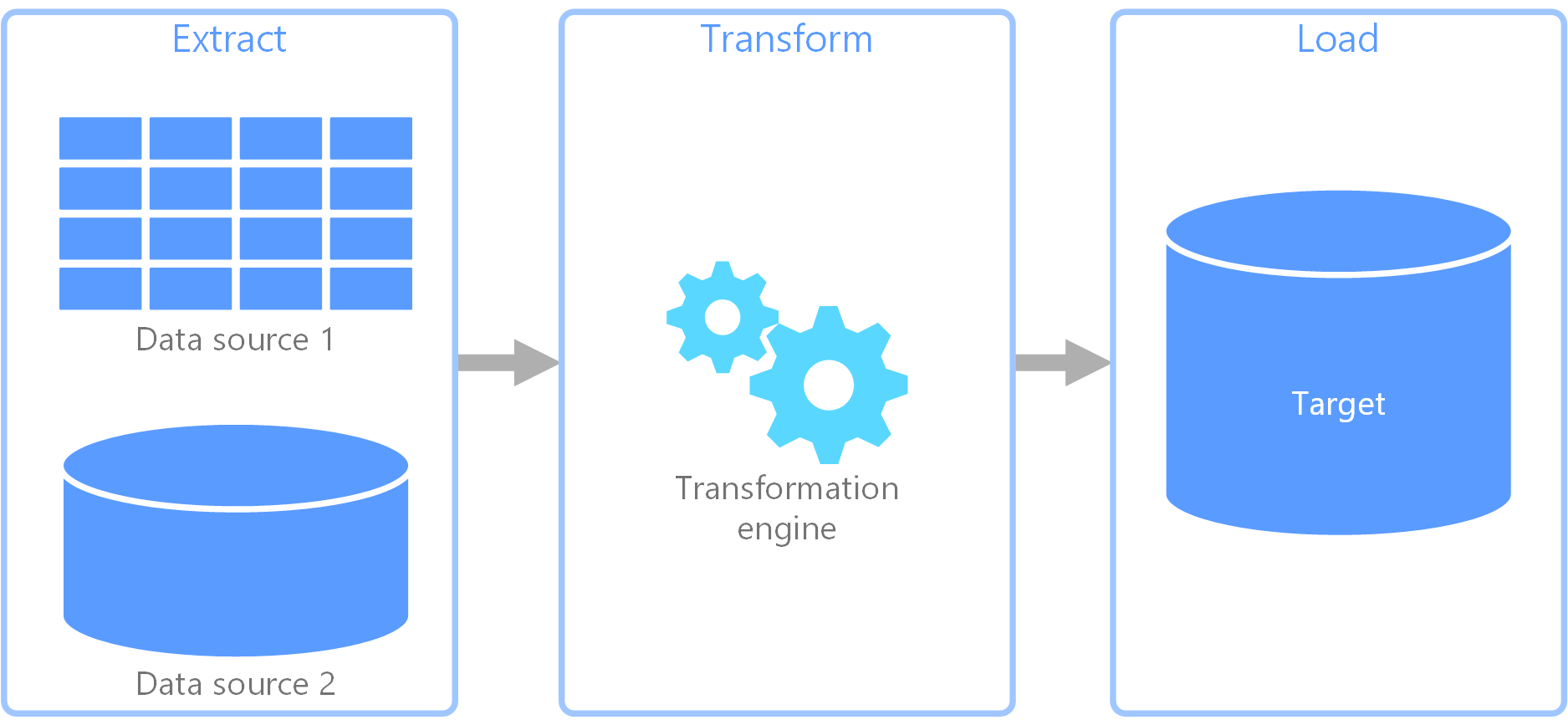
Extract Load Transform
Defining and Describing Extract-Load-Transform

Extract‑Load‑Transform (ELT) is a modern data‑pipeline pattern where startups first pull raw data from many sources, load it directly into a central warehouse or lake, and only then reshape it for analytics, product features, and operations inside that central platform.
[2hudgw]
[6tnqie]
[a8x85b]
[1lxekc]
In innovation contexts, ELT refers specifically to cloud‑native data integration: raw data is extracted from source systems, loaded largely unchanged into a warehouse or lake (e.g., Snowflake, BigQuery, Databricks), and then transformed in‑place using the warehouse’s compute (often with SQL and tools like dbt).
[2hudgw]
[6tnqie]
[a8x85b]
[1lxekc]
This is distinct from older ETL pipelines that transform data before loading and were designed for constrained on‑premise warehouses.
[j4khuz]
[febn5b]
[7dp5yc]
Innovation consultants care about ELT because it shapes data‑team org design, speed of experimentation, the feasibility of near‑real‑time metrics, and how quickly a startup can stand up reliable analytics and data products as it scales.
[6tnqie]
[febn5b]
[dtta44]
ELT also affects vendor choices (ELT tools, warehouses, reverse‑ETL) and the economics of data platforms by leveraging cheap storage plus elastic compute rather than expensive pre‑modeled data stacks.
[2hudgw]
[6tnqie]
[a8x85b]
[dtta44]
Disambiguation
Primary sense — the innovation-consulting sense
Tight definition:In innovation and startup work, Extract‑Load‑Transform (ELT) is a cloud‑first data integration pattern where raw data is extracted from operational systems, loaded into a central data warehouse or lake with minimal preprocessing, and transformed inside that destination for analytics, reporting, and machine learning.
[2hudgw]
[6tnqie]
[a8x85b]
[1lxekc]
[dtta44]
- ELT is not just a rebranding of traditional ETL: in ETL, transformations happen in a separate staging environment before load, often to enforce rigid schemas for fixed reports; ELT deliberately postpones transformation so teams can preserve raw data, support diverse downstream models, and push heavy compute into the warehouse. [j4khuz] [febn5b] [a8x85b] [7dp5yc]
Other senses
1. ELT as “modern approach to data integration” in vendor and tooling ecosystems
Definition:Many data‑platform vendors, analytics consultancies, and tooling companies use ELT as a banner term for a broader ecosystem of connectors, cloud warehouses, SQL transformation frameworks, and orchestration practices that collectively form the “modern data stack.”
[6tnqie]
[febn5b]
[a8x85b]
[1lxekc]
[dtta44]
[7dp5yc]
- Vendors describe ELT as having “revolutionized how businesses handle data in the cloud era,” emphasizing streaming connectors, SaaS data ingestion, and warehouse‑native transformation layers. [dtta44]
- In innovation consulting, this sense matters when helping founders choose between all‑in‑one platforms vs. composable ELT stacks (e.g., separate ingestion, warehouse, transformation, and activation tools) and when designing data organizations capable of owning those layers. [6tnqie] [febn5b] [dtta44] [27ywwx]
2. Legacy ETL (Extract‑Transform‑Load) contrast term
Definition:ETL (Extract‑Transform‑Load) is the older data‑warehousing pattern where data is transformed in a staging area before being loaded into the destination system, often used as a contrasting foil to explain why modern teams adopt ELT instead.
[j4khuz]
[febn5b]
[27ywwx]
[7dp5yc]
Etymology and Origin
- The ETL sequence (“Extract, Transform, Load”) originates from the data warehousing field of the 1970s–1990s, when organizations needed pipelines to move data from OLTP systems into OLAP warehouses; ETL is widely described as a “key process in data warehousing” and a “critical methodology used to prepare data for storage, analysis and reporting.” [j4khuz] [febn5b]
- As cloud data warehouses and lakes emerged, practitioners and vendors began inverting the sequence to emphasize loading raw data first, coining ELT (Extract, Load, Transform) as a distinct pattern where transformations run inside the warehouse; vendors describe this as a “modern approach to data integration” tailored to cloud environments. [2hudgw] [a8x85b] [dtta44]
- Open‑source and startup ecosystems around warehouse‑native transformation, such as dbt Labs, popularized the term in practitioner communities by explicitly branding their work as “Understanding ELT: extract, load, transform,” positioning SQL‑based transformations in the warehouse as the new default. [1lxekc]
Adjacent Vocabulary
- Synonyms
- Antonyms
- Adjacent terms
- Data Warehouses – Central destination where ELT pipelines land raw data for subsequent transformation. [2hudgw] [6tnqie] [febn5b] [a8x85b]
- Data Lakes – Schema‑on‑read storage layer that often receives ELT‑style raw data. [2hudgw] [j4khuz] [a8x85b]
- Data Pipelines – Broader category of systems that move and process data, including ELT, ETL, and streaming approaches. [2hudgw] [j4khuz] [febn5b] [a8x85b]
- Reverse ETL – Pattern that pushes modeled warehouse data back into SaaS tools; often paired with ELT as the “activation” side. [6tnqie] [febn5b] [27ywwx]
- Business intelligence – Reporting and dashboarding layer that consumes transformed data produced by ELT pipelines. [j4khuz] [febn5b] [27ywwx]
Usage in Practice
- Stripe describes the pattern this way: “An ELT (extract, load, transform) process loads raw data into a cloud warehouse first, then transforms it. This gives analysts faster access to data and more flexibility to improve models.” [6tnqie]
- dbt Labs frames ELT as warehouse‑native: “ELT stands for Extract, Load, Transform, a process in which raw data is extracted, loaded into a data warehouse, and then transformed within the warehouse.” [1lxekc]
- Google Cloud positions ELT as the recommended pattern in cloud analytics: “ELT, or extract, load, transform, represents a modern approach to data integration, particularly well‑suited for cloud environments,” where raw data is loaded into BigQuery and then transformed there. [2hudgw]
- DataBricks emphasizes the inversion of legacy practice: “Extract Load Transform (ELT) reverses the traditional ETL order by first loading raw data into a central platform and then transforming it there.” [a8x85b]
- Matillion stresses the strategic shift for businesses: “ELT stands for ‘Extract, Load, Transform’ – a modern approach to data integration that has revolutionized how businesses handle data in the cloud era.” [dtta44]
Common Misuses
- Calling any batch data movement “ELT” even when transformations happen before load.
- Using “ELT” to describe direct SaaS‑to‑dashboard integrations without a central warehouse.
- Labeling highly curated, fixed‑schema nightly jobs as ELT when the warehouse never sees raw data.
- Marketing bespoke, hand‑coded scripts as “an ELT platform” without warehouse‑native transformation capabilities.