


Drone Delivery
Defining and Describing Drone Delivery
- Drone delivery uses autonomous unmanned aerial vehicles to transport goods rapidly and efficiently, revolutionizing logistics by bypassing road congestion and enabling access to remote areas.[1][3]
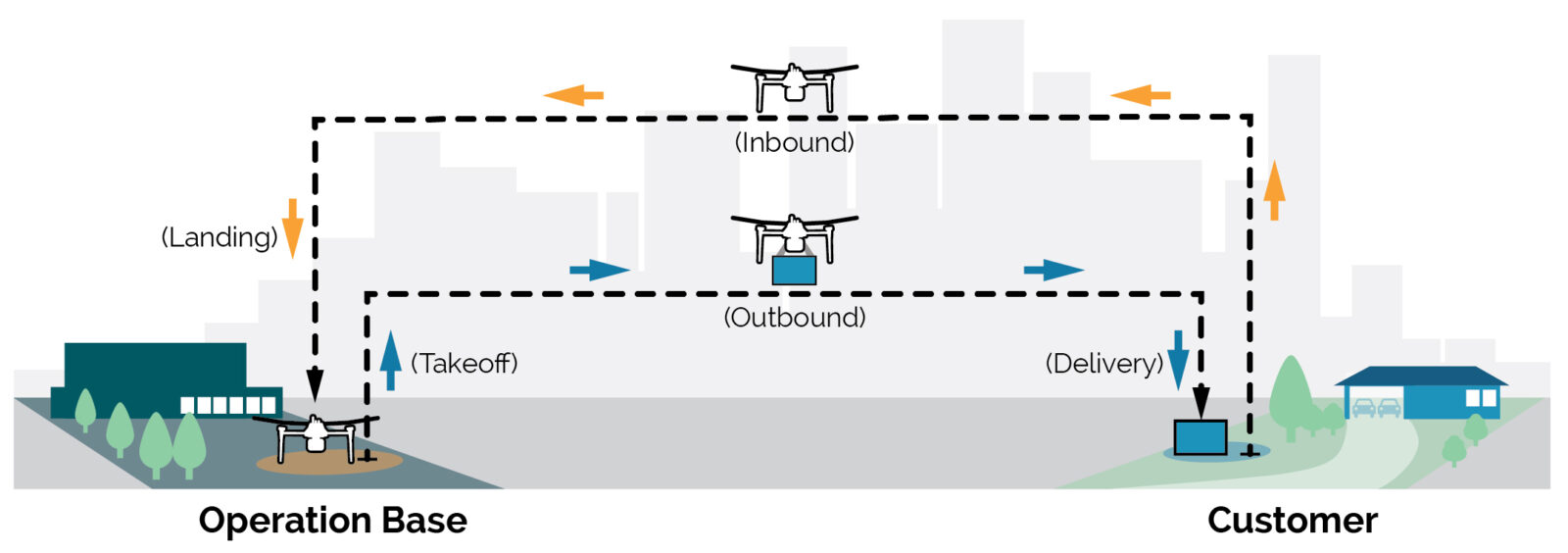
- Drone delivery refers to the deployment of drones for commercial package transport, often in beyond-visual-line-of-sight (BVLOS) operations, applying to sectors like healthcare, retail, and e-commerce where speed and cost-efficiency matter.[1][3]
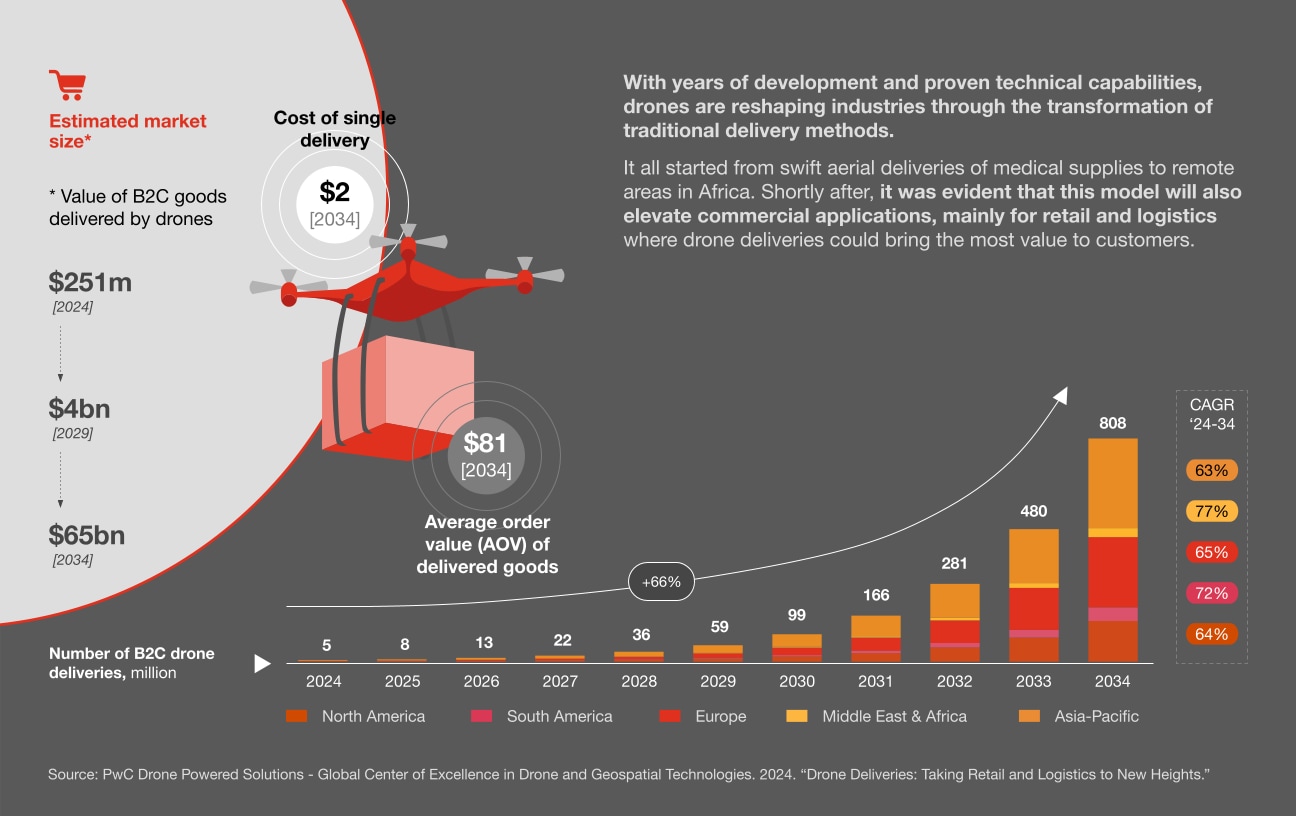
- It matters because the market is exploding, from $12.16 billion in 2025 to a projected $15.62 billion in 2026 at 28.4% CAGR, driven by e-commerce growth and aerial logistics experimentation.[3]
- Key challenges include FAA regulations like Part 135 certification for compensated deliveries, which can take 6-12 months.[4][9]
Uses in Context
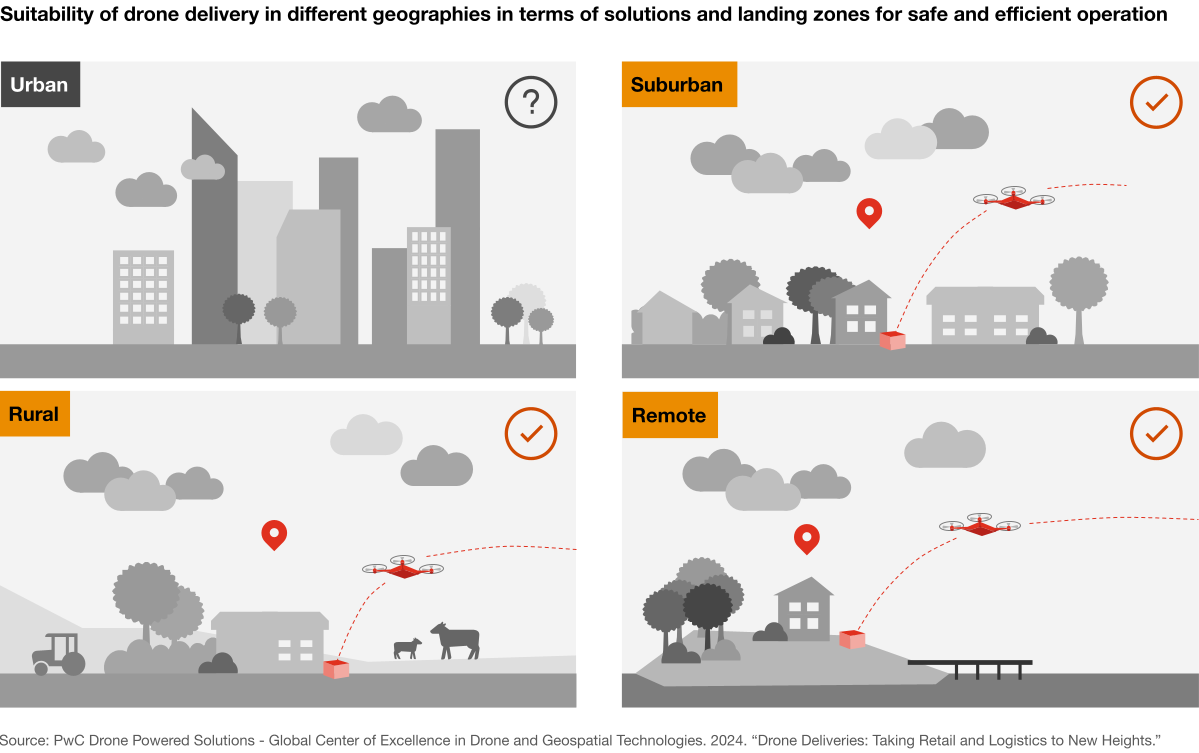
- In healthcare and mission-critical logistics, drone delivery transports blood and medical supplies to remote areas, as pioneered in Rwanda.[1]
- For retail and e-commerce, it promises 30-minute package delivery, with Amazon Prime Air as a publicized experiment.[5]
- In maritime and port operations, it enables 24/7 BVLOS deliveries like cargo, fuel sampling, and documents between ships and shore.[2]
- Across agriculture, food, government, and retail, it supports scalable ecosystems with proprietary aircraft, software, and infrastructure.[1]
- In urban and airport settings, it achieves milestones like Italy's first BVLOS shore-to-ship and airport logistics operations.[2]
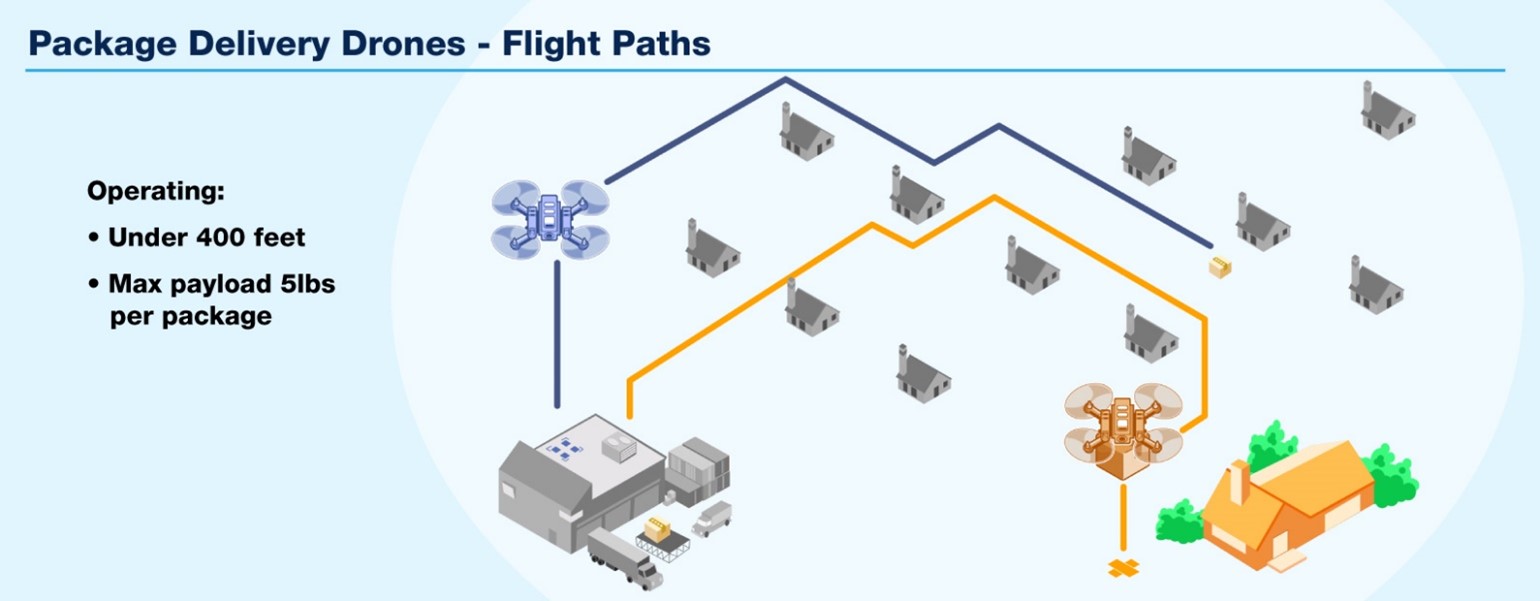
- Regulated commercial use requires FAA Part 135 Air Carrier Certificates beyond basic Part 107 licensing.[4]
History of Use
Origins
- Commercial drone delivery traces to 2014 with Zipline's founding, which in 2016 launched the first autonomous deliveries of blood and medical supplies in Rwanda, establishing credibility in mission-critical logistics.[1]
Evolution
- 2016: Zipline's Rwanda operations marked the shift from experimentation to real-world, regulated use in Africa, laying groundwork for global expansion.[1]
- 2024-2025: Completion of one million deliveries by Zipline in 2024, surpassing two million total, coincided with U.S. volume growth of 15% week-over-week and market value hitting $12.16 billion.[1][3]
- 2026: Zipline's $600M funding at $7.6B valuation fuels U.S. expansion to Houston, Phoenix, and four more states, while the market reaches $15.62B amid FAA Part 135 advancements.[1][3][9]
Best Real-World Examples
- Zipline: Two million+ deliveries globally, expanding in U.S. healthcare, food, and retail.[1]
- Speedbird Aero: 24/7 BVLOS port deliveries in Singapore and Italy's first shore-to-ship/airport ops.[2]
- Flytrex: Retail-focused drone services in competitive U.S. market.[3]
- Matternet: Medical and logistics deliveries, emphasizing BVLOS scalability.[3]
- Wingcopter: Versatile drone logistics for varied payloads and terrains.[3]
- Flirtey: Early pioneer in certified package drops, now in services market.[3]
- Drone Delivery Canada: Cold-climate operations proving viability in diverse environments.[3]
Case Studies
Zipline, founded in 2014, originated drone delivery's commercial viability by launching autonomous blood deliveries in Rwanda in 2016, building a full ecosystem of aircraft, software, and infrastructure.[1] By 2024, it hit one million deliveries, expanding to Japan, Africa, and the U.S., with 15% weekly U.S. growth; a 2026 $600M raise at $7.6B valuation now funds Houston/Phoenix launches and four more states, differentiating via end-to-end control over rivals like Amazon Prime Air.[1] This shows drone delivery's maturation from medical niche to multi-sector scaler, proving profitability in regulated spaces.[1][3]
Speedbird Aero exemplifies adaptable BVLOS drone delivery, achieving 24/7 Singapore port ops for cargo/fuel with Skyports/MPA, then Italy's first shore-to-ship in Siracusa and Fiumicino airport logistics with UrbanV.[2] Operating in five jurisdictions and climates, it validates drone delivery as "not only possible, but a viable and potentially profitable business model."[2] This narrative highlights startups outpacing incumbents by tackling maritime/urban challenges, informing broader logistics transformation.[2]
The delivery drone services market's 28.4% CAGR to $15.62B in 2026 reflects collective evolution, with startups like Flytrex, Matternet, and Wingcopter leading alongside adopters like UPS/FedEx.[3] Early e-commerce pilots and FAA Part 135 pushes enable rapid, accurate retail deliveries, reducing human costs.[3][4][5] It demonstrates how indie operators drive innovation, countering road-based limits amid rising demand.[3][9]
Images

Sources
[1]: Zipline Charts Drone Delivery Expansion With $600 Million in New ...
[2]: A Successful Business Model for Drone Deliveries
[3]: Delivery Drone Services Market Report 2026
[4]: How to start a drone delivery business your guide to launch - JIM
[5]: Drone Delivery for Retail: Statistics and Facts | Statista
[6]: Drone as a Service | Deloitte US
[7]: Unleashing American Drone Dominance - The White House
[8]: Drone Logistics & Transportation Market Size, Report 2031
[9]: [PDF] Draft Programmatic Environmental Assessment for Drone Package ...
[10]: Use Domain Analysis to Model Microservices - Azure Architecture ...