


Digital Literacy
Defining and Describing Digital Literacy
Digital literacy is the capability to effectively find, evaluate, create, and communicate information using digital tools, enabling founders and teams to navigate technology adoption, innovate responsibly, and drive organizational change in information-rich markets.
In innovation consulting, this applies when assessing a startup's readiness to leverage AI, data analytics, or digital platforms for competitive advantage, such as evaluating market signals amid disinformation or scaling tech-enabled teams.[1][2] It does not cover basic hardware operation alone, which is mere technical proficiency, but emphasizes critical thinking and ethical use critical for founder decisions on product-market fit and go-to-market strategies.[4] Consultants care because low digital literacy in teams leads to adoption failures, misinformed pivots, and vulnerability to digital threats, while high literacy accelerates innovation cycles and builds defensible moats through superior information mastery.[7]
Disambiguation
Primary sense — the innovation-consulting sense
The ability to use digital technologies responsibly to access, analyze, create, share information, and act on it, empowering innovators to thrive in fast-evolving tech ecosystems.[2]
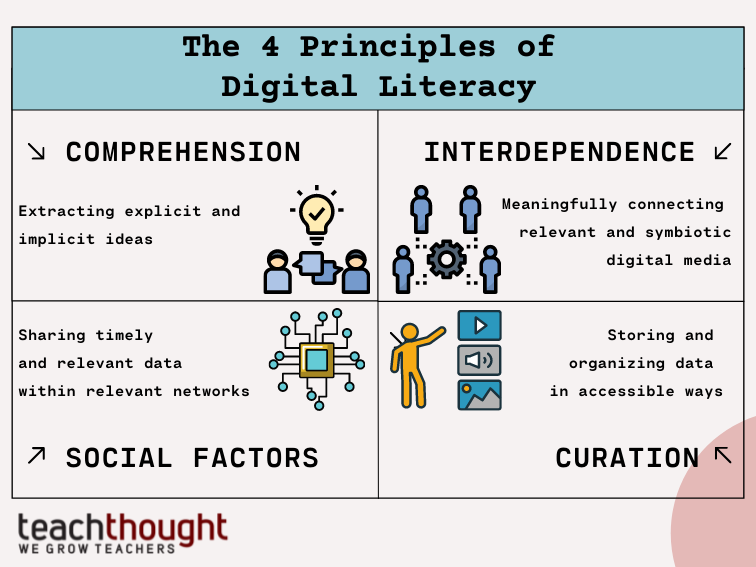
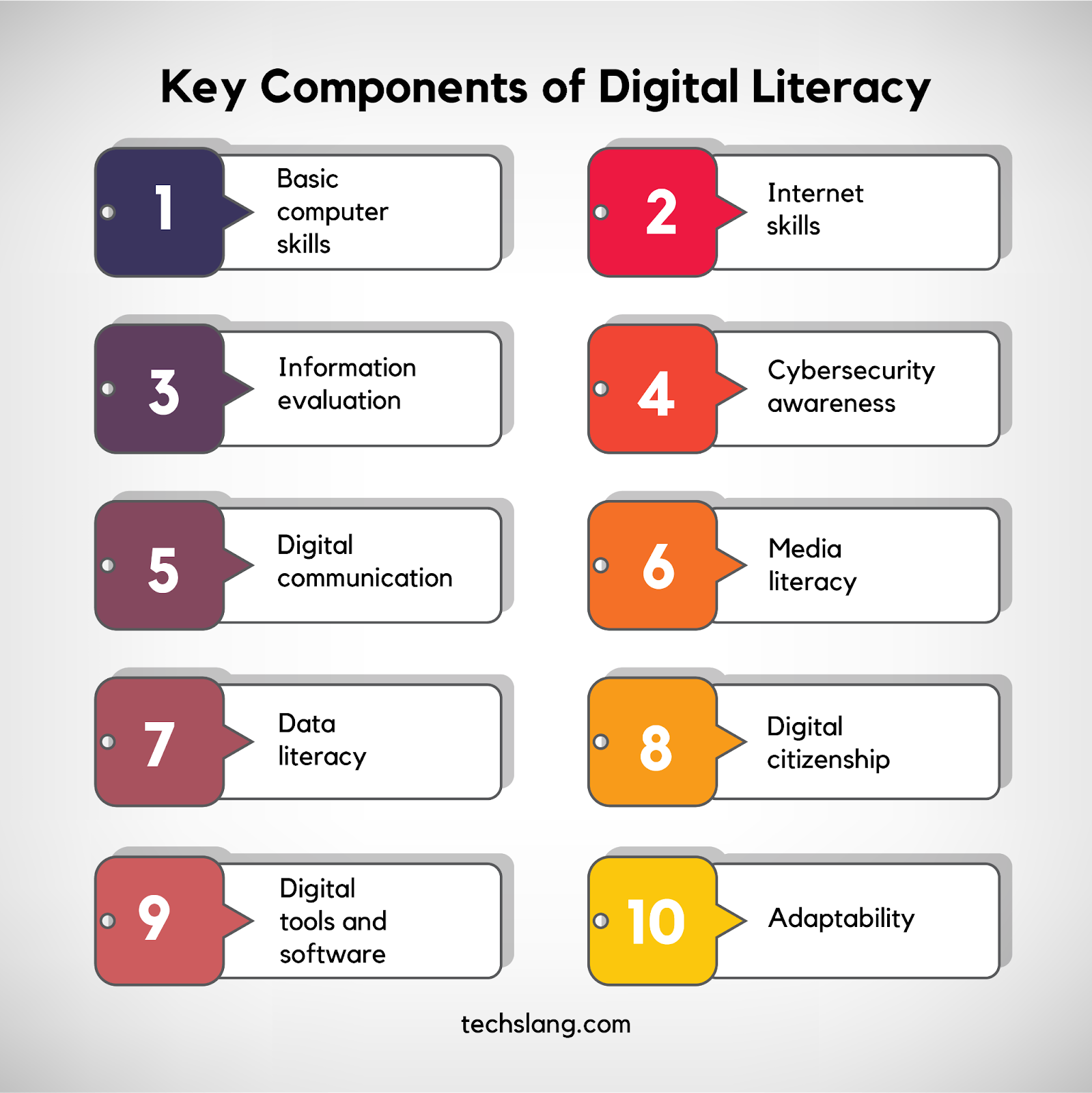
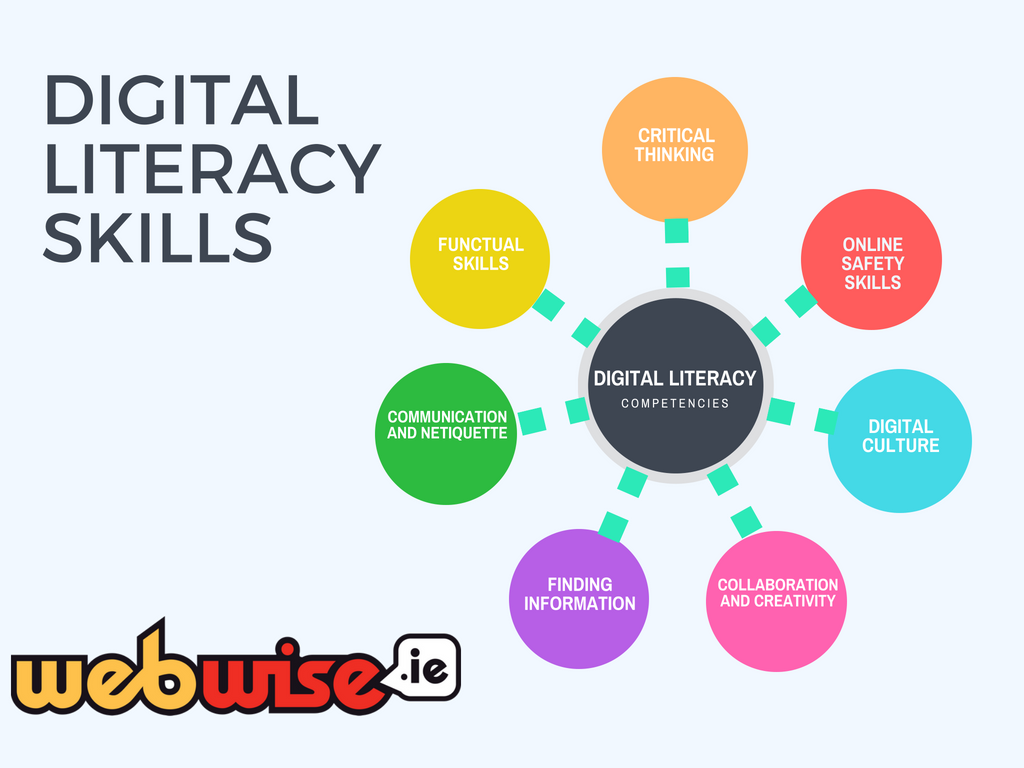
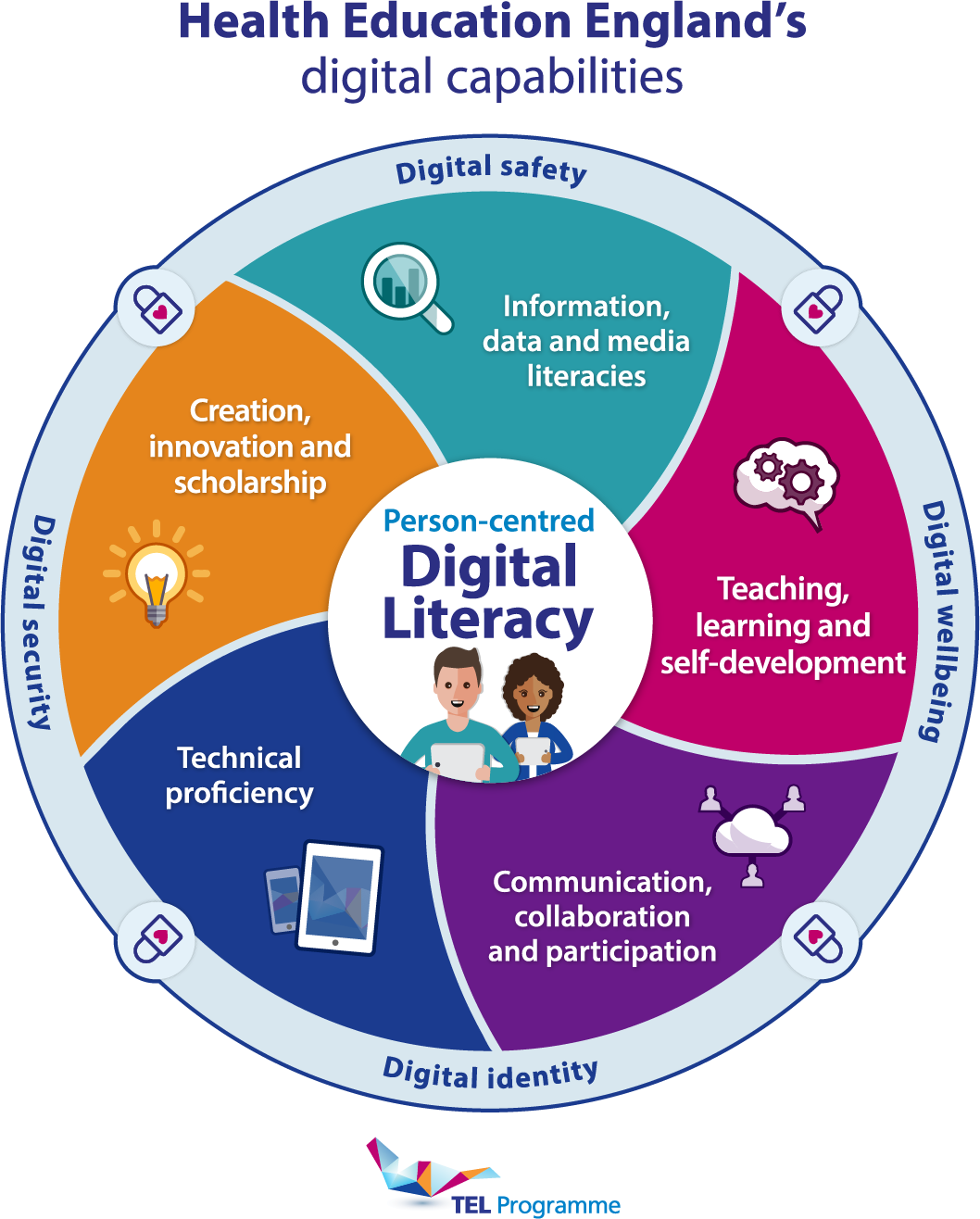
- Encompasses technical skills, critical evaluation of sources, ethical communication, and safety practices, vital for startups building AI-driven products or navigating data markets.[1][3]
- Common in founder contexts for assessing team readiness for tools like modeling software or digital archives, fostering leadership and innovation across disciplines.[2]
- Not just "knowing how to use a computer," but a mindset integrating curiosity, problem-solving, and societal impact awareness for business agility.[1][4]
- Differs from narrow IT training; boundary case: basic email use is technical skill, not digital literacy without critical evaluation.[5]
Other senses
1. Educational pedagogy sense
The foundational skillset taught in classrooms to enable students to use technology for learning, leadership, and positive impact.[2]
- Involves five stages: access, analyze, create, communicate, act, applied in subjects like physics simulations or historical digital archives.[2]
- Expanded by groups like ISTE and Common Sense Media to include privacy, digital citizenship, and social competencies.[7]
- Relevant to edtech startups scaling personalized learning platforms.[2]
2. Civic and societal sense
A mindset for combating disinformation, ensuring online safety, and fostering inclusive democracies through critical online engagement.[1]
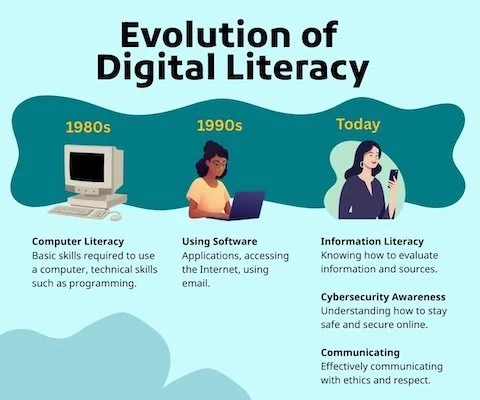
- Includes information literacy, cybersecurity, and respectful communication amid threats like surveillance and AI-generated content.[1]
- UNESCO frames it as using tools to "locate, evaluate, use, and create information," essential for civil society.[1][4]
- Also used in library science (ALA definition mirroring core skills)[5][7] and workforce policy (e.g., Digital Skills for Today’s Workforce Act emphasizing task completion and citizenship)[6]; these overlap but are less central to startup innovation.
Etymology and Origin
Omit: "Digital literacy" is a plain-English compound emerging organically from 1990s tech adoption discourse, without a single coiner or non-obvious migration traceable to a founder essay, paper, or indie practitioner in the provided sources.[1-9]
Adjacent Vocabulary
- Synonyms:
- Digital fluency: emphasizes seamless practical use over critical evaluation.[2]
- Information literacy: focuses more on source evaluation, less on tech tools.[6]
- Digital citizenship: stresses ethical and social responsibilities.[7]
- Antonyms:
- Digital illiteracy: inability to navigate or critically assess online info.[4]
- Tech aversion: outright rejection of digital tools.[1]
- Adjacent terms: digital transformation, AI literacy, data literacy, tech stack, Product Market Fit, go to market
Usage in Practice
- "Digital literacy equips them to navigate information confidently, communicate responsibly, and design ideas that matter... the foundation for learning, leadership, and innovation." — Immerse Education on future innovators[2]
- "Digital literacy is increasingly recognized as a foundational skill that may be just as essential as reading or numeracy... empowering individuals to engage meaningfully with technology both in work and in everyday life." — The Decision Lab[4]
- "Whether it’s a physics student familiarising themselves with modelling software, a history student taking advantage of a digital archive, or a design student experimenting on Canva, digital literacy is the foundation for learning, leadership, and innovation." — Immerse Education[2]
- "Digital literacy for educators goes beyond the ability to simply use technology. It encompasses a dual responsibility—to be personally proficient in digital tools and to teach students how to use them effectively." — Western Governors University on edtech credentials[8]
- "As technologies have evolved, so has the definition of digital literacy... consistently center[ing] five areas: technical skills, information skills, citizenship and safety, everyday functional skills, and cognitive and social competencies." — New America on AI-age skills[7]
Common Misuses
- Equating it to "computer skills training," which ignores critical thinking; use technical proficiency instead.[1]
- Stretching to mean any tech adoption, like buying SaaS tools without evaluation; better as digital transformation.[6]
- Marketing it as "AI readiness" without info evaluation; prefer AI literacy for model-specific skills.[7]
- Reducing to "social media savvy"; use digital citizenship for ethical online behavior.[1]
Images
Sources
[1]: What is Digital Literacy? And Why It Matters - Team CommUNITY
[2]: What Is Digital Literacy? 5 Ways It Shapes Future Innovators
[3]: DIGITAL LITERACY Definition & Meaning - Merriam-Webster
[4]: Digital Literacy - The Decision Lab
[5]: Digital Literacy - LibGuides at University of North Florida
[6]: Converging Terms: Digital Literacy & Information Literacy
[7]: Digital Literacy in the Age of AI: Analysis and Voices from the Field
[8]: Digital Literacy in Education: The New Teaching Credential?
[9]: What Is Digital Literacy? A Clear Guide for Educators | Blog