


Conventions
Data Governance
Large Codebase AI
Code Generators
Software Development
Engineering Velocity
Solutions for Scale
Founder Toolkit
Digital Transformation
AI-Ready Data
Brand Guidelines
UX
Defining and Describing Conventions
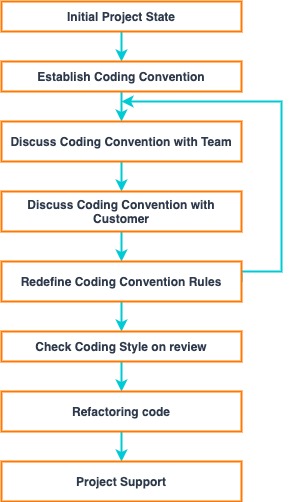
In innovation and engineering-management contexts, conventions are the shared, documented ways of naming, structuring, and interacting with code, data, and interfaces that make complex systems easier to build, scale, and change as a team. [3][9]
Conventions apply wherever people collaborate on software, data, or product design: they include coding conventions, naming conventions in data governance, and design conventions in user interfaces, all aimed at consistency, readability, and maintainability.[3][6][9][11][14][5][7][10][15] They do not cover every aspect of engineering (e.g., algorithms or architecture choices) but instead govern the style and structure of artifacts like code, schemas, and UI patterns.[3][6][9][11][14][5][7][10][15] An innovation consultant cares deeply about conventions because they are leverage points: they make onboarding faster, reduce coordination overhead, and allow rapid iteration without the system devolving into chaos.[3][8][11][12][13][15] In scale-up environments, robust conventions turn idiosyncratic founder code or ad‑hoc data into an organizational asset that many teams can safely extend.[3][6][8][9][11][14]
Disambiguation
Primary sense — the innovation-consulting sense
Conventions (primary sense) : Shared, agreed‑upon guidelines for how a team names, structures, formats, and documents code, data, and interfaces so that the resulting systems are readable, maintainable, and consistent over time. [3][6][9][11][14][5][7][15]
- Conventions in this sense are typically expressed as coding standards , naming conventions , and design guidelines —“rules and guidelines that ensure consistency, readability, maintainability, and reliability in software development.”[3][6][9][11][14] They cover topics such as code organization, indentation, commenting, error handling, and naming.[6][9][11][14]
- These conventions function as social contracts inside engineering organizations: “Code conventions are a set of guidelines and best practices that developers follow when writing code… to ensure that code is readable, maintainable, [and] consistent across team projects.”[9] Enterprise-focused guidance stresses adopting language‑specific style guides, enforcing naming conventions and directory structure, and standardizing documentation and comments across the org.[8]
- A key boundary: conventions are not the same as architecture or feature decisions; they are “baseline cross‑project coding conventions for naming, readability, immutability, and code‑quality review,” and they sit underneath larger design choices.[4] Principles like KISS, DRY, and YAGNI are often encoded into conventions but are higher‑level design philosophies rather than line‑by‑line rules.[4]
- In data management and governance, naming conventions—“assign meaningful names to variables, functions, and methods… keep a sense of consistency in naming (e.g. camelCase vs. snake_case)”—play a similar role in making data structures discoverable, auditable, and safer to change.[6] Course and guideline materials emphasize “Naming Conventions: Using clear and descriptive names for variables and methods to enhance code clarity.”[11][14]
Other senses
1. User-interface and UX design conventions
A set of standard patterns and rules for how screens, controls, terminology, and feedback behave so users can rely on consistency across a product ecosystem. [5][7][10][15]
- UI design guidelines talk about “consistency and standards” , urging designers to “ensure that both the graphic elements and terminology are maintained across similar platforms.”[5] Classic “golden rules” in HCI start with “Strive for consistency” in actions, terminology, color, layout, capitalization, fonts, and more.[7]
- Practical UI guidance frames conventions as using uniform terminology, layouts, and color schemes and following platform‑specific standards for buttons, icons, and navigation.[10] Modern UX practice includes creating comprehensive design system documentation defining canonical patterns (buttons, forms, navigation, data display, error handling) with clear usage guidelines to prevent pattern proliferation.[15]
- For innovation consultants, these conventions matter because they reduce user cognitive load and speed up experimentation: teams can try new features while reusing familiar patterns, and design systems plus consistency audits (systematic identification of inconsistencies across product ecosystems) make multi‑product platforms coherent instead of fragmented.[5][10][15]
2. Social and organizational behavior conventions
Implicit or explicit norms governing how people communicate, make decisions, and coordinate, which shape how innovation efforts unfold inside organizations.
- While the search results focus on technical conventions, several sources implicitly treat conventions as collaboration infrastructure : “Standardized guidelines enable faster onboarding, predictable reviews, safer refactors” in engineering teams.[12] That relies on shared expectations about how work should be done and evaluated.
- Code quality guidelines highlight conventions (readability, naming, commenting, consistent coding standards) as mechanisms that “facilitate maintenance and collaboration,” suggesting a broader organizational function: they structure how teams interact with artifacts and with each other.[11][14]
- For innovation consultants, social conventions around documentation, review practices, and error handling (e.g., “Fail fast and loud… Throw descriptive errors. Never swallow an exception silently.”) affect how quickly issues surface and how psychologically safe experimentation feels.[1][4][12]
- Also used in general English to mean customary social norms or formal gatherings (e.g., trade conventions), but those senses are not central to innovation‑consulting usage and are only relevant when such events or norms explicitly structure innovation programs.
Etymology and Origin
(Plain-English term in its plain sense; etymology not especially meaningful for innovation work, so this section is omitted.)
Adjacent Vocabulary
- Synonyms
- Coding standards / code standards – Often defined as “rules and guidelines that ensure consistency, readability, maintainability, and reliability in software development”; more formal and prescriptive than “conventions,” which can include unwritten norms.[3][6][9]
- Style guide – A documented set of formatting and naming rules, typically language‑specific; narrower than “conventions,” which also include structural and behavioral expectations.[6][8]
- Design guidelines – UI/UX‑focused conventions around layout, interaction, and feedback; emphasize user experience rather than developer collaboration.[5][7][10][15]
-
- Antonyms
- Ad‑hoc practices – Idiosyncratic, undocumented ways of working that vary by individual, the opposite of shared conventions.[3][8][11][14]
- Inconsistency – Directly opposed to conventions; HCI rules warn against inconsistent sequences of actions, terminology, and layouts, because they harm usability.[7][10][15]
-
- Adjacent terms
- Coding Standards – Formalized rules for code quality and style.[3][6][9][11][14]
- Naming Conventions – Specific conventions for identifiers in code and data.[6][9][11][14]
- Design System – Documentation and component libraries that embody UI conventions.[5][10][15]
- Code Quality – Overall standard of code including readability, efficiency, and maintainability, heavily influenced by conventions.[11][14]
- Developer Onboarding – Process improved by shared conventions and standards.[8][12]
- Data Governance – Organizational rules for data, often implemented via naming and structuring conventions.[6]
-
Usage in Practice
- “Coding standards are a set of rules and guidelines that ensure consistency, readability, maintainability, and reliability in software development. They are like a roadmap that helps developers write code in a structured and organized manner.”[3]
- “Code conventions are a set of guidelines and best practices that developers follow when writing code. These standards help ensure that code is readable, maintainable, consistent across team projects, [and] easier to understand and collaborate on.”[9]
- Enterprise guidance emphasizes that teams should “Enforce Naming Conventions & Directory Structure” and “Standardize Documentation & Comments,” treating conventions as strategic tools for dev orgs scaling across many projects and teams.[8]
- A modern C++ engineering guide notes that “Standardized guidelines enable: Faster onboarding, Predictable reviews, Safer refactors,” explicitly connecting conventions to scalability and collaboration.[12]
- Academic-style course materials frame conventions as central to collaboration: “Readability: Code should be easy to read and understand, facilitating maintenance and collaboration… Naming Conventions: Use clear and descriptive names… Consistent Coding Standards: Adhere to a uniform coding style to ensure codebase coherence.”[11][14]
- UI guidelines stress that “Interface designers should ensure that both the graphic elements and terminology are maintained across similar platforms,” foregrounding consistency conventions as a primary design concern.[5]
- Human–computer interaction teaching materials begin with “Strive for consistency… identical terminology should be used in prompts, menus, and help screens; and consistent color, layout, capitalization, fonts, and so on, should be employed throughout,” directly casting conventions as a golden rule of interface design.[7]
Common Misuses
- Using “conventions” to refer to any engineering decision, including architecture or product strategy, when the more precise terms are “design,” “architecture,” or “roadmap.” Conventions should be reserved for shared rules about style, naming, and structure, not business priorities.[3][4][6][9][11][14]
- Treating conventions as purely cosmetic “code style” and ignoring their role in maintainability and collaboration, where “code quality practices” or “engineering process” would better capture the full scope (reviews, refactors, error handling).[3][9][11][14]
- Presenting conventions as optional or individual preferences (“my style”) instead of organization‑level standards; in scale contexts, “coding standards” or “design system constraints” are more accurate for the enforced, shared rules teams rely on.[3][8][11][12][15]
- Labeling rigid, overly complex rulesets as “conventions” when they function more like bureaucratic policy; in those cases “governance policy” or “compliance requirements” is clearer, while effective conventions are lightweight and directly tied to readability, usability, and team speed.[3][6][8][11][14][15]
Sources
[1]: Coding.md - Code Standards That Actually Get Followed
[2]: Software Engineering: Coding Standards Guide | PDF
[3]: A complete Guide to Coding Standards and Best Practices
[4]: SKILL.md - coding-standards
[5]: User Interface Design Guidelines: 10 Rules of Thumb
[6]: Coding Standards and Guidelines in Software Engineering Explained
[7]: Principles of User Interface Design: Guidelines & Golden Rules ...
[8]: 10 Enterprise Coding Standards Every Dev Org Needs
[9]: Understanding Code Conventions: Maintaining Clean and Consistent Code
[10]: 10 Essential UI Guidelines for Designers in 2025 - grauberg.co
[11]: CS2103 T - Code Quality Guidelines and Best Practices
[12]: Modern C++ Coding Standards for High-Performance Systems
[13]: Best Coding Practices for Developers in 2026.
[14]: CS2103 T - Essential Guidelines for Code Quality
[15]: Consistency and Standards in UX Design | UX/UI Principles