Decarbonization


ℹ️ (2025-08-16T16:05.129Z)
Perplexity Query
(2025-08-16T16:05
.129Z)
Question:
Write a comprehensive one-page article about "Decarbonization".

Response from sonar-pro :

Decarbonization: Charting the Path to a Low-Carbon Future
Decarbonization refers to the process of reducing and ultimately eliminating carbon dioxide and other greenhouse gas emissions from human activities, especially those related to energy production, transportation, and industry. [lp5z04] [95ggyh] As the global community faces the urgent threat of climate change—with the United Nations warning of drastic environmental, economic, and social consequences—decarbonization has become a defining priority for governments, businesses, and individuals worldwide. [95ggyh]

What Is Decarbonization and How Does It Work?

At its core, decarbonization means moving away from fossil fuels and transitioning to cleaner, more sustainable forms of energy across all areas of the economy. [f860tb] This process involves several strategies:
  • Switching to renewable energy: Solar, wind, and hydropower are rapidly replacing coal, oil, and gas in electricity generation, supported by falling costs and improved storage technologies like batteries and hydrogen. [qkajr5] [f860tb]
  • Improving energy efficiency: Buildings are being retrofitted with better insulation, smart energy systems, and low-carbon heating, reducing overall energy consumption. [f860tb]
  • Electrifying transport and industry: Shifting road transport from gasoline and diesel to electric vehicles (EVs), powered by renewables, reduces a major source of emissions. In industry, sectors such as steel and cement are investing in green hydrogen and carbon capture to decarbonize high-temperature processes. [f860tb]
  • Permanently reducing emissions: True decarbonization means deep operational change, not just offsetting through tree planting or buying carbon credits; it requires ongoing investment and innovation to shrink an organization’s direct and indirect emissions. [lp5z04] [95ggyh]
Practical Examples and Use Cases
  • Corporate Initiatives: Companies like Microsoft, General Motors, Honeywell, and Google have set ambitious Net-Zero Targets and are redesigning supply chains to eliminate emissions, from raw materials to product delivery. [lp5z04]
  • Policy Measures: The European Union has launched the Carbon Border Adjustment Mechanism (CBAM), aligning the cost of carbon-intensive imports (like steel and cement) with stricter EU standards. [mnzxc6]
  • Local Projects: Cities and regions are investing in electric mass transit, district heating networks powered by renewables, and mandating energy performance in building codes. [f860tb]
Benefits and Potential Applications
Decarbonization has significant benefits:
  • Cost-efficiency: As renewables become cheaper than fossil fuels, businesses and consumers can save money while reducing risk from volatile energy markets. [qkajr5]
  • Competitive Advantage: Early movers gain reputational and market advantages as investors and customers demand sustainability. [lp5z04] [mnzxc6]
  • Systemic Resilience: Reducing reliance on imported fossil fuels enhances energy security and shields economies from geopolitical shocks. [qkajr5]
Challenges and Considerations
  • Upfront Investment: Transitioning to low-carbon technologies requires significant capital, infrastructure upgrades, and new skills. [lp5z04]
  • Complex Supply Chains: Measuring and reducing emissions across global operations is difficult, especially for companies with extensive third-party partners. [lp5z04]
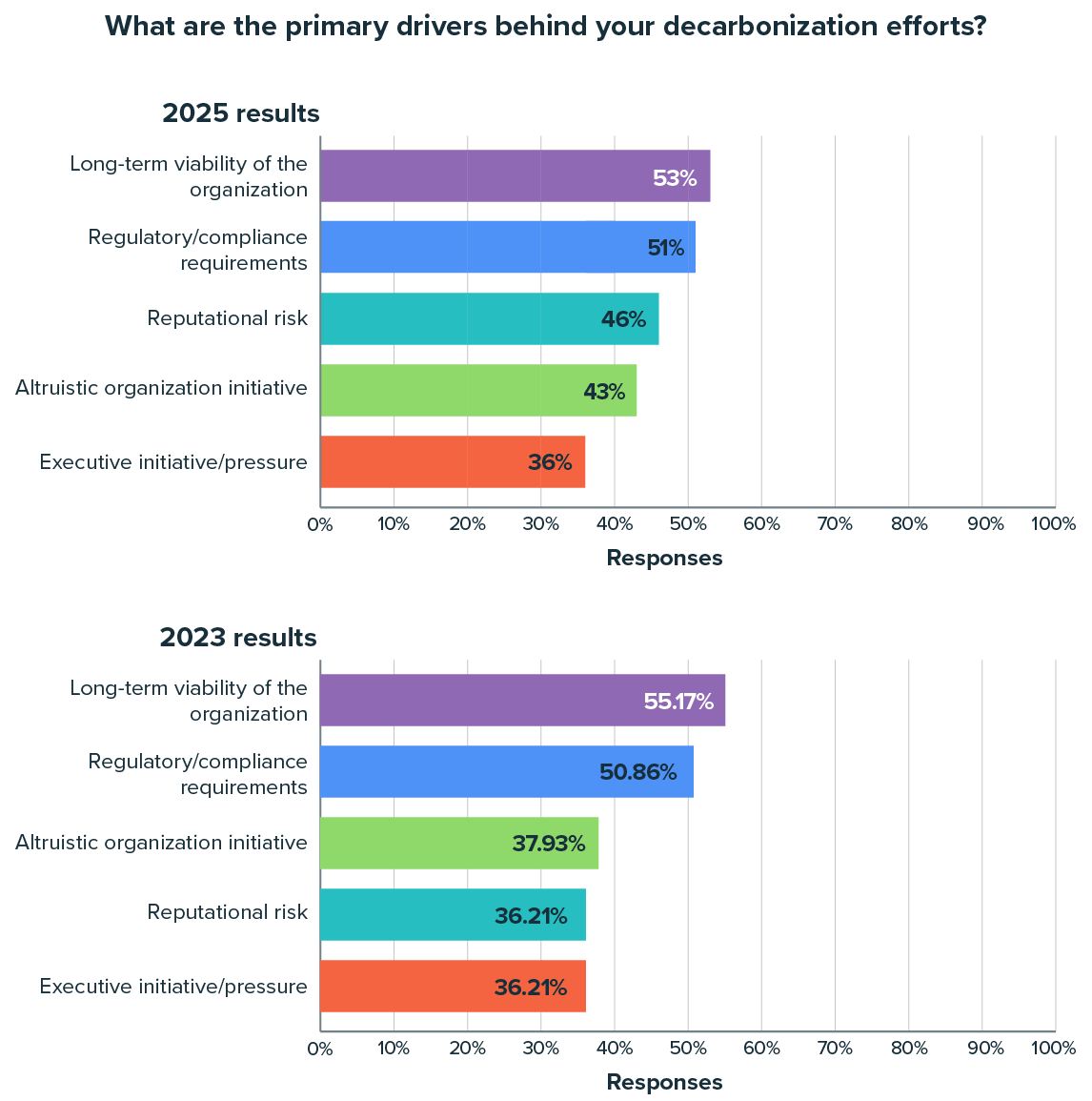
  • Evolving Regulations: Adapting to changing compliance standards, such as product-level carbon tracking, is critical for ongoing corporate success. [lp5z04] [mnzxc6]
Decarbonization is rapidly moving from aspiration to action. Many countries have committed to net-zero emissions targets and are rolling out comprehensive policies and incentives to steer investment towards clean energy. [qkajr5] [mnzxc6] In the private sector, digital tools are emerging to track and report progress, from GRI-certified carbon data platforms to AI-enabled carbon management systems. [lp5z04] Corporate leaders, such as Google and Crocs, have demonstrated that meaningful emission reduction can create new value while lowering risk. [lp5z04] Technologies such as direct air capture, green hydrogen, and advanced energy storage are also scaling up, driven by declining costs and investor interest. [qkajr5] [f860tb]

Future Outlook

Looking ahead, decarbonization is expected to accelerate, driven by continued cost declines in clean technologies, regulatory pressure, and growing public demand for climate action. [qkajr5] [mnzxc6] Economists project that decarbonizing the energy system by 2050 could save trillions of dollars globally compared to maintaining fossil fuel dependency, while also significantly reducing climate-related risks. [qkajr5] Technological innovation—like modular nuclear power, synthetic fuels, and carbon removal—will be crucial as sectors like aviation and heavy industry decarbonize. The need for rapid progress is clear: reaching net-zero requires halving emissions by 2030, with transformative change across all sectors. [95ggyh]
In conclusion, decarbonization represents both a profound challenge and a historic opportunity to build a cleaner, safer, and more resilient future. [95ggyh] As momentum grows, coordinated action across governments, industry, and society will define the decades ahead—a path where innovation and commitment can secure a thriving world for generations to come.

Citations

[qkajr5] 2025, Jun 16. What is Decarbonization? . Published: 2024-09-12 | Updated: 2025-06-16

[lp5z04] 2025, May 21. Decarbonization: Your Company's Roadmap to Reducing ... . Published: 2025-05-21 | Updated: 2025-05-21

[f860tb] 2025, Aug 11. Decarbonization: what it is and why it matters . Published: 2022-09-29 | Updated: 2025-08-11

[95ggyh] 2024, Oct 15. Decarbonization: Definition, Examples, and Why It's Needed . Published: 2024-05-10 | Updated: 2024-10-15

[mnzxc6] 2025, Jun 23. Top three decarbonization priorities for organizations in 2025 . Published: 2025-02-03 | Updated: 2025-06-23