Attention Deficit Disorder
Defining and Describing Attention Deficit Disorder
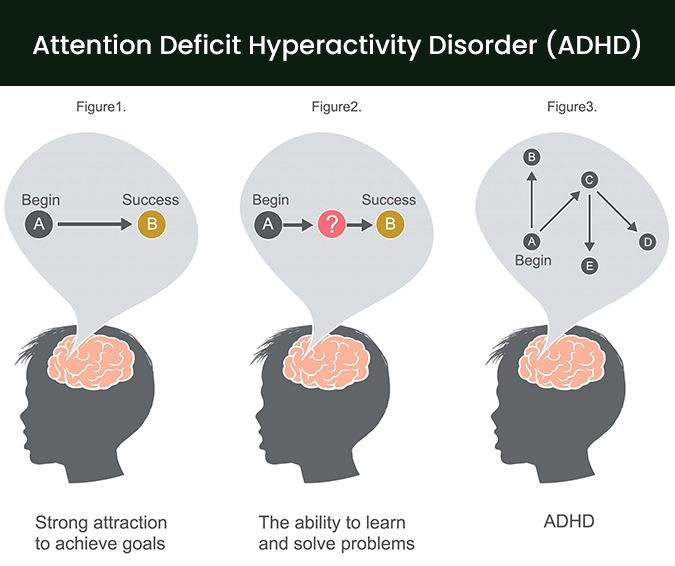
_In innovation and startup contexts, “Attention Deficit Disorder” usually refers (accurately or not) to the inattentive presentation of ADHD in adults—characterized by chronic distractibility, poor follow‑through, and disorganization that materially affects work and relationships.
[ifa3uq]
[1jz1mk]
[insn4y]
In clinical terms, Attention Deficit Disorder (ADD) is an older label now largely folded into Attention‑Deficit/Hyperactivity Disorder, predominantly inattentive presentation (ADHD‑I).
[ifa3uq]
[u3xafa]
It applies when persistent patterns of inattention (difficulty sustaining focus, disorganization, forgetfulness, losing things, not following through) begin in childhood, are present in more than one setting (e.g., home and school/work), and cause significant impairment.
[ifa3uq]
[1jz1mk]
[eb2247]
[wof5vo]
It does not apply to ordinary busyness, boredom with a task, or a founder simply having “too many ideas” unless these symptoms meet diagnostic thresholds and history criteria.
[ifa3uq]
[1jz1mk]
[eb2247]
Innovation consultants care because inattentive ADHD can dramatically influence founder decision‑making, prioritization Decision Science, execution reliability Executive Function, team dynamics, and the design of processes and tools that either compensate for or exacerbate these traits.
[insn4y]
[lze3ta]
Disambiguation
Primary sense — the innovation‑consulting sense
Tight definition
In innovation work, Attention Deficit Disorder is best understood as ADHD, predominantly inattentive presentation in adults, where persistent inattention, disorganization, and forgetfulness affect professional functioning in high‑autonomy roles like founders, executives, and knowledge workers.
[ifa3uq]
[1jz1mk]
[insn4y]
[wof5vo]
Scope, usage, and boundaries
- Core inattentive features include not paying close attention to details or making careless mistakes, difficulty sustaining attention in tasks or conversations, seeming not to listen, not following through on instructions, difficulty organizing tasks, avoiding sustained mental effort, losing necessary items, being easily distracted, and forgetfulness in daily activities. [ifa3uq] [eb2247] [wof5vo]
- In innovation and startup circles, “ADD” is often used informally to describe idea‑driven, novelty‑seeking founders; however, genuine ADHD‑I is not just “creative” or “multi‑passionate”—it is clinically significant, impairing, and requires systematic evaluation and often treatment. [ifa3uq] [1jz1mk] [insn4y] [lze3ta]
Other senses
1. Legacy diagnostic label (pre‑ADHD unification)
Historically, Attention Deficit Disorder was a formal diagnosis used in earlier diagnostic manuals (e.g., DSM‑III) to describe attention problems with or without hyperactivity, which was later re‑categorized into ADHD and its current presentations.
- Also used informally in popular culture as shorthand for “being easily distracted” or “short attention span”; in that vague sense it is not clinically precise and not reliable for innovation analysis, where it is better to distinguish between true ADHD and normal attentional variability.
Etymology and Origin
- The modern construct Attention‑Deficit/Hyperactivity Disorder emerged from pediatric psychiatry as a neurodevelopmental disorder describing persistent patterns of inattention, hyperactivity, and impulsivity that are “noticeably greater than expected for [a child’s] age or developmental level.” [ifa3uq] Earlier editions of the Diagnostic and Statistical Manual of Mental Disorders (DSM) used “Attention Deficit Disorder” as a primary term, later revised to ADHD with subtypes/presentations. [ifa3uq] [u3xafa]
- In startup and business discourse, “ADD” slowly migrated from clinical language into a loose metaphor for scattered, novelty‑seeking attention, often applied to founders and technologists; this metaphorical usage, however, diverges from clinical definitions that require early onset and significant functional impairment. [ifa3uq] [1jz1mk] [insn4y] [lze3ta]
Adjacent Vocabulary
- Synonyms
- Antonyms
- Adjacent terms
Usage in Practice
(Quotes focus on adult/organizational impact of ADHD, which includes what is colloquially called “ADD.”)
- A Yale Medicine psychiatrist notes that adults with ADHD often present after chronic work difficulties: “People may seek an evaluation for ADHD after experiencing ongoing problems with organization, time management, or meeting deadlines at work.” [insn4y]
- A clinical guide for adults highlights business‑relevant symptoms: “From missed deadlines to racing thoughts, ADHD is more than being distracted,” emphasizing that untreated symptoms can affect job performance and relationships. [lze3ta]
- The CDC’s adult ADHD overview explicitly connects symptoms to work functioning: ADHD symptoms that start in childhood “can continue into adulthood” and “may look different in adults,” including problems with “work, relationships, and daily responsibilities.” [1jz1mk]
- Brown Health’s explainer for parents makes a point that applies equally to startups hiring neurodivergent talent: the best outcomes come from “combining medication, behavioral support, and structure,” underscoring the value of environmental scaffolding rather than relying solely on willpower. [u3xafa]
- The American Psychiatric Association notes that ADHD symptoms “lead to significant suffering and cause problems at home, at school or work, and in relationships,” making it directly relevant to leadership and team performance. [ifa3uq]
- A Cleveland Clinic expert emphasizes that ADHD is diagnosed only when symptoms are “impairing” in at least two settings (for children, usually home and school), a criterion that translates in adults to consistent impact across work and personal life. [eb2247]
Common Misuses
- Using “ADD” as shorthand for ordinary distraction or busyness.Many people say they “have ADD” when they are simply stressed, over‑scheduled, bored, or working in a high‑interrupt environment; the better umbrella term here is situational distraction or cognitive overload, not a neurodevelopmental disorder. [ifa3uq] [1jz1mk] [lze3ta] [wof5vo]
- Labeling all highly creative, idea‑driven founders as having ADD.Founders who generate many ideas and shift focus rapidly may or may not meet ADHD criteria; in many cases “creative ideation style,” “opportunity scanning,” or “novelty‑seeking temperament” are more accurate descriptors than a clinical label. [ifa3uq] [1jz1mk] [insn4y]
- Treating ADD/ADHD as a purely positive “superpower” or purely negative “liability.”Popular narratives sometimes oversimplify ADHD as either a superpower in entrepreneurship or as purely dysfunctional; clinically and organizationally, it is better framed as a neurodevelopmental difference with specific strengths and vulnerabilities, where executive‑function support, role design, and treatment can tip outcomes. [ifa3uq] [1jz1mk] [insn4y] [lze3ta]
- Conflating ADHD‑I (ADD) with other mental health conditions.Symptoms like poor concentration or low motivation can also occur in depression, anxiety, or sleep disorders; rather than defaulting to “ADD,” more precise terms such as major depressive disorder, generalized anxiety disorder, or chronic sleep deprivation are often more accurate and require different interventions. [ifa3uq] [1jz1mk] [insn4y] [lze3ta]