



Dropbox
(2025-11-14T08:30.964Z)
Perplexity Query
(2025-11-14T08:30
.964Z)
Question:
Write a comprehensive one-page article about "Dropbox, Technology Company".
Model: sonar-pro
Dropbox is a leading technology company specializing in cloud storage and collaborative productivity tools. By enabling users to store, sync, and share files seamlessly across devices, Dropbox has transformed modern workflows and digital collaboration, making it an essential solution for both individuals and businesses in managing digital content in the cloud.
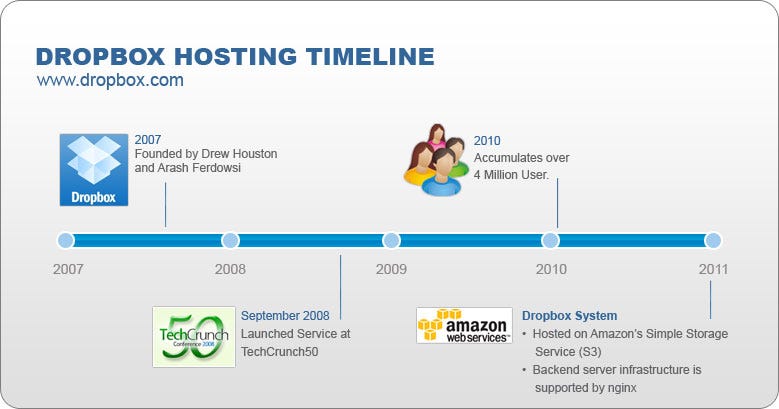
Founded in 2007 by Drew Houston and Arash Ferdowsi, Dropbox began as a means to solve the common frustration of losing USB drives and not having access to important files[1][4][5]. The concept was straightforward but powerful: provide a simple, user-friendly method for accessing and sharing documents from anywhere with an internet connection. This vision led to Dropbox's participation in Y Combinator, a top startup accelerator, which provided early funding and critical mentorship. With its public launch in 2008, Dropbox quickly distinguished itself in a crowded market thanks to its seamless installation, intuitive syncing, and reliable file access, attributes lacking in many early cloud storage competitors[4][5].
Dropbox’s core service centers on cloud-based file storage and synchronization. Users can upload files to their Dropbox account, which are then automatically synced across linked devices—PCs, smartphones, tablets, and the web. This makes Dropbox invaluable for scenarios such as team collaboration on documents, remote work, and file backup. For example, a marketing team can collaboratively edit presentations in real time, or a photographer can share high-resolution images with clients without relying on physical media[1][2][5]. Dropbox’s offerings have expanded to include Dropbox Business for organizational needs and Dropbox Paper, a collaborative workspace for real-time document editing and team project management[1][4].
Integrations with popular platforms such as Microsoft Office, Slack, and Zoom have extended Dropbox’s utility, positioning it as an essential hub in the modern digital workplace. Businesses benefit from enhanced productivity, streamlined communication, and reduced dependency on local storage, while individuals enjoy effortless backup and easy sharing of personal files such as photos, videos, and documents[1][2][5]. However, challenges remain, such as data privacy concerns, the ongoing need for robust security, and fierce competition from tech giants like Google Drive, Microsoft OneDrive, and Apple iCloud[5].

Dropbox has achieved widespread adoption, counting hundreds of millions of users globally and serving over 4 million business teams[5][6]. After rejecting a high-profile acquisition offer from Apple’s Steve Jobs in 2009, Dropbox solidified its independence and accelerated its growth, culminating in a successful initial public offering (IPO) in 2018 that valued the company in the billions[1][3][4]. In recent years, Dropbox has emphasized its strategy to transition from a basic storage service to a productivity platform, launching tools like Dropbox Paper and advancing integrations with third-party applications to enhance collaboration and workflow automation[1][4].
The company’s focus on user experience and continuous innovation has enabled it to maintain a strong market position amidst growing competition. Notably, Dropbox’s viral user acquisition strategy, including referral bonuses and social media promotions, significantly fueled its growth in the early stages and set industry precedents for building engaged digital communities[5].

Looking ahead, Dropbox is expected to deepen its portfolio in collaboration technologies, strengthen security features, and leverage artificial intelligence to enhance document organization and search capabilities. The ongoing rise of remote and hybrid work environments positions Dropbox to play an even greater role in digital collaboration, while advances in automation and integration with other business software could further streamline workflows and unlock new productivity gains[1][4]. As digital information proliferates, Dropbox’s ability to innovate in storage, security, and collaboration will be pivotal for staying relevant.
In summary, Dropbox has reinvented file storage and sharing for the modern era, evolving from a simple cloud storage tool to a comprehensive collaboration platform. Its continued commitment to innovation points toward a future where digital teamwork is even more dynamic, secure, and accessible for all.
Citations
[1]: 2025, Nov 04. From startup to $12 billion: Seven lessons from Dropbox | MIT News. Published: 2018-04-25 | Updated: 2025-11-04
[3]: 2025, Nov 11. A brief history of Dropbox | TechCrunch. Published: 2018-03-06 | Updated: 2025-11-11
[4]: 2025, Oct 18. The History of Dropbox: Innovation and Exponential Growth in Cloud .... Published: 2024-12-26 | Updated: 2025-10-18
[5]: 2025, Oct 30. How Dropbox Grew from 2 Person Startup to Billion Dollar Enterprise. Published: 2020-08-05 | Updated: 2025-10-30
[7]: 2025, Nov 09. Dropbox: Backup and share files in the cloud. - Y Combinator. Published: 2022-12-16 | Updated: 2025-11-09