


Cortex AI
Value Proposition & Features
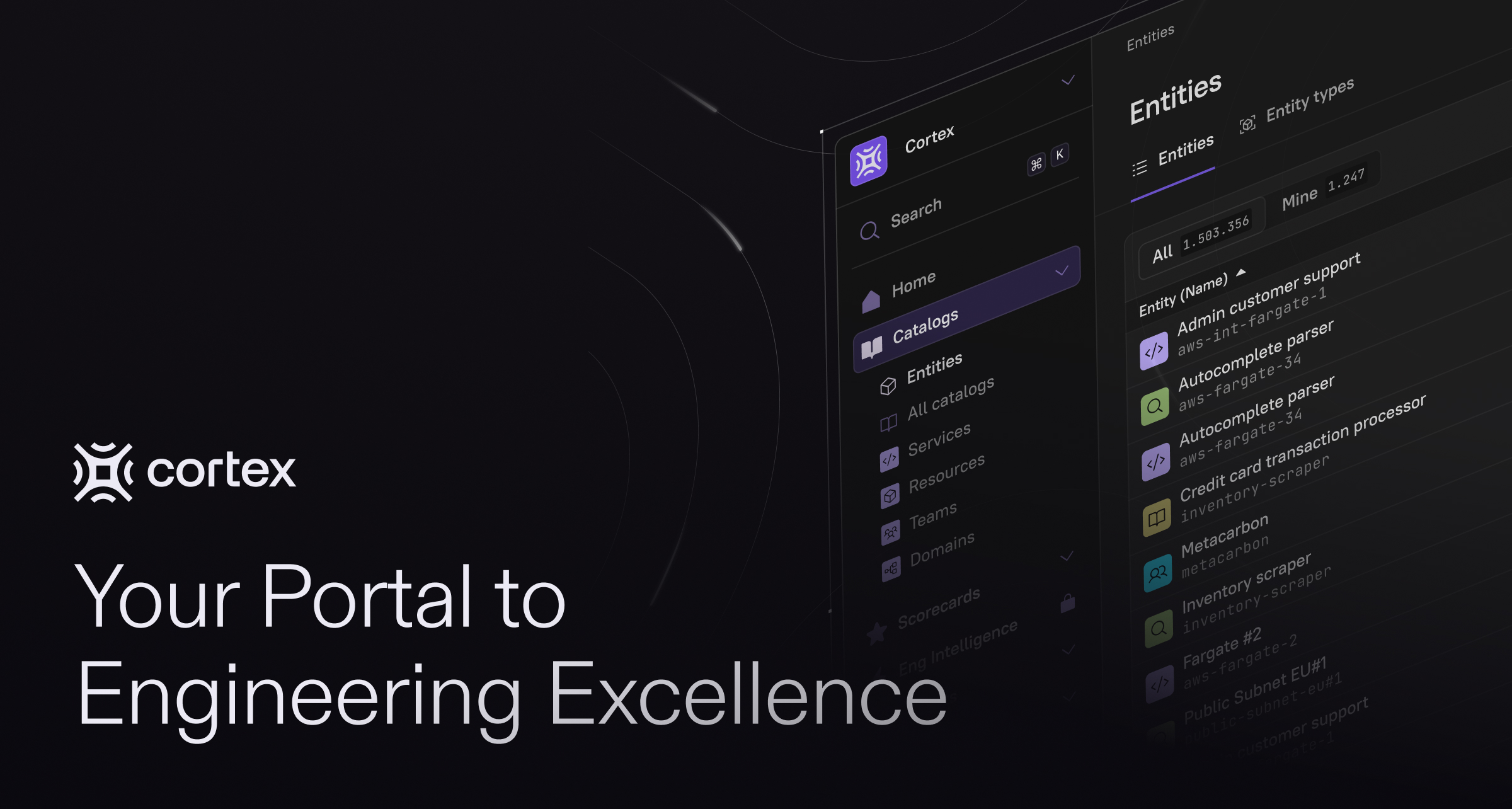
Cortex is an internal developer portal that gives engineering teams a single place to discover software assets, understand ownership, and access self-service workflows across the internal developer platform.
[4nyqrg]
[n6p985]
The product is positioned around improving developer experience by turning scattered service, API, and operational data into a searchable interface for engineers and platform teams.
[4nyqrg]
[n6p985]
The core Software Catalog is the central hub of the portal and is described as a unified, searchable registry for services, APIs, libraries, websites, databases, and other software assets.
[4nyqrg]
Cortex says this catalog acts as a “single source of truth” for ownership, metadata, dependencies, and relationships across the software ecosystem.
[4nyqrg]
Cortex is also closely tied to the broader internal developer portal category, where the portal serves as the interface through which developers discover and access internal platform capabilities.
[e5dqjx]
Secondary sources describe the same category as combining documentation, service catalogs, templates, and self-service actions in one interface.
[n6p985]
[i1iwvo]
Competitive Landscape
Who it's for, who it's not for
Cortex appears to be aimed at platform engineering, developer-experience, and DevOps teams that need a centralized portal for service discovery, ownership metadata, and self-service access to internal capabilities.
[e5dqjx]
[4nyqrg]
[n6p985]
It is most relevant where an organization has enough software assets and internal complexity to justify a curated catalog and portal layer.
[4nyqrg]
[n6p985]
It is less relevant for very small engineering teams that do not need formal service ownership, or for organizations that primarily need a public API portal rather than an internal software catalog.
[n6p985]
[4jk38b]
It is also a weaker fit where teams are not ready to maintain metadata and relationships across their systems.
[4nyqrg]
Viable Alternatives
- Harness Developer Hub — offers an internal developer portal with a software catalog centered on services, APIs, libraries, websites, and databases. [4nyqrg]
- Backstage — the best-known open-source internal developer portal framework, commonly used as a build-your-own alternative for software catalogs and plugins.
- Port — another internal developer portal focused on developer self-service and software cataloging.
- Roadie — managed Backstage offering that reduces the implementation burden of running a portal yourself.
Competitor Table
| Competitor | Description |
| Harness Developer Hub | Internal developer portal with a software catalog and related metadata management. [4nyqrg] |
| Backstage | Open-source developer portal framework used as a customizable internal portal layer. |
| Port | Internal developer portal focused on service cataloging and developer self-service. |
| Roadie | Managed Backstage service for teams that want a portal without self-hosting the framework. |
| Humanitec | Platform engineering tooling that overlaps with internal platform standardization and self-service workflows. [r6sn0c] [hyw5pf] |
Sources
[i1iwvo] Best internal developer portal platforms for 2026 (compared) [6]: [PDF] BARRIERS TO ADOPTION OF INTERNAL DEVELOPER PORTALS ...