


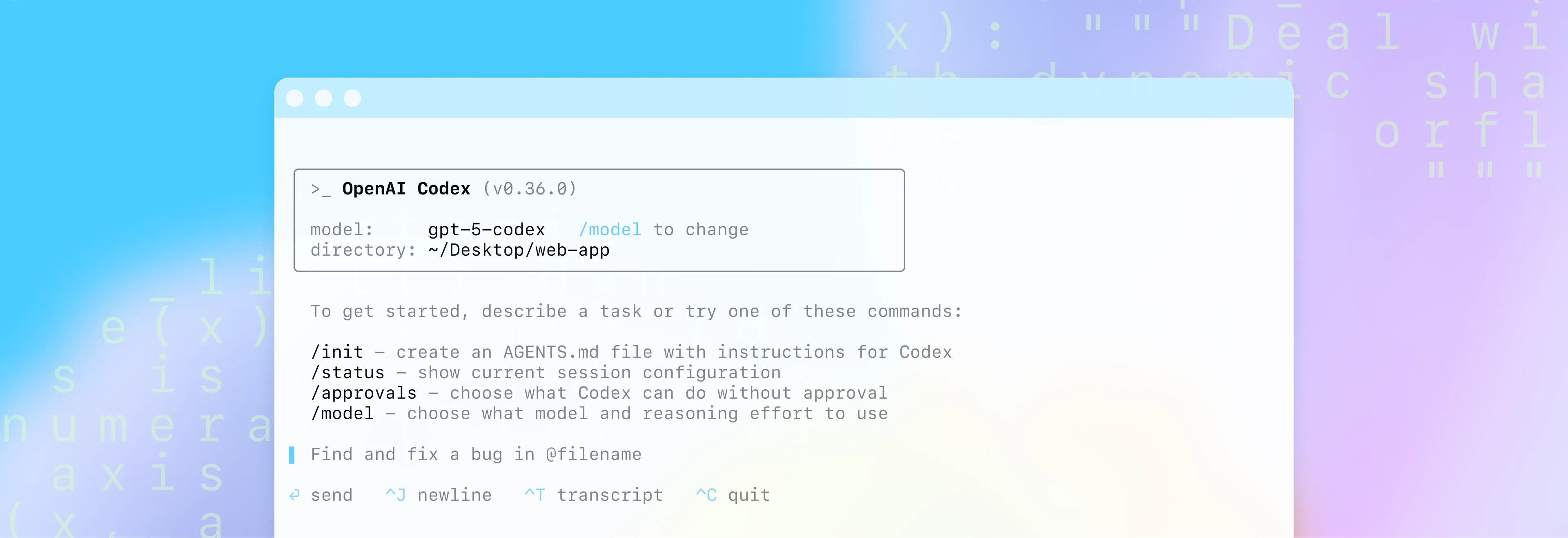
Codex
(2025-10-12T19:18.664Z)
Perplexity Query
(2025-10-12T19:18
.664Z)
Question:
What is Codex by OpenAI? How is it different than just using GPT in an AI Native IDE?
Model: sonar-pro
Codex, by OpenAI
OpenAI Codex is a cloud-based software engineering agent that functions as an autonomous developer capable of working on multiple tasks in parallel within isolated sandbox environments. Unlike simply using a general-purpose language model in an IDE, Codex represents a fundamentally different approach to AI-assisted development, combining specialized architecture, autonomous execution capabilities, and workflow integration that extends far beyond text generation.
Architecture and Foundation
Codex is powered by codex-1, a version of OpenAI's o3 reasoning architecture specifically optimized for software engineering tasks.
[0ir9n6]
[gqj595]
This represents a significant departure from the original Codex model, which was built as a fine-tuned variant of GPT-3 trained on 159 gigabytes of Python code from over 54 million GitHub repositories.
[0ir9n6]
The current implementation uses reinforcement learning trained on real-world coding tasks across various environments, enabling it to generate code that mirrors human style and PR preferences while adhering precisely to instructions.
[gqj595]
The training methodology is particularly sophisticated—codex-1 was trained to iteratively run tests until achieving passing results, giving it the ability to verify and correct its own work.
[gqj595]
This is fundamentally different from general-purpose GPT models, which simply generate text without the capability to execute or validate the code they produce.
[0ir9n6]
Key Differentiators from GPT in IDEs
When you use GPT-4 or GPT-4o in an AI-native IDE, you're essentially working with a highly capable text generator that can produce code snippets and explanations. The model responds to your prompts but lacks the deeper integration and autonomous capabilities that define Codex. Several critical distinctions emerge:
Execution and Verification: Codex operates within cloud sandbox environments where it can actually run code, execute tests, and iterate on solutions until they work correctly.
[0ir9n6]
[gqj595]
GPT models in IDEs typically cannot execute the code they generate, requiring you to manually test and debug their output. This makes Codex a true development tool rather than just a sophisticated autocomplete system.
Codebase Understanding: Codex maintains context across entire repositories, understanding project structure, dependencies, and development workflows.
[0ir9n6]
Each task runs with your repository preloaded into its sandbox environment.
[gqj595]
While GPT models can process large context windows (up to 128K tokens in GPT-4o), they lack the specialized training on software engineering practices that allows Codex to understand how to structure projects, handle dependencies, and follow best practices.
[0ir9n6]
[y3wy5c]
Autonomous Task Execution: Codex can perform complete tasks autonomously, including writing features, fixing bugs, and proposing pull requests for review.
[gqj595]
It works in parallel on multiple tasks, functioning more like a teammate than a tool. In contrast, GPT models in IDEs require continuous human guidance and cannot independently complete multi-step engineering workflows.
Practical Capabilities
Codex demonstrates specialized competencies that reflect its training on real-world software engineering tasks. It understands not just how to write code, but also how to structure projects, run tests, and follow development best practices.
[0ir9n6]
The system can interpret complex technical requirements and translate them into working software solutions, maintaining the style and conventions you'd expect from a human developer.
Compared to OpenAI's o3 model, codex-1 consistently produces cleaner patches that are ready for immediate human review and integration into standard workflows.
[gqj595]
This polish reflects its training specifically on the types of contributions developers actually merge into production codebases.
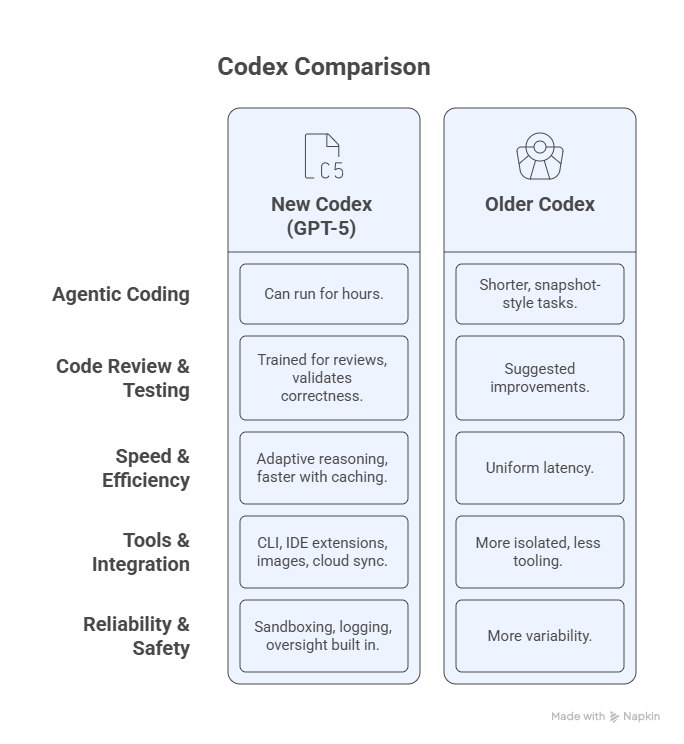
Evolution from Original Codex
The original Codex, which powered the first generation of GitHub Copilot, was limited by its GPT-3 foundation.
[ec0bx9]
[y3wy5c]
It had a small context window of around 4K tokens and suffered from inconsistent output quality, weak debugging abilities, and occasional syntax errors.
[y3wy5c]
That version has since been deprecated and is no longer recommended for production use.
[y3wy5c]
The current Codex represents a complete architectural reimagining. While the original was essentially a fine-tuned language model, the new system built on o3 reasoning architecture brings sophisticated problem-solving capabilities, iterative refinement, and the ability to work autonomously within complete development environments.

Availability and Access
Codex is currently available to ChatGPT Pro, Business, and Enterprise users, with Plus and Edu support rolling out.
[gqj595]
As of June 2025, Plus users gained access, and the system now supports internet access during task execution.
[gqj595]
This represents a premium offering distinct from the general GPT API access that powers most AI-native IDEs.
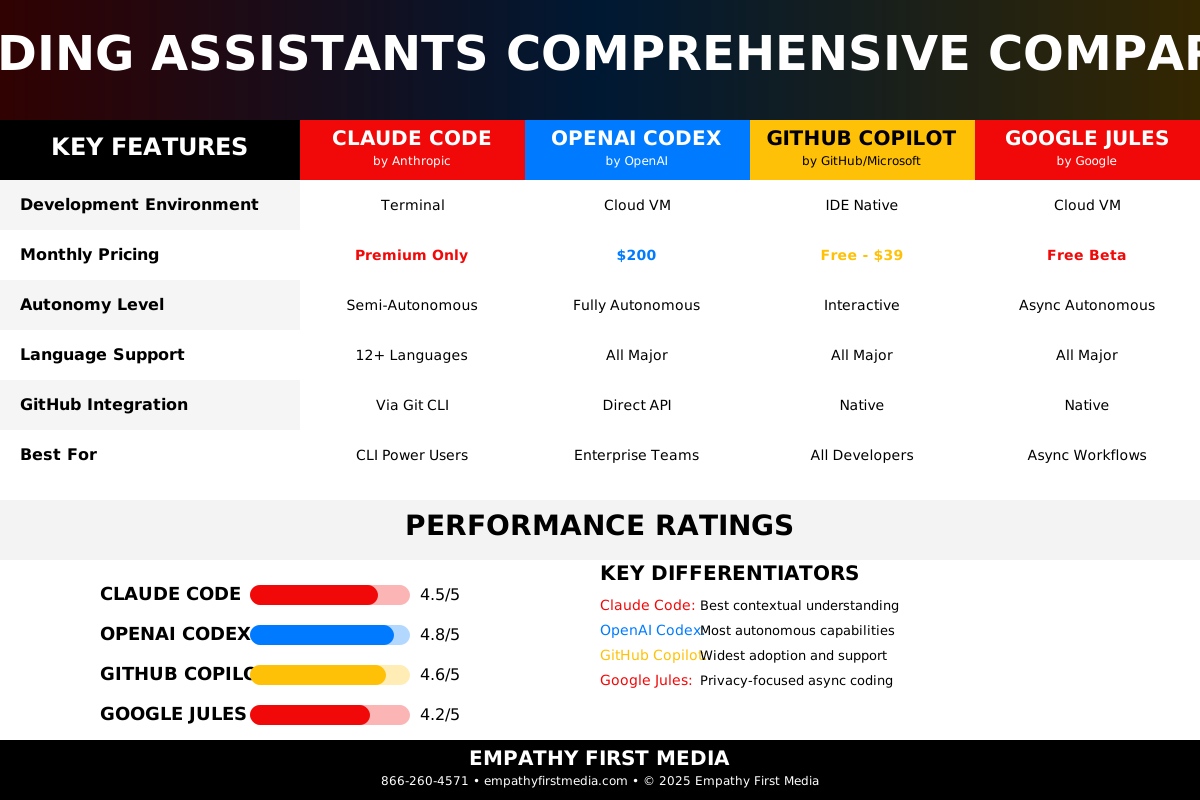
Comparison with GPT Models for Coding
While GPT-4 and GPT-4o offer impressive coding capabilities with large context windows and strong reasoning abilities,
[y3wy5c]
they serve different purposes than Codex. GPT-4o, for example, provides near GPT-4-level accuracy with drastically reduced latency and multimodal support,
[y3wy5c]
making it excellent for real-time code assistance and pair programming. However, it functions as a coding assistant rather than an autonomous agent.
GPT models excel at generating code snippets, explaining concepts, refactoring suggestions, and answering questions about code.
[y3wy5c]
[h44ezn]
They act as "coder buddies" that enhance your productivity but require your active participation and programming knowledge.
[h44ezn]
Codex, by contrast, can take ownership of entire features or bug fixes, working independently in sandboxed environments until tasks are complete.
Use Case Alignment
The distinction becomes most apparent when considering workflows. If you need real-time autocomplete, code explanations, or assistance while actively writing code, GPT models integrated into your IDE provide immediate, cost-effective support. If you want to delegate complete engineering tasks—"implement user authentication," "fix these three bugs," "add API documentation"—Codex's autonomous, execution-capable architecture becomes invaluable.
The specialized training on software engineering workflows means Codex understands the full development lifecycle in ways that general-purpose models cannot match.
[0ir9n6]
It bridges natural language and programming logic not just through text generation, but through actual software development capabilities including testing, debugging, and iterative refinement until solutions meet specifications.
Citations
[ec0bx9] 2025, Oct 10. OpenAI Codex vs GPT - DEV Community. Published: 2025-05-18 | Updated: 2025-10-10
[0ir9n6] 2025, Oct 11. How does Codex differ from GPT-3? - Milvus. Published: 2025-10-03 | Updated: 2025-10-11
[y3wy5c] 2025, Oct 10. Which OpenAI Model Is Best for Coding? A Developer's Guide to .... Published: 2025-07-03 | Updated: 2025-10-10
[gqj595] 2025, Oct 12. Introducing Codex - OpenAI. Published: 2025-05-16 | Updated: 2025-10-12
[5]: 2025, Oct 11. GPT-5-Codex is a better AI researcher than me. Published: 2025-10-07 | Updated: 2025-10-11
[h44ezn] 2025, Sep 10. GPT-4 vs Codex for Coding...general discussion - API. Published: 2023-03-20 | Updated: 2025-09-10
[7]: 2025, Oct 12. OpenAI Codex Hands-on Review - Zack Proser. Published: 2025-05-18 | Updated: 2025-10-12
[8]: 2025, Oct 12. Will Codex ever get an upgrade to at least GPT 5? or better o3?. Published: 2025-08-16 | Updated: 2025-10-12