
Peter Turchin

Peter Turchin

Peter Turchin is a complexity scientist and cliodynamics pioneer who uses data-driven models of history to forecast social instability and long-run political cycles. [3e1cbk] [cvc3uf] [3wiyoi]
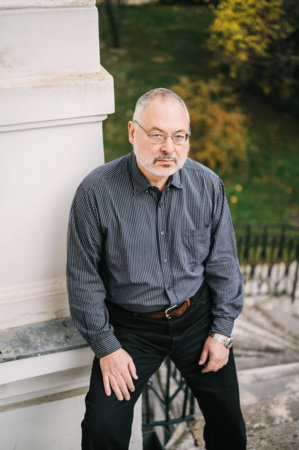
Peter Turchin is a person: a Russian-American scientist trained as a theoretical biologist who became a leading figure in the quantitative study of historical dynamics, which he and colleagues term Cliodynamics. [3e1cbk] [cvc3uf] [3wiyoi] He began publishing influential work in population ecology in the 1990s and shifted his primary focus to historical social science and cliodynamics in the 2000s. [3wiyoi] Innovation consultants return to his work because it offers testable models of elite overproduction, state capacity, and social cohesion that help anticipate political and macro-social turbulence shaping markets and institutions. [3e1cbk] [bw7cxn] [1nmgen]

Type and Format

  • Type: This source is a person (researcher/author).
  • Format details:
    • Peter Turchin is Professor Emeritus of Ecology and Evolutionary Biology at the University of Connecticut, with work spanning ecology, cultural evolution, and mathematical models of historical dynamics. [6ovwlj] [3wiyoi]
    • He is a project leader and External Professor at the Complexity Science Hub Vienna, working on social and cultural evolution and cliodynamics. [cvc3uf] [n2oujk]
    • He is a Research Associate at the School of Anthropology and Museum Ethnography, University of Oxford, collaborating with the World History Lab and the Centre for the Study of Social Cohesion. [cvc3uf]
    • His primary public surfaces are his personal site peterturchin.com and his Substack Cliodynamica. [3e1cbk] [bw7cxn]
  • Where it lives:
    • Homepage [3e1cbk]
    • Cliodynamica Substack [bw7cxn]

The People Behind It

Since the source is a person, this section is a brief bio of Peter Turchin.
  • Peter Turchin was born in 1957 in Russia (then Soviet Union) and emigrated to the United States, later becoming a Russian-American scientist. [3wiyoi]
  • He was initially trained as a theoretical biologist, working in population ecology before pivoting to historical social science. [cvc3uf] [3wiyoi]
  • Turchin earned his PhD in zoology from Duke University in 1985 and joined the University of Connecticut faculty, where he became a professor in ecology and evolutionary biology and later professor in the Department of Mathematics. [6ovwlj] [3wiyoi]
  • He is known as a co-founder of cliodynamics, defined on his site as “the field of historical social science” using tools of complexity science and large datasets to study long-term social dynamics. [3e1cbk] [1nmgen]
  • His current roles include Professor Emeritus at the University of Connecticut, project leader at Complexity Science Hub Vienna, and Research Associate at Oxford’s School of Anthropology and Museum Ethnography. [cvc3uf] [6ovwlj] [n2oujk]

Catalog of Notable Works

Key books and public works by Peter Turchin (oldest to newest), focusing on cliodynamics and macro-social dynamics:
  • Complex Population Dynamics: A Theoretical/Empirical Synthesis (Princeton University Press, 2003) — 2003 — integrates theory and data in population ecology and lays methodological groundwork Turchin later adapts to historical dynamics. [3wiyoi] [92vsox]
  • Historical Dynamics: Why States Rise and Fall (Princeton University Press) — 2003 — develops mathematical models to explain the rise and decline of complex societies using structural-demographic theory. [3wiyoi] [92vsox]
  • War and Peace and War: The Rise and Fall of Empires — 2006 — popular-level synthesis arguing that empires rise in regions of intense inter-group conflict (“metaethnic frontiers”) and fall as internal cohesion erodes. [3wiyoi]
  • Secular Cycles — 2009, co-authored with Sergey Nefedov — analyzes long-term “secular cycles” in agrarian societies, focusing on variables like population, elite numbers, and state finances. [3wiyoi] [92vsox]
  • Ages of Discord: A Structural-Demographic Analysis of American History — 2016 — applies structural-demographic theory to U.S. history, arguing that mounting elite overproduction, inequality, and fiscal stress drive waves of instability. [3wiyoi] [1nmgen]
  • End Times: Elites, Counter-Elites, and the Path of Political Disintegration — 2023 — extends his analysis to argue that modern America is entering a period of heightened instability driven by elite competition and social immiseration. [3e1cbk] [bw7cxn] [1nmgen]
  • The Great Holocene Transformation — 2025 — described on his Substack as a recent book that looks at how the Holocene era transformed human societies, linking deep history with current political-economic dynamics. [bw7cxn]
(Where individual publisher pages or Google Books URLs are not directly listed in the search results, titles and years are taken from Turchin’s biography and bibliographies. [3wiyoi] [92vsox] )

Why It Matters to Innovators

  • Turchin’s structural-demographic theory offers a quantitative framework for understanding when societies enter phases of instability due to elite overproduction, inequality, and state fiscal crises, which directly affects political risk, regulation, and demand in markets innovators operate in. [3wiyoi] [1nmgen]
  • His notion of elite overproduction—too many credentialed elites competing for too few positions—helps explain rising polarization, institutional gridlock, and legitimacy crises, a critical backdrop for innovators betting on regulatory and institutional environments. [3wiyoi] [1nmgen]
  • Cliodynamics’ emphasis on large historical datasets and testable models provides a methodological template for treating social change more like a science, resonant with data-driven Forecasting and Complexity science approaches to strategy. [3e1cbk] [bw7cxn]
  • His work on social cohesion and “integrative vs. disintegrative phases” gives innovators a lens on when societies are more receptive to collective projects, major infrastructure, or ambitious institutional innovation versus when fragmentation and risk aversion dominate. [3e1cbk] [cvc3uf] [1nmgen]
  • By tying long-run fiscal health, inequality, and social unrest into recurrent cycles, Turchin’s models help frame macro “storm windows” and “calm windows,” informing long-horizon bets in areas like state capacity, resilience tech, and governance innovation. [3wiyoi] [1nmgen]

Best Starting Points

  • Cliodynamica (Substack) – Introductory essays [bw7cxn] — Accessible, timely posts applying cliodynamics to current events; good for grasping his voice and core concepts without heavy math.
  • War and Peace and War: The Rise and Fall of Empires [3wiyoi] — Narrative-style introduction to his ideas about empires, cohesion, and “metaethnic frontiers,” easier to read than his more technical works.
  • Ages of Discord: A Structural-Demographic Analysis of American History [3wiyoi] [1nmgen] — Best single-volume deep dive into how his structural-demographic model applies to a familiar case (the U.S.), with clear implications for today.
  • End Times: Elites, Counter-Elites, and the Path of Political Disintegration [3e1cbk] [1nmgen] — Captures his latest thinking about contemporary American and global instability, directly linking theory to current crises.
  • Great Simplification podcast episode with Peter Turchin [1nmgen] — One-hour conversation that surfaces his key ideas (elite overproduction, cycles of instability) in a Q&A format.

Adjacent Sources

  • End Times (Peter Turchin) — Deep dive on his 2023 book about elites and political disintegration. [3e1cbk] [1nmgen]
  • Ages of Discord (Peter Turchin) — Core structural-demographic treatment of U.S. history. [3wiyoi]
  • Secular Cycles (Turchin & Nefedov) — Technical backbone for his theory of long-run agrarian cycles. [3wiyoi]
  • Complexity Science Hub Vienna — Institutional home for much of his current complexity and cliodynamics research. [n2oujk]
  • Elite overproduction — Central mechanism in his account of political instability. [3wiyoi] [1nmgen]
  • Cliodynamics — The broader scientific program Turchin co-founded, studying history with quantitative, model-based tools. [3e1cbk] [1nmgen]

Sources

[3wiyoi] Peter Turchin - Wikipedia [6]:

Peter Turchin Book Talk: “End Times: Elites, Counter ... - YouTube
[7]: Peter Turchin (@Peter_Turchin) / Posts / X - Twitter