


The Pragmatic Programmer
(2025-08-17T12:28.406Z)
Perplexity Query
(2025-08-17T12:28
.406Z)
Question:
Summarize the book "The Pragmatic Programmer"
Response from sonar-pro:
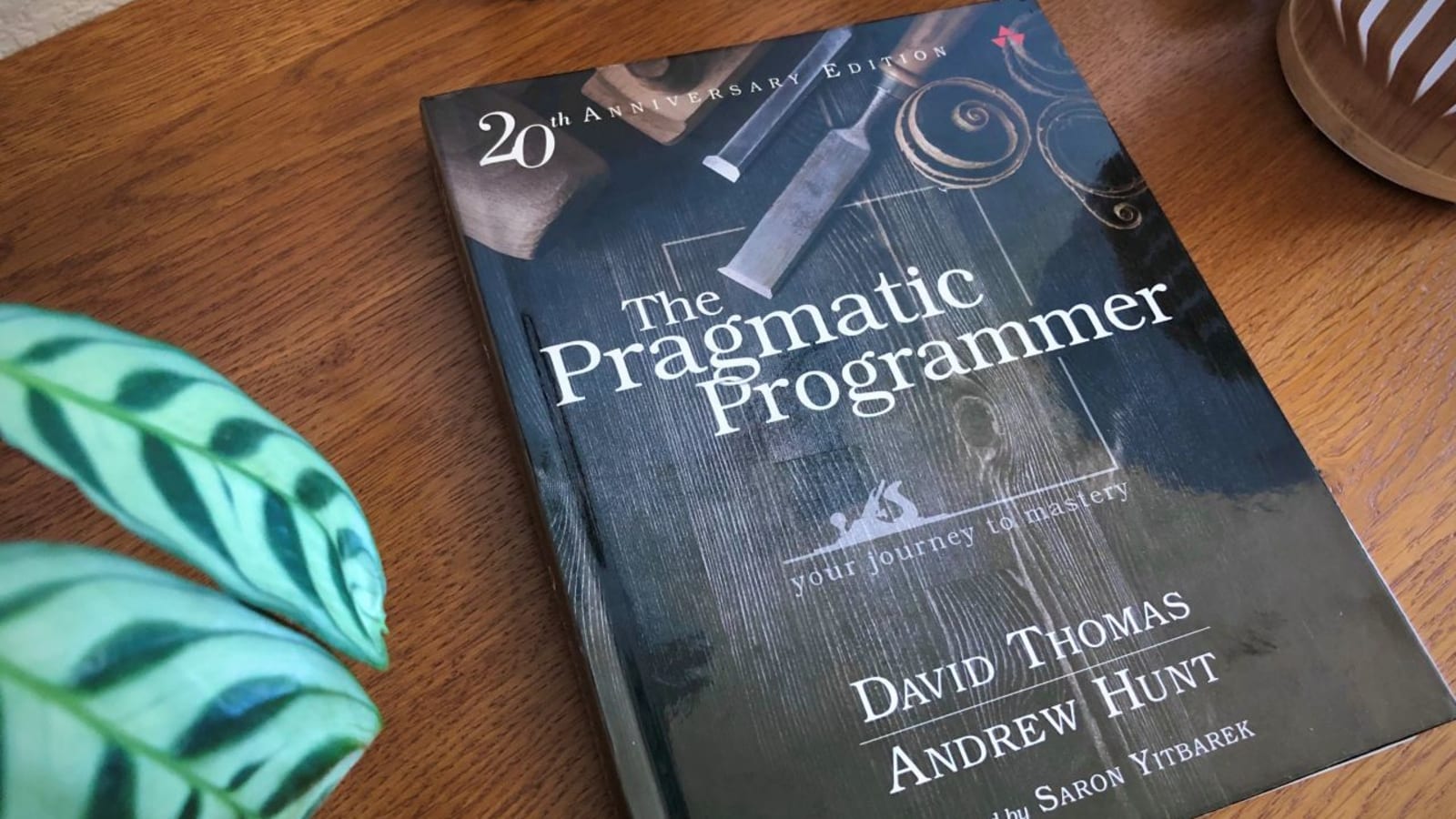
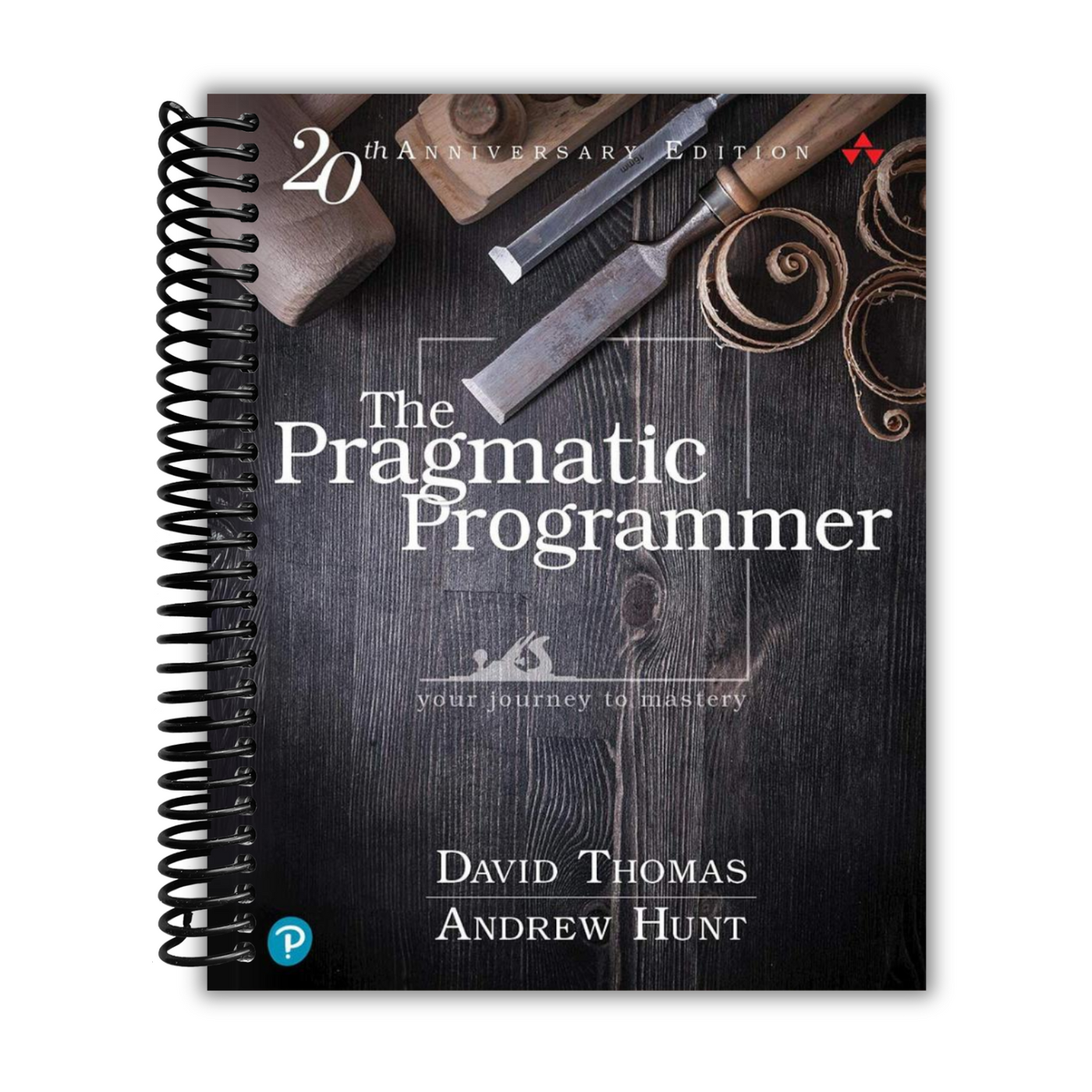
The Pragmatic Programmer by Andrew Hunt and David Thomas is a foundational book in software development that offers practical advice and philosophical insights for becoming a more effective, adaptable, and thoughtful programmer.
[pgaq41]
[mmpyr5]
It is structured around key principles, concrete tips, and mindset recommendations that are relevant to any stage of a developer’s career.
The book focuses on these core themes:
- Continuous Learning: Developers must be proactive about growing their knowledge. This includes exploring new languages, paradigms, and technologies, as well as engaging with the broader technical community to avoid stagnation and stay relevant. [jbcpm5] Example: Set a goal to learn a new programming language or major concept each year.
- Core Practices:
- DRY Principle (Don’t Repeat Yourself): Avoid duplicating code or logic, since repetition leads to errors and maintenance headaches. Instead, centralize functionality and abstract commonalities. [pgaq41] [d06by2] [jbcpm5]
- YAGNI (You Aren’t Gonna Need It): Do not add functionality unless it is immediately necessary, to keep systems simple and agile. [pgaq41]
- Version Control, Testing, and Automation: Use tools and practices that allow for safe experimentation and reliable deployments, such as automated testing, build scripts, and robust version control systems. [pgaq41]
- Think Critically & Take Responsibility: Take ownership of code and its consequences, apply thorough reasoning to technology choices, and don’t leave “broken windows” (i.e., unresolved problems) unrepaired. [pgaq41]
- Software Design Wisdom:
- Orthogonality: Components should be as independent as possible, so changes in one part don’t have unintended consequences elsewhere.
- Simplicity through Prototypes/Tracer Bullets: Use prototypes and iterative, testable deliverables to refine ideas and catch issues early. [ah6p2g]
- Mindset and Philosophy:
- Adaptability: Pragmatic programmers are flexible, curious, and willing to experiment.
- Responsibility: They see themselves as stewards of their craft—actively maintaining, refactoring, and improving code bases rather than just implementing requirements. [mmpyr5]
- Paranoia for Quality: Use defensive programming techniques (like design by contract and assertive programming) to increase system reliability and reduce bugs. [ah6p2g]
The book is not a manual of coding recipes or specific frameworks, but a guide for developing professional judgment and habits that enable high-quality, maintainable, and robust software systems.
[mmpyr5]
Each chapter ends with succinct “tips” that encapsulate practical takeaways, making it a reference that can be revisited throughout a programmer’s career.
Citations
[pgaq41] 2025, Aug 13. I've read... The Pragmatic Programmer. Published: 2022-01-16 | Updated: 2025-08-13
[d06by2] 2025, Mar 29. The Pragmatic Programmer - Book Review. Published: 2023-01-04 | Updated: 2025-03-29
[ah6p2g] 2025, Jul 27. HugoMatilla/The-Pragmatic-Programmer: Summary of .... Published: 2016-08-22 | Updated: 2025-07-27
[jbcpm5] 2025, Apr 07. Book Summary: The Pragmatic Programmer | by Fayner Brack. Published: 2023-04-22 | Updated: 2025-04-07
[mmpyr5] 2025, Aug 12. A Pragmatic Programmer Book Review - Jeff Bailey. Published: 2020-12-19 | Updated: 2025-08-12