Write a comprehensive one-page article about "The Agile Manifesto".
Model: sonar-pro
The Agile Manifesto is a foundational document in modern software development that outlines core values and guiding principles for creating software efficiently, collaboratively, and adaptively.
[s3s2zu]
[d22zzd]
Its significance lies in shifting development from rigid processes to a customer-focused, iterative approach, transforming not only how software is built but also how teams collaborate and respond to change.
[ckg73z]
Main Content
Drafted in 2001 by a group of seventeen independent software practitioners at a ski resort in Utah, the Agile Manifesto emerged as a response to the limitations of traditional, sequential work models such as the Waterfall methodology.
[642yjc]
[1uatbo]
The group, known as the Agile Alliance, recognized that the prevailing approach—heavy on formal processes and documentation—failed to accommodate dynamic requirements and rapid feedback loops central to successful software projects.
[s3s2zu]
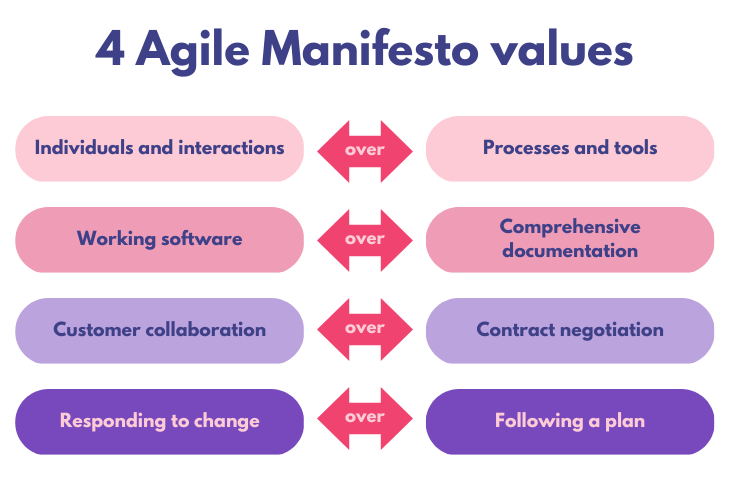
At its core, the Manifesto is built on four central values
[7nerm0]
[8]:
Individuals and interactions over processes and tools.
Working software over comprehensive documentation.
Customer collaboration over contract negotiation.
Responding to change over following a plan.
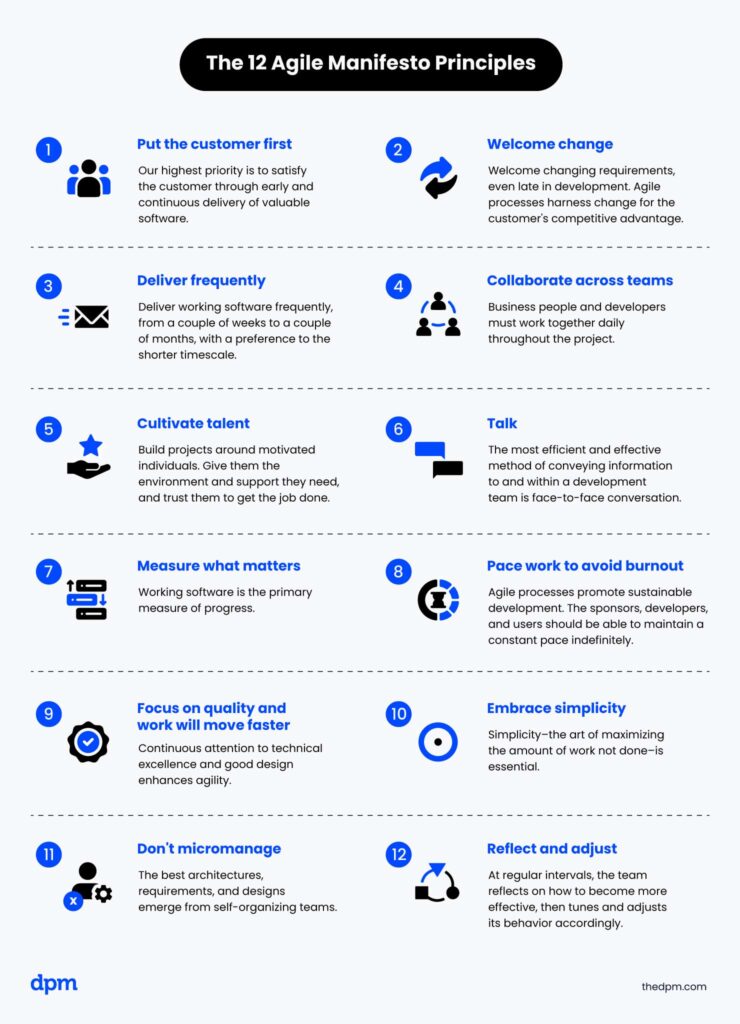
These values are reinforced by twelve guiding principles, which promote fast delivery, continuous improvement, technical excellence, and adaptability.
[y87yg0]
For example, Agile encourages frequent releases of working software, welcoming changes even late in development, and close daily cooperation between business stakeholders and developers.
[y87yg0]
Practical examples and use cases include project management frameworks like Scrum (short, regular sprints and daily standups for rapid adaptation to new requirements), Kanban (visualizing work to improve flow), and XP (Extreme Programming) (frequent releases and pair programming to ensure code quality and adaptability).
[y87yg0]
Companies such as Spotify and Salesforce have leveraged Agile techniques to rapidly deliver customer value and remain competitive.
Benefits of Agile include improved team morale, increased transparency, faster response to market changes, and higher customer satisfaction. Teams working in an Agile way can experiment, learn, and iterate quickly, which is invaluable in uncertain, rapidly-evolving business environments.
[7nerm0]
However, there are challenges as well. Shifting from traditional processes to Agile requires significant cultural change, ongoing investment in training, and sustained leadership support. Agile is not a strict methodology but a guiding mindset, which means implementation can be inconsistent or misapplied, sometimes leading to "Agile in name only" without realizing its real benefits.
[s3s2zu]
Current State and Trends
Adoption of Agile is now widespread, extending beyond software into industries such as manufacturing, finance, and marketing.
[mxv2y1]
Its flexibility makes it well-suited to any context requiring frequent adaptation and continuous delivery. Scrum, Kanban, and Scaled Agile Framework (SAFe) remain popular methodologies, while tools like Jira, Trello, and Asana help teams implement Agile principles.
[y87yg0]
Major organizations including Microsoft, IBM, and Google have embedded Agile into their product development lifecycles, highlighting its value in both large-scale and startup environments. Recent trends include scaling Agile practices across complex organizations and incorporating DevOps to create seamless end-to-end workflows—bridging development and operations for faster, more reliable delivery.
[y87yg0]
Future Outlook
Looking ahead, Agile is expected to continue evolving, integrating more deeply with artificial intelligence-driven project management, remote-first team collaboration tools, and cross-disciplinary applications far beyond IT. As organizations increasingly face uncertainty and rapid technological shifts, the Agile mindset—embracing change, collaboration, and iterative improvement—will remain a cornerstone for innovation and value delivery.
Conclusion
The Agile Manifesto revolutionized how teams build and adapt products by prioritizing flexibility, collaboration, and responsiveness to change. Its influence will only grow as the pace of technological and market change accelerates, making Agile principles indispensable for modern organizations.