


Crossing The Chasm
Crossing the Chasm: Marketing and Selling High-Tech Products to Mainstream Customers.
(2025-07-22T20:24.713Z)
Perplexity Query
(2025-07-22T20:24
.713Z)
Question:
Write a comprehensive one-page article about "Crossing the Chasm".
Introduction
Crossing the Chasm is a pivotal concept in technology marketing and innovation management, introduced by Geoffrey A. Moore in his influential book, “Crossing the Chasm: Marketing and Selling High-Tech Products to Mainstream Customers”. [^4mfh2t] [^lbqct9] This framework highlights the difficult transition that disruptive innovations face when moving from a small group of enthusiastic early adopters to the much larger and more conservative mainstream market. Understanding this concept is essential for entrepreneurs, investors, and companies aiming to transform breakthrough products into mainstream successes.
Main Content
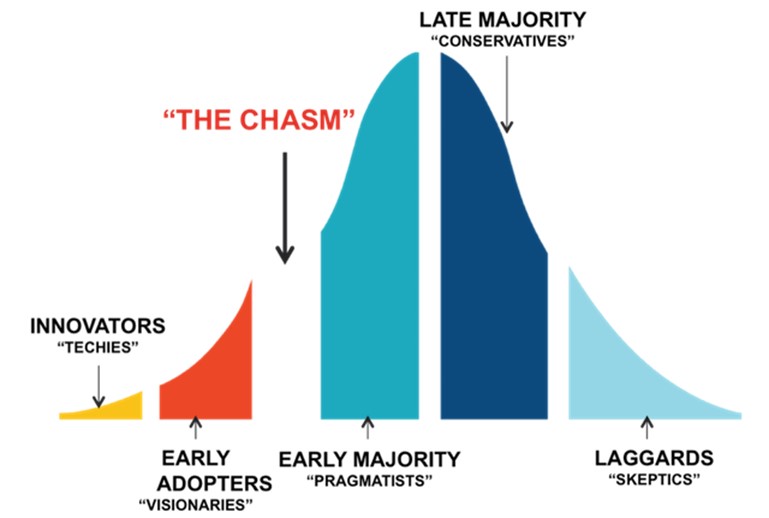
At the core of Moore’s model is the recognition of a significant gap—or "chasm"—that exists between early adopters and the early majority within the technology adoption lifecycle. [^4mfh2t] [^zfvo8y] [^rd0vkj] Early adopters, often called “visionaries,” are willing to embrace new technologies and take risks, whereas the early majority, or “pragmatists,” are more cautious and require solid proof of value before committing. [^4mfh2t] [^zfvo8y] The chasm represents a critical period where enthusiastic initial uptake can stall if a product fails to gain traction with the more risk-averse mainstream market.
To successfully cross the chasm , Moore recommends that innovators focus intently on a specific niche or "beachhead market" before broadening their reach. [^lbqct9] [^zfvo8y] Rather than appealing to all potential customers, companies should first dominate one highly targeted segment by solving a real, significant problem for that group. For example, Tesla initially targeted the luxury car market with its Roadster and Model S, building credibility and capital before expanding to the mass market with the Model 3. [^zfvo8y] Similarly, Apple’s early focus on creative professionals with the Macintosh helped it establish a loyal base before mainstream adoption.
A crucial element in crossing the chasm is delivering the " whole product "—ensuring that what’s offered is not just a set of intriguing features, but a complete solution that works seamlessly for everyday users. [^4mfh2t] [^zfvo8y] Pragmatists expect reliability, compatibility, and a robust ecosystem of support. This often requires companies to forge partnerships and alliances, ensuring the product integrates into existing workflows and meets all customer needs—not just the initial promise.
Benefits of this approach include increased credibility, focused use of resources, and a higher likelihood of establishing a dominant market standard . [^lbqct9] [^rd0vkj] The “crossing the chasm” strategy has enabled companies like Salesforce, Zoom, and many SaaS startups to transform early experimentation into enduring mainstream business models. However, the challenges are substantial: companies must resist the temptation to overextend too quickly, address gaps in the "whole product," and communicate a compelling value proposition tailored to pragmatic buyers.
 Source: https://www.the-waves.org/2023/10/09/crossing-the-chasm-geoffrey-moore-failing-to-explain-reality/
 Current State and Trends
Today, the chasm concept remains integral to startup and product launch strategy , especially in high tech and SaaS sectors. [^zfvo8y] Many new technologies—such as virtual reality (VR) headsets like Meta Quest and Apple Vision Pro —are still in the process of crossing the chasm, having gained the interest of early enthusiasts but facing hurdles in mainstream usability, content ecosystem, and price. [^zfvo8y] Successful adoption in artificial intelligence, cloud computing, and platform technologies also often hinges on understanding and executing this transition.
Key players who have successfully navigated the chasm include Tesla, Apple, Salesforce, and Zoom —each leveraging niche adoption to springboard into broader markets. Recent trends show a focus on “whole product” ecosystems, customer-centric design, and robust partner networks as means to accelerate mass adoption. [^zfvo8y] [^rd0vkj] The model’s relevance is evidenced by its continued citation in product management, investment, and marketing discussions.
Future Outlook
Looking forward, the challenges of crossing the chasm will intensify as products and services become more complex and customer expectations continue to evolve. The emergence of AI, mixed reality, and decentralized platforms will require even more strategic focus on early mainstream use cases, seamless integration, and ecosystem development. Companies that master crossing the chasm will shape the future of technology markets and set new standards for innovation diffusion.
Conclusion
Crossing the Chasm is a time-tested guide for transforming innovative products into mainstream successes by bridging a critical adoption gap. [^4mfh2t] [^zfvo8y] As technology cycles accelerate, mastering this transition will remain central to driving the next wave of market leaders.
Sources
[^4mfh2t] https://en.wikipedia.org/wiki/Crossing_the_Chasm
[^lbqct9] https://strategiesforinfluence.com/crossing-the-chasm-geoffrey-moore/
[^zfvo8y] https://www.joecotellese.com/posts/crossing-the-chasm-book-summary/
[^rd0vkj] https://www.predictableinnovation.com/methods/crossing-the-chasm-framework-mistakes
[^w1rn9n] https://www.hawthorneadvertising.com/taking-the-leap-crossing-the-marketing-chasm/