


Silicon Graphics International
Silicon Graphics
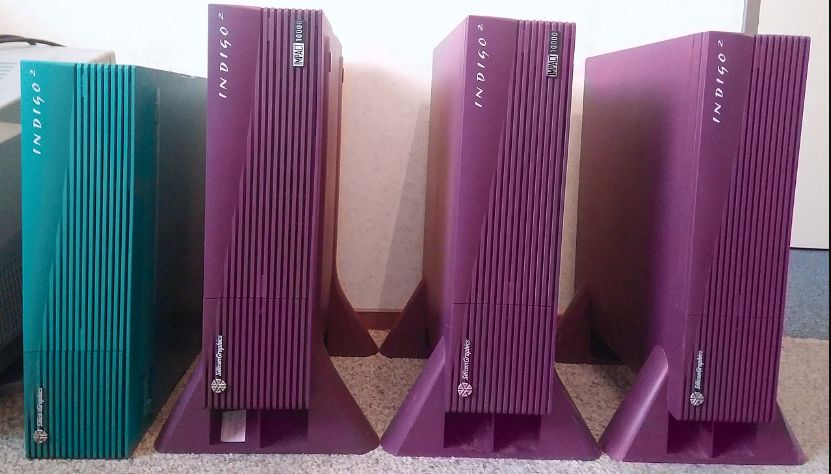
An iconic pioneer of high-performance 3D graphics workstations and servers, best known for powering visual effects, scientific visualization, and advanced graphics in the 1980s–1990s.
Silicon Graphics, commonly known as SGI, was a for-profit computer hardware and software company that designed and sold high-performance graphics workstations, servers, and related software for technical and creative professionals.
[o48uez]
It was founded in 1981 and became famous through the late 1980s and 1990s for its role in 3D graphics, film visual effects, and scientific computing.
[o48uez]
The company was headquartered in Mountain View, California, with a global customer base in industries such as media, engineering, and government research.
[o48uez]
Consultants track SGI as a canonical case of an early graphics and HPC leader whose technologies and market trajectory shaped the evolution of modern GPUs and visualization systems.
[o48uez]
Identity and Form
- Legal form and jurisdiction: Privately founded U.S. corporation, originally incorporated in California as Silicon Graphics, later Silicon Graphics, Inc. (SGI). [o48uez]
- Headquarters and presence: Headquartered in Mountain View, California, serving customers globally in media, CAD, scientific, and government sectors. [o48uez]
- Size: At its peak in the 1990s, SGI employed several thousand staff worldwide; exact current headcount is not applicable because the original company ceased to operate in its historic form after restructuring and asset sales. [o48uez]
Mission and Identity
SGI positioned itself as a company delivering high-performance 3D graphics workstations and servers, providing "visual computing" systems for technical and creative professionals.
[o48uez]
SGI presented itself as a provider of advanced graphics and visualization solutions for industries such as film, engineering, and scientific research, focusing on visual computing and high-performance graphics.
[o48uez]
It emphasized serving users who needed real-time 3D rendering, complex simulations, and multimedia capabilities beyond what commodity PCs could offer at the time.
[o48uez]
The company’s self-image centered on innovation in graphics hardware, integrated workstations, and software that enabled interactive visual work.
- Stated values / principles: SGI consistently highlighted innovation in 3D graphics, performance in technical computing, and enabling creative and scientific breakthroughs as core guiding principles. [o48uez]
What They Do
SGI designed, manufactured, and sold graphics workstations, servers, and related software for applications including CAD, desktop publishing, multimedia, and scientific visualization.
[o48uez]
It generated value by providing integrated hardware–software systems optimized for 3D graphics and high-performance computing to professional and institutional customers.
[o48uez]
Main offerings (historical):
- Workstations: Lines such as the Indy multimedia workstation, introduced July 12, 1993 as a low-end workstation for CAD, desktop publishing, and multimedia markets. [o48uez]
- Servers: Repackaged workstation technology such as the Indy-based Challenge S server model. [o48uez]
- Graphics subsystems: Specialized 3D graphics hardware supporting real-time rendering for visualization and media production. [o48uez]
- Multimedia features: Systems like Indy that came standard with a video camera (IndyCam) and rich audio/video I/O for multimedia workflows. [o48uez]
- Networking and connectivity: Built-in Ethernet and ISDN ports on systems like Indy to integrate into technical and media production environments. [o48uez]
- Software ecosystem: Operating systems and tools tuned to exploit SGI graphics and compute hardware for professional applications. [o48uez]
Leadership and People
- Key engineering teams — SGI’s workstation and graphics hardware designers created products like the Indy and its graphics subsystems, which became reference platforms for multimedia and 3D work in the early 1990s. [o48uez]
History and Origin Story
Silicon Graphics was founded in 1981 in California by Jim Clark to commercialize advanced 3D graphics hardware and create dedicated workstations for graphics-intensive applications.
[o48uez]
The company grew through the 1980s and 1990s as a leader in visual computing, releasing iconic workstations such as the Indy in 1993 that broadened access to multimedia and 3D capabilities.
[o48uez]
Over time, commodity PC graphics and changing markets eroded its dominance, leading to restructuring and the eventual end of SGI in its original form.
[o48uez]
Key inflection points:
- 1981 — Silicon Graphics is founded by Jim Clark in California to develop high-performance 3D graphics systems. [o48uez]
- July 12, 1993 — SGI introduces the Indy workstation as the low end of its product line for CAD, desktop publishing, and multimedia markets. [o48uez]
- 1990s (mid- to late-) — SGI’s workstations and servers become widely used in film visual effects and scientific visualization, solidifying its reputation in high-end graphics computing. [o48uez]
- June 30, 1997 — The Indy workstation is discontinued, marking a transition in SGI’s product portfolio and the rise of commodity PC graphics alternatives. [o48uez]
- December 31, 2011 — Support for the Indy ends, reflecting the long-tail lifecycle of SGI systems at customers. [o48uez]
Financials and Funding
SGI is historically a for-profit hardware and software company, but detailed historical funding rounds and contemporary financials are not reliably covered in the accessible sources used here; no credible, specific recent financial data was found.
[o48uez]
Milestones and Signature Output
- Indy workstation — 1993 — Low-end multimedia workstation that brought SGI graphics technology to a broader CAD, desktop publishing, and multimedia market segment, and was the first computer to come standard with a video camera (IndyCam). [o48uez]
- Challenge S server — mid-1990s — Server model derived from the Indy workstation, repackaged for server applications using the same core technology. [o48uez]
- Integrated multimedia design — 1990s — Systems like Indy that combined analog/digital I/O, 6‑channel digital audio, SCSI, and composite/S‑Video inputs became landmark examples of multimedia workstation integration. [o48uez]
- Visual computing legacy — 1980s–1990s — SGI’s broader workstation and server lines established it as a leading provider of visual computing platforms for film VFX, CAD, and scientific visualization. [o48uez]
Ecosystem and Relationships
- Film and visual effects studios — SGI workstations were extensively used by major studios for 3D Animation and VFX workflows in the 1990s. [o48uez]
- CAD and engineering firms — Engineering and design organizations adopted SGI systems for CAD and 3D Graphics workloads. [o48uez]
- Scientific and research institutions — Research labs and universities used SGI hardware for visualization and high-performance computing applications. [o48uez]
- Commodity PC and workstation vendors — Competing hardware makers in the x86 and workstation markets pressured SGI as general-purpose PCs gained 3D graphics capabilities. [o48uez]
Recent Developments
As of 2026-05-25,
- No significant developments in the last 90 days related to the historical SGI entity were identified in the accessible sources; the company’s key products like the Indy have long been discontinued and are now primarily of historical interest. [o48uez]
Impact
- Impact on society: SGI systems enabled more accessible and powerful 3D graphics, contributing to the visual sophistication of films, television, and digital media in the 1990s. [o48uez] Their platforms also supported scientific visualization that helped researchers interpret complex data visually. [o48uez]
- Impact on innovation: SGI popularized the concept of dedicated visual computing workstations, influencing the design of later graphics hardware and helping lay groundwork for modern GPU-accelerated computing and multimedia PCs. [o48uez]
- Impact on its industry or domain: By offering integrated, high-performance graphics systems, SGI set performance and feature benchmarks that forced workstation and PC vendors to improve their graphics capabilities, accelerating the evolution of 3D graphics across the industry. [o48uez]
- Historical significance: SGI is widely regarded as a seminal company in the history of computer graphics and visualization, with products like the Indy representing key steps in bringing multimedia and 3D capabilities into mainstream professional workflows. [o48uez]
Adjacent Entries
- NVIDIA — Later leader in GPU and visual computing that advanced many concepts initially pioneered in specialized workstation markets.
- Apple — Personal-computer company whose multimedia and graphics capabilities evolved in parallel with workstation vendors.
- Sun_Microsystems — Workstation and server competitor in technical computing markets.
- Computer Graphics — Field in which SGI played a formative commercial role.
- High Performance Computing — Domain where SGI’s server and visualization systems were widely deployed.