


MIT Media Lab
MIT Media Lab
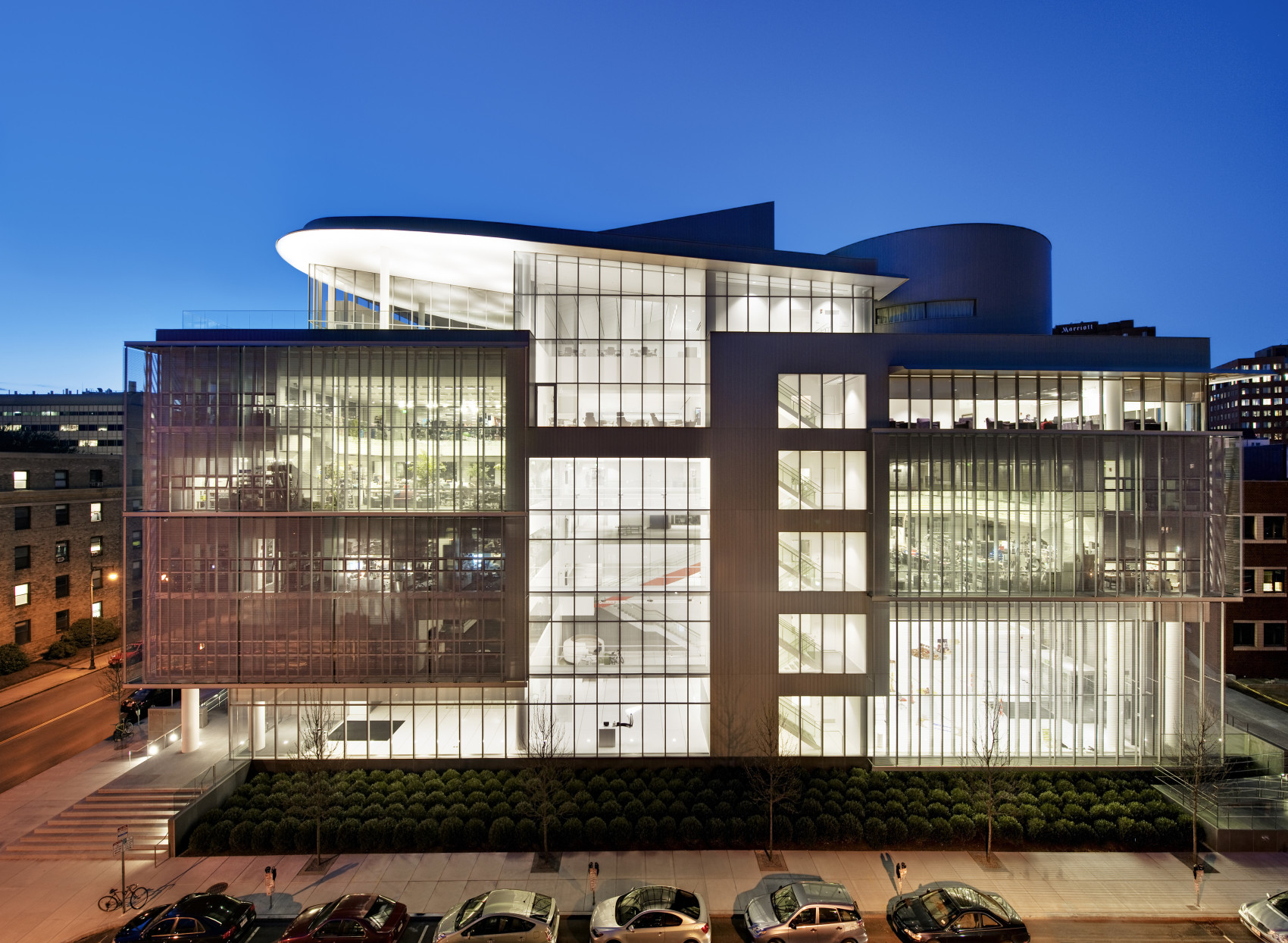
- The MIT Media Lab is a pioneering research lab at MIT fusing technology, media, and design to prototype future human experiences.
- It is a research laboratory within MIT's School of Architecture and Planning, founded in 1985 by Nicholas Negroponte and Jerome Wiesner. [s2lyb2]
- Housed in the Wiesner Building (E15) in Cambridge, Massachusetts, it conducts interdisciplinary work across neurobiology, robotics, emotive computing, and more, with an annual budget around $75 million. [s2lyb2]
- Consultants return to it for its prototypes in human-computer interaction, AI, and societal tech that reveal emerging paradigms in adaptable interfaces and inventive fabrication. [s2lyb2]
Type and Format
- Format details — Ongoing research programs with iterative prototype development, displayed for visitors; focuses on themes like human adaptability, HCI, education, artistic creation, and tech for developing worlds. [s2lyb2]
The People Behind It
- Founders: Nicholas Negroponte (architect, computer scientist, early digital media advocate) and Jerome Wiesner (former MIT President). [s2lyb2]
- Location and scale: Based in Cambridge, MA, with ~837 employees and significant revenue supporting operations. [3vmfr1]
Catalog of Notable Works
- MPEG-4 SA project — Developed structured audio, making it a practical reality for multimedia standards. [s2lyb2]
- Aspen Movie Map — 1970s precursor to Google Street View, enabling interactive spatial navigation. [s2lyb2]
- Femto-photography technique — 2011 publication by Ramesh Raskar's group, imaging individual light pulse movements. [s2lyb2]
- Research groups (as of 2014): Neurobiology, biologically inspired fabrication, socially engaging robots, emotive computing, bionics, hyperinstruments. [s2lyb2]
- Recurring themes: Machines with common sense, sociable robots, prosthetics, sensor networks, musical devices, city design, public health. [s2lyb2]
Why It Matters to Innovators
- Credible as MIT's flagship for prototyping "tangible bits" — physical-digital hybrids that diagnose gaps in human-tech intuition, like emotive computing for intuitive interfaces. [s2lyb2]
- Illuminates Human Centered Design by testing prototypes in real visitor interactions, revealing failure modes in HCI before scaling. [s2lyb2]
- Frameworks human adaptability as core to innovation, teaching mental models for robots and bionics that anticipate societal integration of AI companions. [s2lyb2]
- Exposes developing-world tech challenges, installing models for low-resource fabrication and sensor networks that bypass infrastructure constraints. [s2lyb2]
Best Starting Points
- MIT Media Lab Homepage — Gateway to current groups, prototypes, and events capturing the lab's interdisciplinary ethos. [s2lyb2]
- Aspen Movie Map — Seminal hypermedia project showing early interactive city-scale experiences. [s2lyb2]
- Femto-Photography — Breakthrough in light-speed imaging, exemplar of the lab's physics-meets-media innovation. [s2lyb2]
- Research Themes Overview — Quick scan of active areas like sociable robots for human-tech futures. [s2lyb2]
Adjacent Sources
- Jerome Wiesner — Co-founder, MIT president shaping lab's vision.
- Wired Magazine — Covers similar media-tech intersections.
- Human Computer Interaction — Core to lab's prototypes.
- Tangible User Interfaces — Echoes lab's physical-digital work.
- Ramesh Raskar — Key researcher behind femto-photography advances.