


Cloud Native Computing Foundation
Cloud Native Computing Foundation

An open-source umbrella foundation that stewards the cloud‑native ecosystem, CNCF convenes vendors, end users, and projects to standardize and accelerate modern infrastructure and application platforms.
The Cloud Native Computing Foundation (CNCF) is an open‑source community foundation and industry consortium that hosts and governs cloud‑native projects under the auspices of The Linux Foundation.[1][5] Founded in 2015, it focuses on building “sustainable ecosystems for cloud native software,” including projects like Kubernetes, Prometheus, and OpenTelemetry, with a global community and events footprint.[1][2][5] CNCF is based within The Linux Foundation (a U.S. nonprofit) and operates globally through member companies, end‑user communities, and local meetups.[1][3][7] Consultants track CNCF because it effectively sets de facto standards and best practices for cloud‑native infrastructure used by hyperscalers and enterprises worldwide.[1][2][5]
Identity and Form
- Type: This organization is an open-source umbrella foundation / trade body that hosts and governs cloud‑native software projects and communities.[1][2][5]
- Legal form and jurisdiction:
- Nonprofit foundation initiative hosted by The Linux Foundation, a U.S. 501(c)(6)/501(c)(3) nonprofit; public corporate filings are through The Linux Foundation rather than a separate listed entity.[1][5]
- Headquarters and presence:
- Operates under The Linux Foundation (San Francisco–based) with a global, distributed community and events, including worldwide KubeCon + CloudNativeCon conferences and regional community groups.[1][2][7]
- Size:
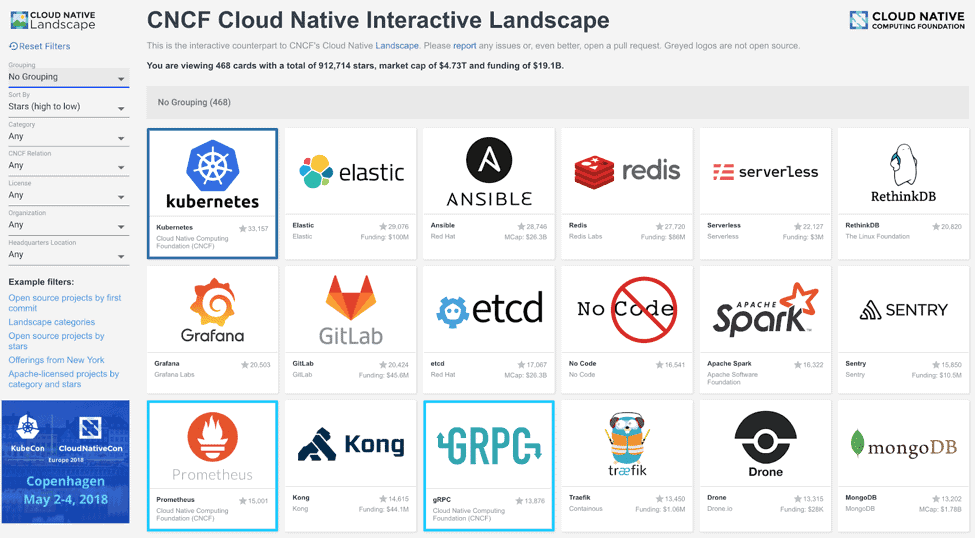
- CNCF reports more than 230 hosted projects across sandbox, incubating, and graduated stages, indicating one of the largest open‑source ecosystems in infrastructure.[2]
- The CNCF End User Community alone counts hundreds of end‑user member organizations (forward‑thinking companies using cloud‑native tech), signaling a broad production‑user base.[3]
- Where it lives online:
- GitHub organization: github.com/cncf (canonical host for CNCF project assets and governance repos).[2]
- News & announcements: cncf.io/announcements (press releases such as project graduations).[5]
Mission and Identity
- Stated mission (in their own words):“The Cloud Native Computing Foundation (CNCF) builds sustainable ecosystems for cloud native software.”[1][5]
- CNCF positions itself as a vendor‑neutral home for cloud‑native open‑source projects, providing governance, community support, and marketing to help them grow from early sandbox ideas to widely adopted, production‑grade technologies.[1][2][5] It says it serves end users, developers, and vendors that build, deploy, and operate modern, scalable applications using containers, microservices, and dynamic orchestration.[2][3] CNCF emphasizes values like openness, neutrality, security, and clear governance, framing itself as the coordination point where end‑user feedback and project roadmaps intersect.[2][3]
- Stated values / principles (representative):
- Vendor‑neutral governance and open participation for projects and members.[2][3]
- Focus on security, contributor pathways, and clear project roadmaps as part of their maturity and due‑diligence process.[2]
- Support for end‑user–driven feedback loops to ensure real‑world adoption and production readiness of projects.[2][3]
What They Do
CNCF hosts, governs, and grows open‑source cloud‑native projects, providing a neutral home, technical oversight, and marketing/community support rather than selling commercial products.[1][2][5] It generates impact by curating a project landscape, running major industry conferences, maintaining technical oversight committees, and operating programs such as end‑user communities and training in partnership with The Linux Foundation.[1][2][3][6]
Main activities and programs
- Project hosting & governance: Maintains a structured lifecycle (sandbox → incubating → graduated) for more than 230 projects, with technical due‑diligence around governance, security, and contributor strategy.[2]
- Technical Oversight Committee (TOC): Runs a TOC that evaluates project maturity, using criteria covering governance, contributor community, security processes, and engineering principles before promotion or graduation.[2]
- Project graduation & incubation: Oversees major project milestones such as OpenTelemetry’s graduation as a “de facto observability standard,” signaling production readiness and ecosystem backing.[1][5]
- End User Community: Operates the CNCF End User Community, providing a vendor‑neutral environment where organizations using cloud‑native technologies collaborate, share best practices, and influence the roadmap of CNCF projects.[3]
- Events & conferences: Co‑organizes KubeCon + CloudNativeCon and topic summits (e.g., Observability Summit) as global hubs for cloud‑native practitioners and maintainers.[1][2]
- Education & certifications (via Linux Foundation): Partners with Linux Foundation Training on CNCF‑branded programs such as the Certified Kubernetes Administrator (CKA) and cloud‑native engineer tracks (e.g., “Advanced Cloud Engineer IT Professional Program”).[6]
- Community groups & meetups: Supports regional groups like Cloud Native New York City, bringing together engineers and platform teams to learn and share around Kubernetes and related CNCF projects.[7]
- Content and thought leadership: Publishes blogs, case studies, and technical content on topics such as AI sandboxing in cloud‑native environments, mapping new patterns to Kubernetes‑like architectures.[4]
Leadership and People
- CNCF is governed within The Linux Foundation structure, with a managing director and a technical oversight body; named roles sometimes vary over time, and individual names are not consistently listed in the snippets available in the current search results.[1][2]
- The Technical Oversight Committee (TOC) acts as the key governance body for projects, conducting due diligence on project maturity, governance, security, and contributor strategy before advancement.[2]
(No reliable, up‑to‑date source in these results provided specific current individual leaders with roles; listing names would risk inaccuracy.)
History and Origin Story
CNCF was formed under The Linux Foundation in 2015 to create a neutral home for Kubernetes and emerging cloud‑native technologies, responding to the need for common standards and community governance around containers and microservices.[2][5] Over time it evolved into a broad umbrella with hundreds of projects, formalized maturity levels (sandbox, incubating, graduated), robust technical oversight, and a strong end‑user voice shaping project roadmaps.[2][3]
Key inflection points
- 2015 – Foundation of CNCF: CNCF is launched by The Linux Foundation as a neutral home for Kubernetes and other cloud‑native projects, establishing the concept of an open cloud‑native ecosystem.[2][5]
- Establishment of project maturity model (date formalized over time): CNCF introduces its sandbox / incubating / graduated project levels, along with structured due‑diligence (governance, security, contributor strategy, roadmap) to guide project progression.[2]
- Growth to 230+ projects (by mid‑2020s): CNCF’s ecosystem expands to more than 230 hosted projects, reflecting broad industry participation and diversification beyond its initial Kubernetes focus.[2]
- 21 May 2026 – OpenTelemetry graduation: CNCF announces OpenTelemetry’s graduation at the Observability Summit, calling it the “de‑facto observability standard” and underscoring CNCF’s role in standardizing telemetry for metrics, logs, and traces.[1][5]
Financials and Funding
- Primary funding model:
- CNCF is funded through corporate memberships, event revenues, and sponsorships under The Linux Foundation umbrella, rather than product sales.[1][2]
- Recent sponsorship / support signals:
- CNCF collaborates with sponsors and partners for events (e.g., Observability Summit where OpenTelemetry graduation was announced) and receives in‑kind contributions (engineering time, infrastructure) from member companies that maintain CNCF projects.[1][2]
(Detailed line‑item budgets, membership fee schedules, or grant totals were not present in the current search results; these financial specifics typically appear in Linux Foundation annual reports rather than CNCF‑specific filings.)
Milestones and Signature Output
Signature hosted projects (illustrative)
- Kubernetes — CNCF’s flagship container orchestration project and a core standard for cloud‑native infrastructure (widely recognized as foundational to CNCF’s existence).[2]
- Prometheus — widely used monitoring and metrics system for cloud‑native workloads, hosted and governed as a CNCF project.[2]
- OpenTelemetry — graduated CNCF project described as a “vendor-neutral, open source observability framework” and “de‑facto observability standard” for metrics, logs, and traces.[1][5]
- Other CNCF projects (aggregate): In total, CNCF hosts over 230 projects across sandbox, incubating, and graduated stages, spanning service meshes, storage, security, and developer tooling.[2]
Major recent graduations / releases (last ~24 months)
- OpenTelemetry graduation (2026):
- Event: “Cloud Native Computing Foundation Announces OpenTelemetry’s Graduation, Solidifying Status as the De Facto Observability Standard.”[1][5]
- Why it matters: Signals that OpenTelemetry met CNCF’s highest bar on governance, security, and adoption, and positions it as the standard telemetry layer across observability tools.[1][5]
Ecosystem and Relationships
- The Linux Foundation — CNCF is a project of The Linux Foundation, which provides its legal, financial, and administrative umbrella.[1][5]
- Kubernetes project — Flagship CNCF project; CNCF acts as steward and neutral home for its governance and community.[2]
- OpenTelemetry project — CNCF‑hosted observability project whose graduation CNCF announced in 2026, exemplifying CNCF’s role in standardizing key layers of the stack.[1][5]
- Prometheus project — Core CNCF metrics and monitoring project, tightly associated with cloud‑native observability patterns.[2]
- CNCF End User Community — Internal but distinct program representing organizations that consume, rather than sell, cloud‑native technologies and influence CNCF project directions.[3]
- Regional Cloud Native communities (e.g., Cloud Native New York City) — Local groups officially tied into the CNCF community platform, extending CNCF’s reach to practitioners on the ground.[7]
Recent Developments
As of 2026-05-26,
- 2026‑05‑21 – OpenTelemetry graduation announced: CNCF announces that OpenTelemetry has graduated, calling it the “de‑facto observability standard” at the Observability Summit in Minneapolis, highlighting its role in standardizing telemetry collection and export.[1][5]
- 2026‑04‑30 – AI sandboxing thought leadership: CNCF publishes a blog post “AI sandboxing is having its Kubernetes moment,” drawing analogies between AI workload isolation and Kubernetes‑style distributed architectures, and positioning CNCF projects as relevant to secure AI infrastructure.[4]
- 2026‑05 – CNCF‑branded training push: Linux Foundation Training promotes “CNCF Mega May 2026,” featuring programs like the Advanced Cloud Engineer IT Professional Program that bundle CNCF‑aligned courses and certifications such as CKA.[6]
- Ongoing (2026) – Expansion of end‑user and community footprint: CNCF’s community site highlights active local groups like Cloud Native New York City, indicating continued growth of practitioner‑level engagement around CNCF projects.[7]
Impact
- Impact on society
- By enabling a vendor‑neutral ecosystem of cloud‑native tools, CNCF has indirectly impacted millions of end users who rely on services built atop Kubernetes and other CNCF projects, improving availability and scalability of digital services.[2][3]
- CNCF’s End User Community allows organizations to share practices for building and operating critical systems, contributing to more robust platforms in sectors like finance, retail, and public services.[3]
- Impact on innovation
- CNCF institutionalized the sandbox / incubating / graduated model for open‑source infrastructure projects, providing a repeatable pattern for shepherding experimental ideas into widely adopted standards across the cloud‑native stack.[2]
- The foundation helped popularize cloud‑native architectures (containers, microservices, declarative APIs, observability) and connected them into a coherent ecosystem, accelerating innovation in platforms and developer experiences.[2][4]
- By backing OpenTelemetry as a neutral observability framework, CNCF catalyzed industry alignment around standard telemetry APIs and data models, reducing fragmentation in observability tooling.[1][5]
- Impact on its industry or domain
- CNCF effectively became the central standards‑setting arena for cloud‑native infrastructure, where vendors and users align on APIs and reference implementations rather than competing on proprietary stacks.[2][5]
- The success of CNCF‑hosted projects (Kubernetes, Prometheus, OpenTelemetry) forced cloud providers and vendors to offer CNCF‑compatible services, reshaping the cloud market around interoperable, open standards.[1][2][5]
- CNCF‑run events like KubeCon + CloudNativeCon serve as the primary industry gathering for cloud‑native, influencing roadmaps, investment, and talent flows in the infrastructure ecosystem.[2]
- Historical significance
- CNCF is widely regarded as the institutional home of the cloud‑native movement, comparable to how the Apache Software Foundation anchored the earlier web‑server and big‑data waves, making it a likely focal point in the history of cloud infrastructure.[2][5]
- Criticisms and controversies
- No substantive, well‑documented controversies or regulatory findings surfaced in the current search results; most coverage focuses on project milestones, events, and technical guidance.[1][2][3][4][5][6][7]
Adjacent Entries
Sources
[1]: Cloud Native Computing Foundation Announces OpenTelemetry's ...
[2]:
[3]: CNCF End User Community
[4]: AI sandboxing is having its Kubernetes moment | CNCF
[5]: Cloud Native Computing Foundation Announces OpenTelemetry's ...
[6]: CNCF Mega May 2026 | Linux Foundation Education
[7]: Cloud Native New York City - Open Community Groups