


Unlock the power of AI with BrainChip.
BrainChip
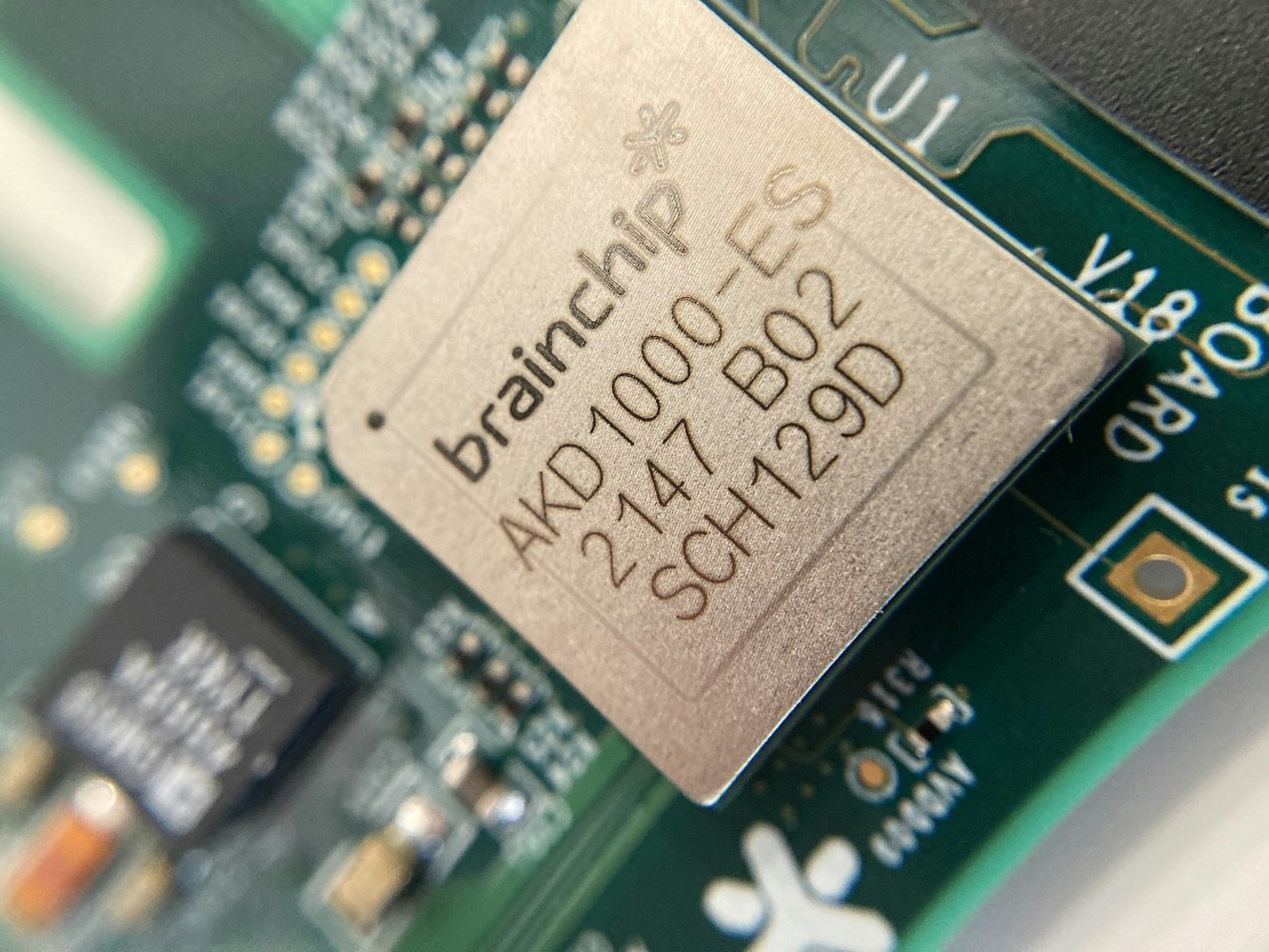
An edge-AI semiconductor company developing neuromorphic processors that bring low-power, always-on intelligence directly onto sensors and devices.
BrainChip is a for-profit public semiconductor company that develops and licenses neuromorphic AI processors and IP, primarily under its Akida product line for edge and on-sensor computing. It traces its origins to 2004 and now operates as BrainChip Holdings Ltd, a public company listed on the Australian Securities Exchange (ASX: BRN), with key operations in the United States and Australia. The company focuses on ultra‑low‑power, event-based neural network processing for applications such as automotive, industrial, consumer, and cybersecurity devices. Consultants track BrainChip as a bellwether for commercial neuromorphic hardware and edge-AI architectures that differ markedly from conventional GPU/CPU-based AI accelerators.
Identity and Form
- Type: This organization is a for-profit company.
- Legal form and jurisdiction: Public company (BrainChip Holdings Ltd, ticker ASX: BRN) incorporated in Australia.
- Headquarters and presence: Headquarters listed as Sydney, Australia, with substantial operations and leadership in the United States, including offices in California.
- Size: BrainChip reported having approximately 100 employees in recent coverage and filings (latest publicly referenced headcount range is ~80–100 staff).
- Where it lives online: Homepage:
brainchip.com. Investor relations and ASX announcements: BrainChip Holdings Ltd page on the ASX. Company overview and funding/market data: BrainChip profile on financial and market-intelligence platforms such as Kalkine and similar analyst sites. [dyyt2d]
Mission and Identity
- “BrainChip is a global technology company that is leading the way in neuromorphic AI, empowering devices with intelligence at the edge.”
BrainChip positions itself as a pioneer of neuromorphic artificial intelligence for edge devices, focusing on achieving “AI close to the sensor” with extremely low power consumption and minimal latency. It states that it serves OEMs and system integrators in markets such as automotive, industrial, consumer, and cybersecurity by providing IP and chips that enable “always-on” intelligent processing without relying on the cloud. The company emphasizes values like efficiency, scalability, and privacy-preserving on-device inference as core to its technology proposition.
- Stated values and principles include enabling “ultra-low power, real-time, on-chip learning” and delivering “high-performance AI at the edge while reducing energy usage and data movement,” which it presents as guiding design tenets for Akida and related IP.
What They Do
BrainChip designs and licenses Akida neuromorphic processors and related IP, along with software tools and reference platforms, to enable edge devices to run neural networks with low power and low latency directly on the chip. The company generates revenue via licensing its IP to semiconductor partners and OEMs, selling development boards, and offering support and tools for implementing Akida in customer systems.
[dyyt2d]
Its day‑to‑day activities span chip and IP design, software stack development, joint development with ecosystem partners, and supporting customer integrations in target verticals like automotive and industrial IoT.
Main offerings and activities:
- Akida IP — a neuromorphic processor intellectual property block that can be integrated into SoCs to provide event-based, spiking neural network processing at the edge.
- Akida standalone chips / devices — discrete Akida-based devices and reference chips that OEMs can evaluate and design into products.
- Edge AI and on-sensor processing solutions — solutions enabling “AI on the sensor” for applications such as automotive ADAS, smart home, industrial monitoring, and cybersecurity anomaly detection.
- Software development tools and SDK — tools for mapping and optimizing neural networks onto Akida, including conversion from standard deep-learning frameworks and support for on-chip learning features.
- Ecosystem and partner programs — collaborations with semiconductor manufacturers, automotive and industrial OEMs, and technology partners to validate and deploy Akida in commercial systems.
- IP licensing and support — commercial licensing agreements for Akida as an IP core, plus engineering support, co-design, and customization services for licensees. [dyyt2d]
Leadership and People
- Sean Hehir — CEO — described in company communications as Chief Executive Officer of BrainChip, leading its commercialization and partnerships.
- Peter Van der Made — Founder & Chief Technology Officer — a neuromorphic computing pioneer who originated the technology underlying BrainChip’s Akida architecture.
- Anil Mankar — Co-founder & Chief Development Officer — responsible for product development and engineering, with a background in semiconductor design and embedded systems.
- Antonio J. Viana — Chairman of the Board — board chair with prior executive experience in the semiconductor IP and EDA sectors, guiding BrainChip’s strategic direction.
History and Origin Story
BrainChip traces its origins to early neuromorphic research and development led by founder Peter Van der Made, with the company evolving into BrainChip Holdings Ltd, a publicly listed entity on the ASX focused on commercializing neuromorphic AI processors. The company’s key inflection points include its listing on the Australian exchange, the introduction of the Akida neuromorphic processor, and subsequent IP-licensing deals and ecosystem partnerships aimed at scaling adoption across automotive, industrial, and consumer markets.
[dyyt2d]
Key milestones:
- 2004 — Foundational neuromorphic computing work by Peter Van der Made and early corporate precursors that would eventually become BrainChip’s technological base.
- 2015 — BrainChip Holdings Ltd becomes listed on the Australian Securities Exchange (ASX: BRN), providing capital access to pursue neuromorphic AI commercialization.
- 2019–2020 — Launch of early Akida neuromorphic processor products and development boards, marking the shift from concept to commercial hardware.
- 2021–2023 — Multiple IP licensing and partnership announcements with semiconductor and technology companies to integrate Akida into broader SoC and system platforms. [dyyt2d]
- 2024–2025 — Continued focus on edge-AI markets with updates to Akida, expanded software tools, and new design wins in automotive and industrial applications reported in company communications and analyst coverage. [dyyt2d]
Financials and Funding
BrainChip is a public company, so available financials come from ASX disclosures and analyst reports rather than venture-style funding rounds.
- BrainChip Holdings has traded under ticker ASX: BRN, with recent market commentary noting share-price volatility and a declining trend over the past year; for example, a May 2026 article reported the stock at AUD 0.14, down over 34% year-on-year. [dyyt2d]
- Analyst coverage highlights that BrainChip is still in the early revenue phase, with relatively modest current revenues relative to its market capitalization and investor expectations; its business model relies heavily on future IP-licensing income scaling as Akida adoption grows. [dyyt2d]
- The company does not pay a dividend according to recent ASX information and commentary, reflecting a growth- and R&D-focused capital allocation strategy. [dyyt2d]
Milestones and Signature Output
- Akida neuromorphic processor launch — ~2019–2020 — introduction of BrainChip’s flagship event-based neural network processor for edge AI, positioning it as one of the first commercial neuromorphic SoCs aimed at mainstream OEMs.
- Akida IP licensing deals — 2021–2024 — series of IP license agreements with semiconductor and technology companies, seen as crucial validation of the Akida architecture and its business model. [dyyt2d]
- Edge-AI and on-sensor processing demos — 2020–2023 — public demonstrations showing “always-on” inference and on-chip learning on low-power devices, underscoring Akida’s neuromorphic capabilities in automotive, industrial, and consumer use cases.
- Ecosystem expansion with partners — 2022–2024 — collaborations with hardware and software ecosystem partners to integrate Akida into larger platforms and toolchains, enhancing developer adoption.
- Ongoing Akida roadmap updates — 2023–2025 — iterative enhancements to Akida’s performance, supported topologies, and development tools, signaling BrainChip’s intent to maintain a leading position in neuromorphic edge AI.
Ecosystem and Relationships
- Australian Securities Exchange (ASX) — BrainChip Holdings Ltd is listed on the ASX under ticker BRN, which shapes its disclosure obligations and investor base.
- Semiconductor and SoC partners — BrainChip maintains IP-licensing and co-development relationships with various chipmakers and SoC vendors to embed Akida as an IP core in commercial silicon. [dyyt2d]
- Automotive and industrial OEMs — target customers and development partners for Akida-based edge-AI solutions in applications like ADAS and predictive maintenance.
- AI and edge-computing ecosystem partners — collaborations with software, tools, and platform vendors to integrate Akida into standard AI workflows and edge stacks.
- Analyst and investor community — covered regularly by technology and small-cap analysts, which influences perceptions of BrainChip’s traction and valuation. [dyyt2d]
Recent Developments
As of 2026-05-27,
- 2026-05-21 — Analyst coverage reported BrainChip’s share price at AUD 0.14, down about 34.09% over the past year, highlighting investor concern over the pace at which IP-licensing deals are converting into meaningful revenues. [dyyt2d]
- Q1–Q2 2026 — Recent commentary emphasizes that while BrainChip continues to announce IP licenses, there remains a “long road to revenue,” with the company still working to translate design wins into production-scale royalties. [dyyt2d]
- Early 2026 — Ongoing updates from BrainChip’s ASX announcements and communications indicate continued R&D and customer engagement around Akida, with a focus on securing more high-volume applications in edge markets. [dyyt2d]
Impact
- Impact on society
- BrainChip’s neuromorphic edge-AI technology aims to enable more energy-efficient, always-on intelligent devices, which could reduce power consumption and reliance on cloud data centers in applications like smart homes and industrial monitoring.
- Its focus on on-device processing supports privacy-preserving use cases (e.g., processing sensor data locally instead of uploading it), which has implications for consumer data protection and regulatory compliance.
- Impact on innovation
- BrainChip is one of a small group of firms commercializing neuromorphic processors for general edge-AI workloads, helping to move neuromorphic computing from research labs into commercial silicon.
- The Akida architecture’s support for event-based processing and on-chip learning contributes to broader experimentation with alternative AI hardware paradigms beyond traditional von Neumann architectures and GPU accelerators.
- Impact on its industry or domain
- In the edge AI hardware and Hardware-for-AI segment, BrainChip serves as a reference case for neuromorphic IP as a licensable core, influencing how chip designers consider integrating spiking or event-based architectures into mainstream SoCs.
- Its public listing and regular analyst coverage make it a visible proxy for investor sentiment about the commercial prospects of neuromorphic and non-traditional AI hardware approaches. [dyyt2d]
- Historical significance
- BrainChip’s early market entry with commercial neuromorphic hardware positions it as a potential historical reference point if neuromorphic computing becomes a major pillar of AI acceleration in future decades.
- Criticisms and controversies
- Financial analysts have criticized BrainChip for the slow ramp of revenues relative to expectations, pointing to the gap between announced licenses and realized royalty streams and noting significant share-price declines as a result. [dyyt2d]
Adjacent Entries
- SynSense — another neuromorphic hardware company focused on low-power spiking neural networks for edge devices.
- IBM Research — long-standing research institution with significant work in neuromorphic computing (e.g., TrueNorth).
- Intel Labs — research group behind neuromorphic platforms such as Loihi, relevant as a larger-industry comparator.
- Neuromorphic Computing — the broader computing paradigm BrainChip’s Akida architecture exemplifies.
- Edge AI — the application context for BrainChip’s on-device intelligence solutions.