


Video Random Access Memory
Defining and Describing Video Random Access Memory
-
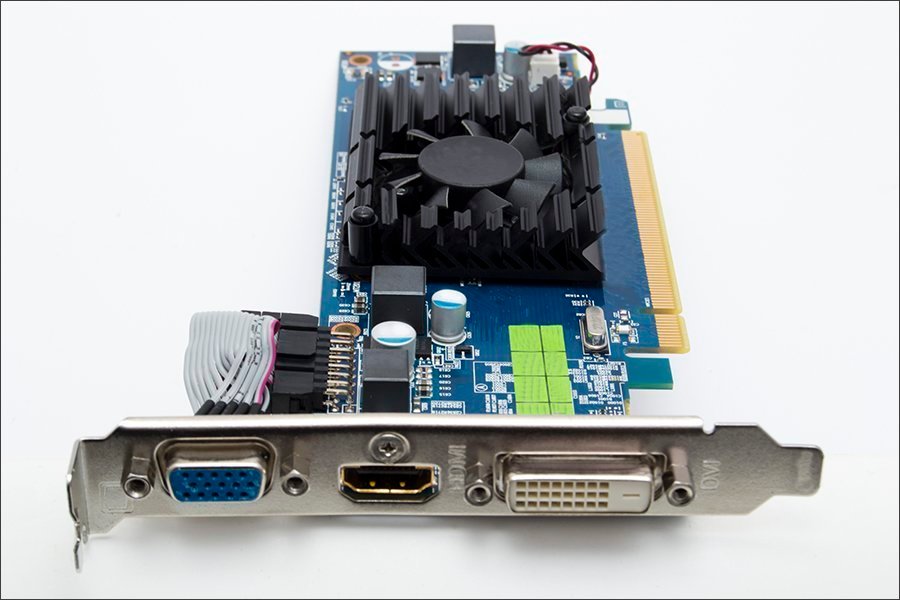
- In startup and innovation work, Video Random Access Memory (VRAM) means the high-speed memory attached to or closely associated with a graphics processor, whose capacity and bandwidth can determine which visual, simulation, or AI workloads a product can run locally. [1][2][10]
- Historically, VRAM stored pixels and other graphical data for display rendering.[1][5] In contemporary accelerator discussions, the term is also used more broadly for memory available to a GPU or AI accelerator, even when no video is being rendered.[10] Innovation consultants therefore treat VRAM as a product-architecture and adoption constraint: it affects model size, latency, device economics, cloud dependence, and the feasibility of edge or on-premises deployment.[2][10][11]
Disambiguation
Primary sense — the innovation-consulting sense
VRAM is the GPU-accessible memory resource that supplies graphics or AI compute with high-bandwidth working data. [2][10]
- For AI products, VRAM commonly holds model weights, intermediate activations, and the key-value cache generated during inference.[2][12]
- Capacity determines whether a model and its runtime data can remain resident on the accelerator; insufficient capacity can force slower transfers or swapping and can undermine local-inference economics.[11][14]
- Bandwidth is distinct from capacity: bandwidth measures how quickly data can feed the GPU’s compute cores, while capacity measures how much data can be held.[2][10]
- VRAM is not synonymous with the GPU itself, compute performance, or system RAM. System RAM serves the broader computer, whereas VRAM is optimized for the graphics processor’s high-throughput workload.[2][8]
- In product strategy, a GPU with more VRAM is not automatically the best choice: the relevant decision also includes model size, quantization, concurrency, latency, power, hardware cost, and whether workloads can be served from the cloud.[2][14]
Other senses
1. Dedicated display memory
In its original and narrower sense, VRAM is memory reserved for a graphics adapter’s framebuffer and display data. [1][5]
- The framebuffer stores pixels that are rendered and sent to a monitor; textures and other graphics data may also occupy this memory.[1][5]
- Dedicated graphics memory emerged because standard system memory was inadequate for increasingly demanding graphical interfaces and 3D rendering.[8]
- This sense remains relevant when evaluating games, workstation visualization, digital twins, design tools, and other products whose user experience depends on local rendering.[3][8]
2. A family of graphics-memory implementations
VRAM can also refer informally to the memory technology used by a graphics card, including GDDR-based memory and, in accelerator contexts, HBM. [3][5]
- Older video memory included dual-ported video RAM; later systems adopted technologies such as SGRAM, GDDR, and HBM.[5]
- GDDR is widely associated with graphics cards, while HBM uses stacked memory and very wide interfaces to provide high bandwidth for advanced accelerators.[3][5]
- Calling every accelerator memory technology “VRAM” can obscure important architectural differences; a hardware roadmap should specify the actual memory type, capacity, bandwidth, and packaging.
Etymology and Origin
- “Video Random Access Memory” expands the acronym VRAM and describes random-access memory dedicated to video or graphics data.[1][5]
- The reported origin of the underlying dedicated-memory design is IBM’s work in 1980 by Frederick Dill, Daniel Ling, and Richard Matick for a high-resolution graphics adapter associated with the RISC Technology Personal Computer.[1]
- IBM’s RT PC is also described as an early use of video DRAM, although the technology was initially expensive and became more broadly adopted later.[9]
- The term subsequently migrated from display hardware into modern GPU and AI-hardware vocabulary, where “VRAM” often denotes accelerator memory even when the workload is model inference rather than video rendering.[10]
Adjacent Vocabulary
- Synonyms :
- GPU memory : the most practical modern synonym; broader and less tied to display output.[10]
- Graphics memory : emphasizes rendering, textures, framebuffers, and gaming or visualization workloads.[3][5]
- Accelerator memory : more suitable for AI and high-performance-computing contexts, especially where the device is not primarily a graphics card.[2][10]
- Video memory : a plain-language equivalent, often used for consumer hardware explanations.[1][8]
-
- Antonyms :
- System RAM : general-purpose main memory used by the CPU and operating system rather than memory dedicated to the graphics processor.[2][8]
- CPU-only execution : a contrasting architecture in which workloads do not rely on a discrete GPU’s dedicated high-bandwidth memory.
-
- Adjacent terms :
- GDDR
- High Bandwidth Memory
- Framebuffer
- Model Weights
- Key-Value Cache
Usage in Practice
- “VRAM is the common name for memory used by a GPU to hold working data.”[10]
- “VRAM … is purpose-built to sit as close as possible to the GPU die and supply it with the working set: model weights, activations, and the key-value cache that inference generates token by token.”[2]
- “VRAM holds model weights, accelerator buffers, and often parts of the runtime cache.”[11]
- “When enough VRAM exists, models can remain resident, and inference runs without slow swapping.”[11]
- “VRAM … is built for high-bandwidth parallelism, continuously feeding thousands of GPU cores.”[4]
- “Video random-access memory … [is] a dedicated computer memory … used to store pixels and other graphical data in a framebuffer.”[5]
- “The simple answer is ‘video random-access memory,’ a type of memory used to store image data for a PC display.”[1]
Common Misuses
- “More VRAM always means a faster product.” Better term: compute performance or end-to-end inference performance . VRAM capacity can enable a workload, but speed also depends on bandwidth, compute resources, software, power, and workload shape.[2][10]
- Calling system RAM “VRAM” merely because a program uses it for graphics. Better term: shared memory or unified memory when the CPU and GPU access a common pool.
- Treating VRAM capacity as equivalent to model capacity. Better term: deployable model footprint . Model weights are only one component; KV cache, activations, and framework overhead also consume memory.[12][14]
- Using “VRAM” for every high-bandwidth memory subsystem without qualification. Better term: GDDR memory , HBM , or accelerator memory , depending on the actual architecture.[3][5]
Sources
[1]: What Does 'VRAM' Actually Mean On An Nvidia GPU? - BGR
[2]: VRAM vs RAM 2026: GPU Memory for AI Workloads | Servnet UK
[3]: www.spielemagazin.de · hardware · lexikonVRAM – Der Videospeicher für Spiele und Grafikkarten
[4]: Unlocking AI Potential with High Bandwidth Memory (HBM) - LinkedIn
[5]: Video random-access memory – Wikipedia
[6]: Building Scalable AI Applications with Cloud GPUs & B300 Servers
[7]: Memòria d'accés aleatori de vídeo - Viquipèdia, l'enciclopèdia lliure
[8]: What is VRAM? Video RAM Explained for Beginners & Gamers
[9]: DRAM (r66 판)
[10]: www.kovaragrid.com › research › what-is-vramVRAM: GPU memory capacity, bandwidth and sizing | Kovara
[11]: From 32GB VRAM GPUs to 256GB Desktops: The New Local Mini AI Supercomputer Hardware Ladder
[12]: RAM vs. VRAM: Which Matters for AI Models? - NanoGPT
[13]: RAMDAC — Graphics Hardware Codexery
[14]: GPU Sizing for LLMs (2026): VRAM, Hardware & TCO Guide
[15]: Video Graphics Array