Rolling Releases
Defining and Describing Rolling Releases (software development)
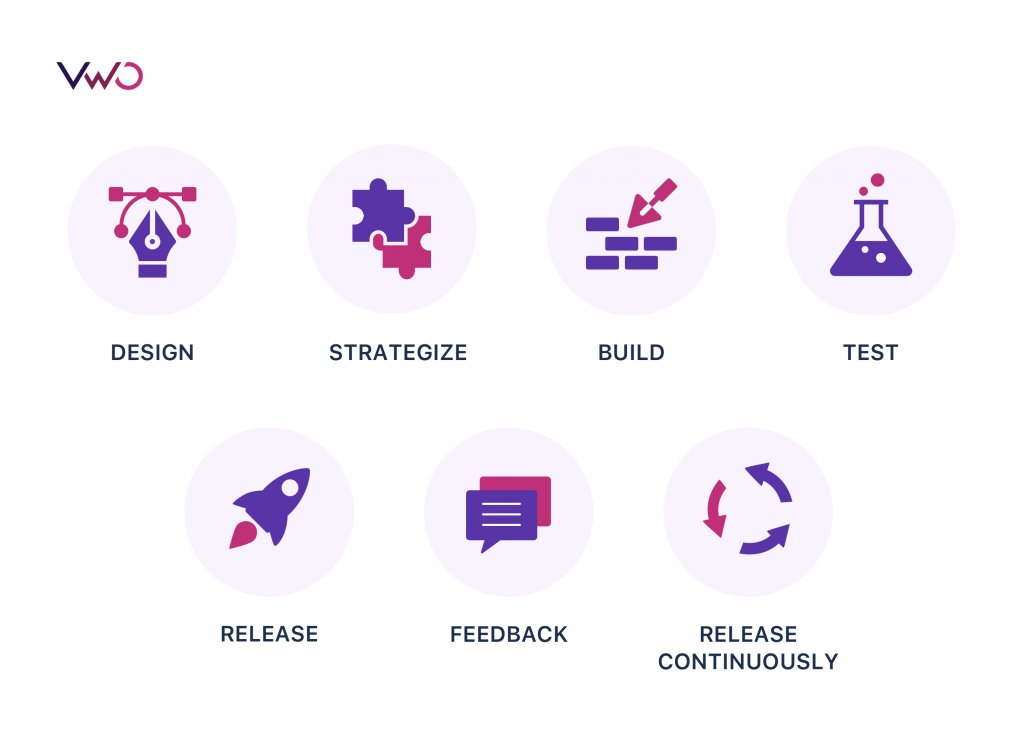
In innovation and startup contexts, rolling releases describes a software delivery model where features and fixes are shipped as a continuous stream of small updates instead of infrequent, big-bang versioned releases.
[gyke1s]
For an innovation consultant, the term applies when a product team intentionally designs its release strategy and infrastructure so that the product is always “current” and updated in-place, rather than shipping discrete 1.0, 2.0, 3.0-style major versions.
[del66f]
[64ysp5]
[gyke1s]
It does not apply to traditional, infrequent “project-style” releases with long stabilization phases and big marketing launches, even if those releases use agile internally.
[9djkft]
[del66f]
[7ykbqr]
You would care about rolling releases because they strongly influence time-to-market, risk surface, customer experience, organizational structure, and tooling choices (feature flags, continuous delivery, observability) that determine how quickly a startup can iterate and how safely it can experiment in production.
[del66f]
[64ysp5]
[gyke1s]
Disambiguation
Primary sense — the innovation-consulting sense
A rolling release in modern software development is a release strategy where new code is continuously integrated, deployed, and exposed to users in small, frequent increments, so the product evolves without infrequent, monolithic version jumps.
[del66f]
[64ysp5]
[gyke1s]
- This model is not the same as fixed-release cycles (e.g., quarterly releases) where large bundles of changes are accumulated and then pushed as a coordinated “project release”; rolling releases instead “stream small batches of work through an automated pipeline” to a frictionless path to production. [64ysp5] [7ykbqr]
- It also differs from deployment-only practices: modern teams deliberately “separate deployment from release,” treating deployment as moving code to servers and release as the business decision of making features visible, often using feature flags to keep code dormant while still operating a rolling-release pipeline. [64ysp5]
Other senses
1. Rolling release Linux distributions (OS-level)
A rolling release Linux distribution is an operating system that “never requires a major version upgrade” and is continuously updated, in contrast to fixed-release distributions like Ubuntu or Debian.
[gyke1s]
- In this sense, the OS vendor ships updates to the same base system continuously, rather than publishing major versions and expecting users to perform disruptive upgrades. [gyke1s]
- This model is strategically relevant to innovation because it reduces friction for end-users to stay on the latest bits, making it easier for SaaS vendors, devtool startups, or on-prem products targeting these distros to assume a more current runtime environment. [gyke1s]
- For founders, choosing a rolling-release distro (e.g., on developer workstations or in some production environments) can increase access to cutting-edge packages but raises availability and stability trade-offs that must be mitigated via testing, staging, and rollback strategies. [gyke1s]
Etymology and Origin
- The phrase “rolling release” arises by analogy to rolling upgrades and rolling deployments in systems administration—patterns where changes are applied gradually across nodes without taking the entire system down; in Linux communities it came to denote distros that don’t have discrete major versions but are updated continuously. [gyke1s]
- Linux distribution documentation and community discussions in the 2000s–2010s (e.g., around Arch and other distros) consistently contrast “rolling release” with “fixed-release” models, emphasizing that a rolling release OS is “always current” and does not require periodic full upgrades. [gyke1s]
Adjacent Vocabulary
- Synonyms
- Continuous Delivery – A software engineering practice where code is kept in a deployable state and can be released to production at any time; rolling release is the business-side expression of adopting continuous delivery for the product’s outward-facing update model. [del66f] [64ysp5] [7ykbqr]
- Continuous Deployment – Extends continuous delivery by automatically deploying every successful change to production; often implies a rolling-release experience for users, but in practice rolling releases may still use manual business gates. [del66f] [64ysp5]
- Evergreen software – A product kept automatically up-to-date without manual upgrades; rolling release is a specific way to achieve evergreen behavior in practice. [gyke1s]
- Antonyms
- Fixed-release model – Software shipped in discrete, versioned releases (e.g., annually or quarterly) that require explicit upgrades, the opposite of continuously updated rolling releases. [gyke1s]
- Adjacent terms
Usage in Practice
“Instead of bundling large changes into rigid project-style releases, teams stream small batches of work through an automated pipeline.”
[64ysp5]
“Modern release management uses progressive delivery and runtime controls, not manual gates… separating deployment from delivery to ship faster.”
[64ysp5]
“Deployment is a technical task… Release is a business decision. It controls when users get access to the new functionality.”
[64ysp5]
“Modern release strategies, such as blue-green deployments, canary releases, and feature flagging, are employed to minimize risk and ensure a seamless user experience… allow for a gradual rollout of new features and provide the ability to quickly roll back.”
[del66f]
“Release management has evolved from a siloed, process-heavy function to a critical, integrated discipline within modern DevOps practices… directly impacting business value and customer satisfaction.”
[del66f]
“Elite performers deploy on-demand, using metrics like deployment frequency, lead time, and change failure rate to evaluate their release process rather than just counting the number of releases.”
[64ysp5]
Common Misuses
- Calling any frequent deployment a “rolling release” when there is no deliberate user-facing strategy or progressive controls; in such cases the precise term is continuous deployment or simply high deployment frequency.
- Using “rolling release” as a marketing label for products that still rely on major version upgrades, where customers must manually install or schedule upgrades; the more accurate term here is fixed-release with regular updates or rapid-release cycle.