Write a comprehensive one-page article about "Race Conditions (in Software Engineering".
Model: sonar-pro
Race Conditions explained
Race conditions in software engineering occur when the behavior of a program depends on the relative timing of concurrent operations, such as threads or processes accessing shared data.
[74nk0a]
[az543i]
They matter because this timing‑dependent behavior can lead to subtle bugs, data corruption, and serious security vulnerabilities that are often difficult to detect and reproduce.
[74nk0a]
[hxb6ve]
Main Content
At its core, a race condition appears when two or more threads or processes access the same shared resource and at least one of them modifies it, without proper synchronization.
[74nk0a]
[jdb37w]
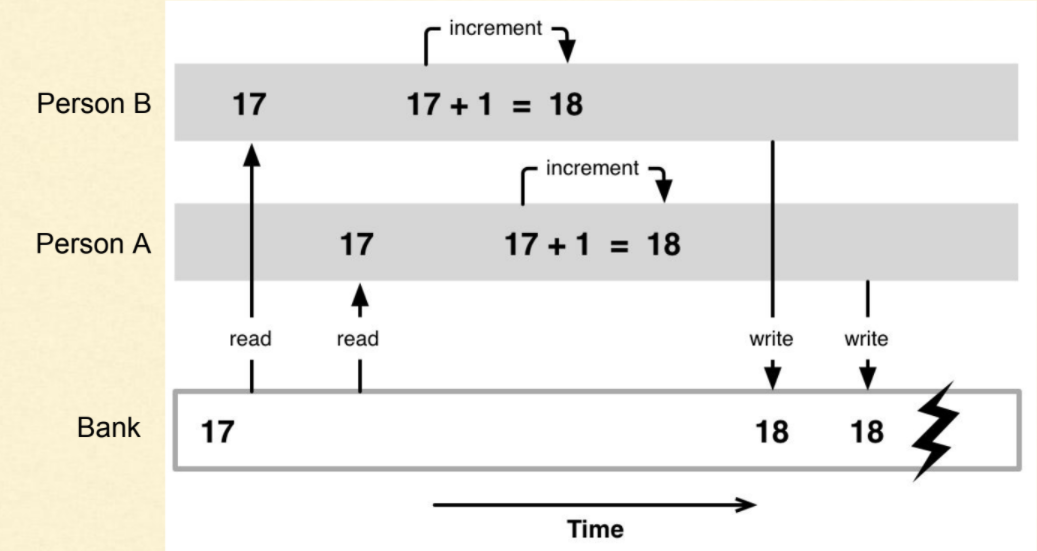
Because operations like “read, modify, write” are not atomic, the final result depends on which operation happens first, creating nondeterministic behavior that may change from one program run to the next.
[az543i]
[jdb37w]
This can affect variables in memory, files on disk, or external systems such as Databases and network services.
[hxb6ve]
[piluv2]
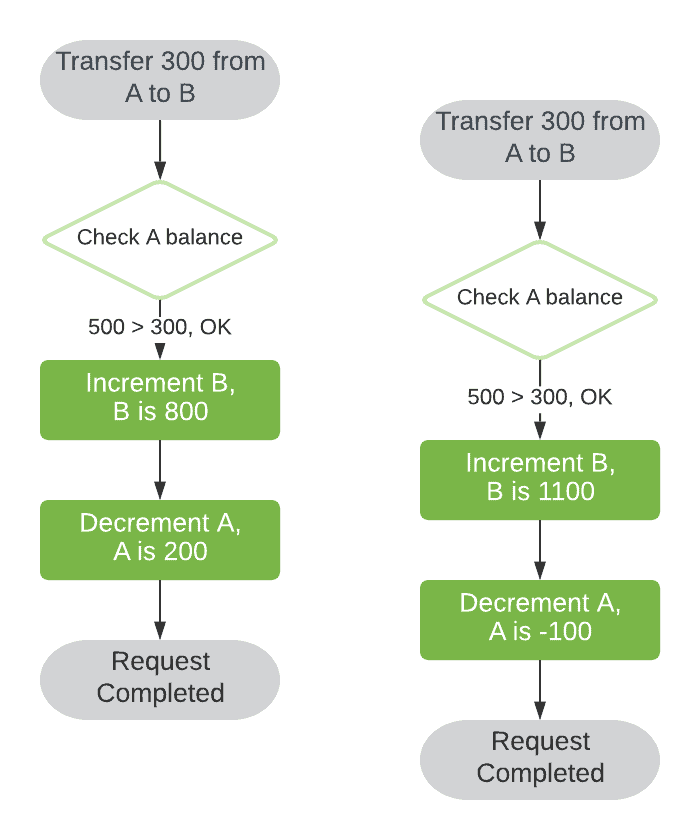
A simple example is a bank account balance shared by two concurrent transfers. Each thread reads the current balance (say 100), independently subtracts 10, and writes back 90; without locks, both updates can overwrite each other so the account loses 10 units instead of 20.
[az543i]
[jdb37w]
Similar problems appear in counters for website visits, inventory updates in e‑commerce, or concurrent writes to log files and configuration data.
[hxb6ve]
[piluv2]
In operating systems, race conditions often arise in critical sections managing process scheduling, I/O, and shared kernel data structures, leading to crashes or inconsistent state. This is a key issue in Data Integrity Rituals
[jdb37w]
Race conditions are not only correctness problems; they can also be exploited. Many security vulnerabilities are based on races where an attacker manipulates timing to change state between a check and an action—the classic time‑of‑check to time‑of‑use (TOCTTOU) bug.
[74nk0a]
[az543i]
For instance, a privileged program might check access rights on a file and then open it later; if an attacker swaps the file in between, they may gain unauthorized access or escalate privileges.
[e5vdxd]
[pggz9k]
[x6w7nr]
High‑profile exploits such as the Dirty COW vulnerability in the Linux kernel used a race to turn read‑only mappings into writable ones, enabling privilege escalation.
[hxb6ve]
In web applications, rapid parallel HTTPS requests can trigger race conditions in business logic, such as using a coupon code multiple times or bypassing rate limits.
[x6w7nr]
To manage race conditions, engineers rely on synchronization and design strategies. Mutual exclusion mechanisms—locks, semaphores, monitors, and critical sections—ensure that only one thread at a time can execute code that touches shared state.
[74nk0a]
[az543i]
[jdb37w]
Atomic operations and transactional primitives allow certain updates to complete indivisibly, while immutability and avoiding shared state reduce the surface where races can occur.
[hxb6ve]
[piluv2]
Dynamic and static analysis tools help detect potential races, but they remain hard to find systematically, so defensive design and thorough testing under load and high concurrency are essential.
[hxb6ve]
Current State and Trends
Race conditions are a pervasive issue across modern software stacks, from low‑level operating systems and embedded devices to large‑scale distributed services and cloud platforms.
[74nk0a]
[hxb6ve]
[piluv2]
With the widespread adoption of multicore processors and highly concurrent architectures, mainstream languages and frameworks now provide richer concurrency models and safer primitives to reduce race risks, such as higher‑level synchronization libraries and thread‑safe collections.
[az543i]
[hxb6ve]
Security vendors and application‑security platforms increasingly treat race conditions as a distinct vulnerability class, with specialized testing tools and guidance for developers.
[hxb6ve]
[e5vdxd]
[pggz9k]
[x6w7nr]
Key players include major OS and language communities (Linux, Microsoft Windows, Java, .NET, C/C++ standards), as well as security and observability vendors that offer race‑condition detection and analysis as part of their tooling.
[hxb6ve]
[e5vdxd]
[pggz9k]
In data engineering and distributed systems, orchestrators and workflow frameworks highlight race‑free patterns for accessing shared databases, message queues, and storage systems.
[piluv2]
Recent developments involve using formal verification, model checking, and advanced static analysis to reason about concurrency, as well as fuzzing techniques that systematically vary timing to expose race‑related bugs.
[hxb6ve]
Future Outlook
As systems become more parallel, distributed, and real‑time, systematic management of race conditions will remain a central challenge. Expect broader use of safer concurrency abstractions (such as actors, transactions, and message passing), expanded tool support that integrates race detection into continuous integration, and stronger emphasis on security testing focused on timing‑based attacks.
[hxb6ve]
[pggz9k]
[x6w7nr]
Combining better language features, automated analysis, and disciplined design practices is likely to reduce the frequency and impact of race conditions, even as underlying systems grow more complex.
[az543i]
[hxb6ve]
In summary, race conditions are timing‑dependent bugs in concurrent software that can cause unpredictable behavior, data corruption, and security vulnerabilities.
[74nk0a]
[az543i]
[hxb6ve]
As software continues to scale across cores, machines, and clouds, understanding and preventing race conditions will be crucial to building reliable and secure systems.