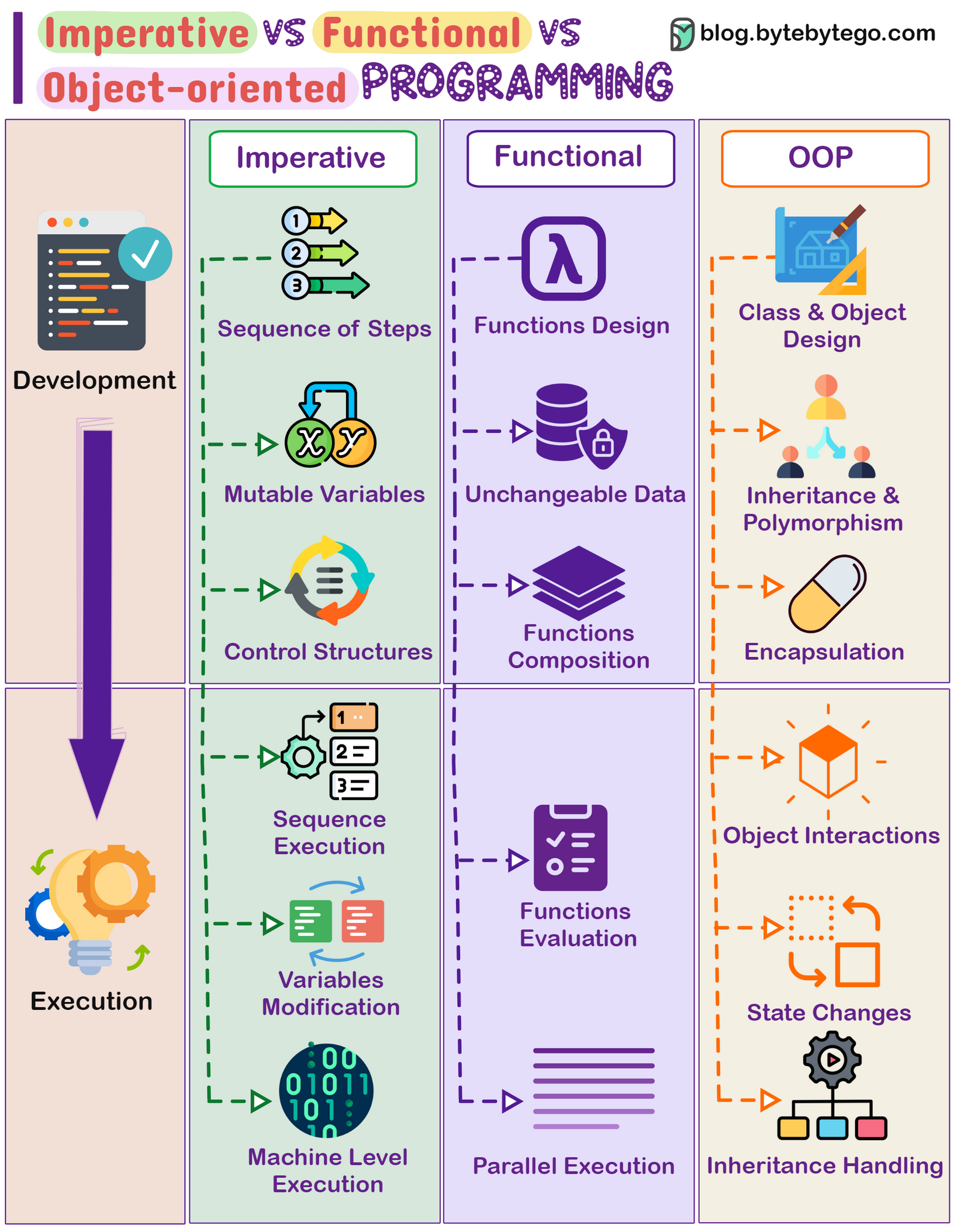


Object‑Oriented Orogramming
Defining and Describing Object‑Oriented Orogramming
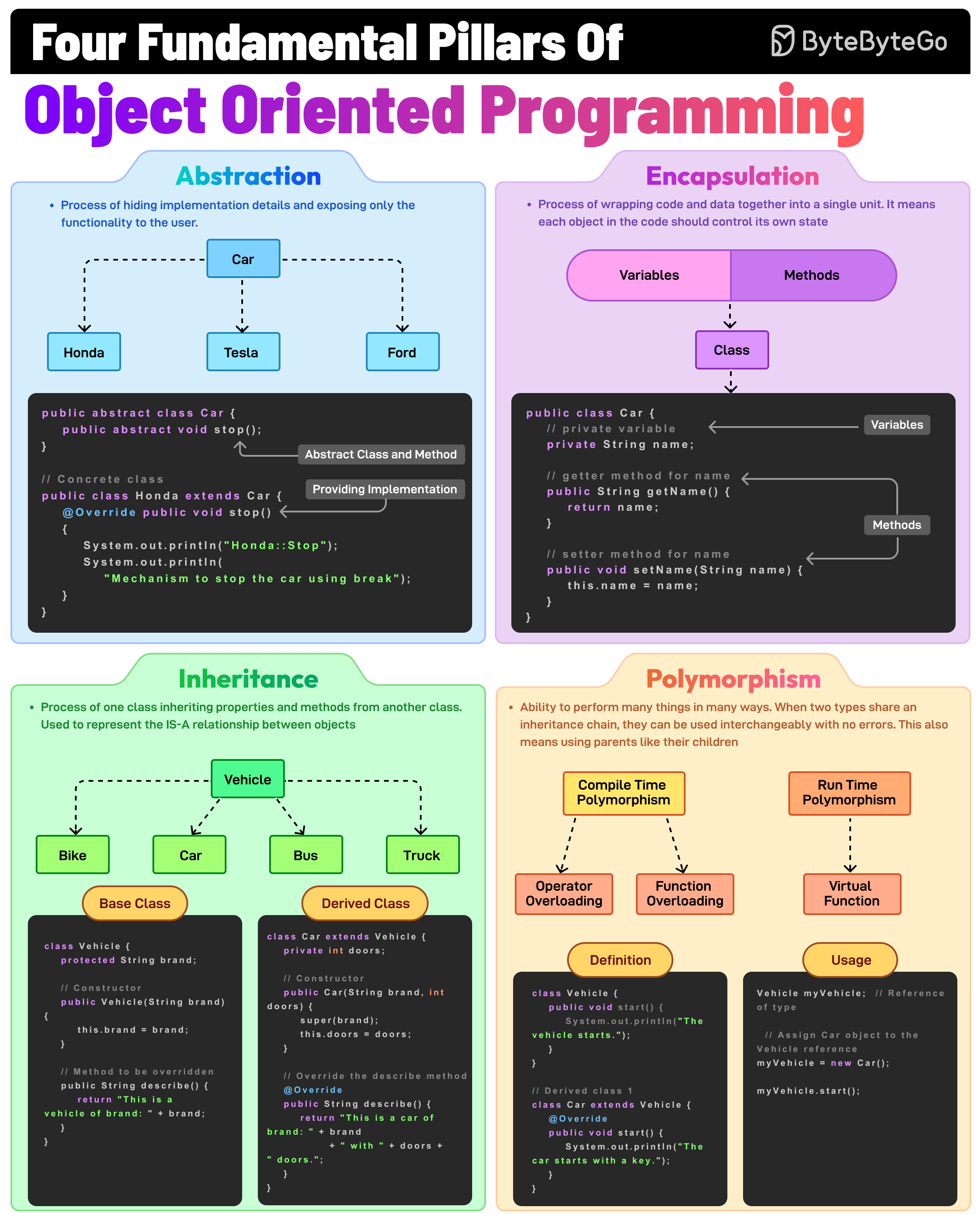
“Object‑Oriented Orogramming” is almost always a misspelling of object‑oriented programming (OOP), a software‑design paradigm that organizes code around objects (bundles of data and behavior) rather than around standalone procedures, and it matters in innovation contexts because OOP strongly shapes how quickly and safely a startup can evolve its product.
[903yrr]
[54j9y8]
[z8je3z]
In practice, when founders or consultants say “object‑oriented orogramming,” they are referring to mainstream OOP practices in languages like Python, Java, C#, C++, or Ruby.
[z8je3z]
[pdut36]
[eux1xp]
OOP structures complex software as classes and objects, using concepts like encapsulation, inheritance, polymorphism, and abstraction to make systems more modular, reusable, and maintainable.
[903yrr]
[54j9y8]
[z8je3z]
[pdut36]
Innovation consultants care because these design choices impact team velocity, ability to onboard new engineers, technical debt, and how easily the product can adapt to pivots or new business models.
[903yrr]
[54j9y8]
[z8je3z]
The term does not refer to a separate methodology or business framework; it is simply (and informally) the same thing as object‑oriented programming.
Disambiguation
Primary sense — the innovation-consulting sense
Tight definition
In innovation and startup work, “object‑oriented orogramming” = object‑oriented programming (OOP): a programming paradigm that structures software as interacting objects (instances of classes) that bundle state and behavior to improve modularity, reuse, and maintainability in complex applications.
[903yrr]
[54j9y8]
[z8je3z]
Scope, usage, and boundaries
- It is especially effective for developing complex applications, because it supports better organization, easier debugging, and enhanced collaboration among developers, which are critical for scaling startup products. [54j9y8]
- Core OOP principles are encapsulation (bundling data and behavior and hiding internal details), inheritance (reusing and customizing behavior via class hierarchies), polymorphism (different object types sharing interfaces but behaving differently), and abstraction (hiding complex implementation behind simple interfaces). [903yrr] [z8je3z] [pdut36] [9t3tv4]
- In an innovation context, OOP is not a business methodology like “lean startup” or “OKRs”; it is a technical design paradigm whose consequences show up in iteration speed, defect rates, and the cost of adding new features—factors consultants must understand but not confuse with process frameworks. [903yrr] [54j9y8] [z8je3z] [wdn2gz]
Other senses
- The only consistent “other sense” is trivial: “Object‑Oriented Programming” sometimes appears as a typo or playful variant in informal discussion or transcripts; it does not denote a distinct concept and has no separate theory or literature beyond object‑oriented programming itself. [903yrr] [54j9y8] [z8je3z]
Etymology and Origin
- Object‑oriented programming emerged from research languages like Simula (1960s) and Smalltalk (1970s), which introduced the idea of modeling software as interacting objects representing entities with state and behavior. [54j9y8]
Adjacent Vocabulary
- Synonyms
- Antonyms
- Adjacent terms
- encapsulation – Encapsulation – Hiding internal state and exposing only necessary interfaces; central to OOP’s promise of modularity. [903yrr] [pdut36] [9t3tv4]
- polymorphism – Allowing different object types to share an interface while providing different implementations. [903yrr] [z8je3z] [pdut36] [9t3tv4]
- abstraction – Modeling relevant attributes and hiding implementation details to reduce complexity. [903yrr] [pdut36] [9t3tv4]
- composition – Building complex behavior by combining objects rather than via deep inheritance hierarchies; frequently recommended by experienced engineers as a healthier OOP style. [wdn2gz]
- technical debt – Technical Debt – Accumulated complexity that makes change harder; OOP practices and mis‑practices (e.g., over‑inheritance) can either mitigate or worsen it in startup codebases. [54j9y8] [wdn2gz]
Usage in Practice
“Object‑oriented programming (OOP) is a programming paradigm built around the idea of modeling software as a collection of objects—components that bundle data and behavior together.”
[903yrr]
“Object‑Oriented Programming (OOP) is a programming paradigm that organizes code around objects, which are instances of classes… a widely used approach to software development that emphasizes modularity, reusability, and encapsulation.”
[54j9y8]
“Object-Oriented Programming (OOP) is a programming paradigm that organizes programs using classes and objects… [It] helps developers create modular, reusable, and maintainable applications by modeling real-world entities in code.”
[z8je3z]
“The four basic principles of object-oriented programming are: abstraction… encapsulation… inheritance… [and] polymorphism.”
[pdut36]
“Object-oriented programming… brings these two aspects [data and the tools needed to manipulate the data] together into a single unit. This unit is the object, which contains the data and the tools needed to manipulate the data.”
[eux1xp]
“Class, objects, abstraction, encapsulation, inheritance, and polymorphism” are described as the pillars of OOP, with a class defined as “a blueprint in OOP that defines what an object is and what it does.”
[9t3tv4]
In critical commentary, one practitioner notes: “Use methods and interfaces if you want, it’s fine. Avoid inheritance, especially for large arrays that you iterate often. But also understand why,” reflecting an experienced critique of naive OOP in performance‑sensitive code.
[wdn2gz]
Common Misuses
- Treating “Object‑Oriented Orogramming” as a distinct methodology
- Misuse: Speaking as if “orogramming” were a different flavor or school compared to standard OOP.
- Using “OOP” as a synonym for any modern programming
- Misuse: Claiming a stack is “object‑oriented” simply because it uses a popular language, regardless of whether the codebase is structured around objects and classes.
- Equating OOP with heavy inheritance and deep class hierarchies
- Misuse: Assuming that “doing OOP” means extensive use of inheritance for all reuse, which can harm performance and maintainability in startup systems.
- Marketing OOP as a business strategy rather than a technical design choice
- Misuse: Pitch decks or vendor materials describing OOP itself as a “competitive advantage” or “innovation methodology.”