

Multi-Factor Authentication
Defining and Describing Multi-Factor Authentication
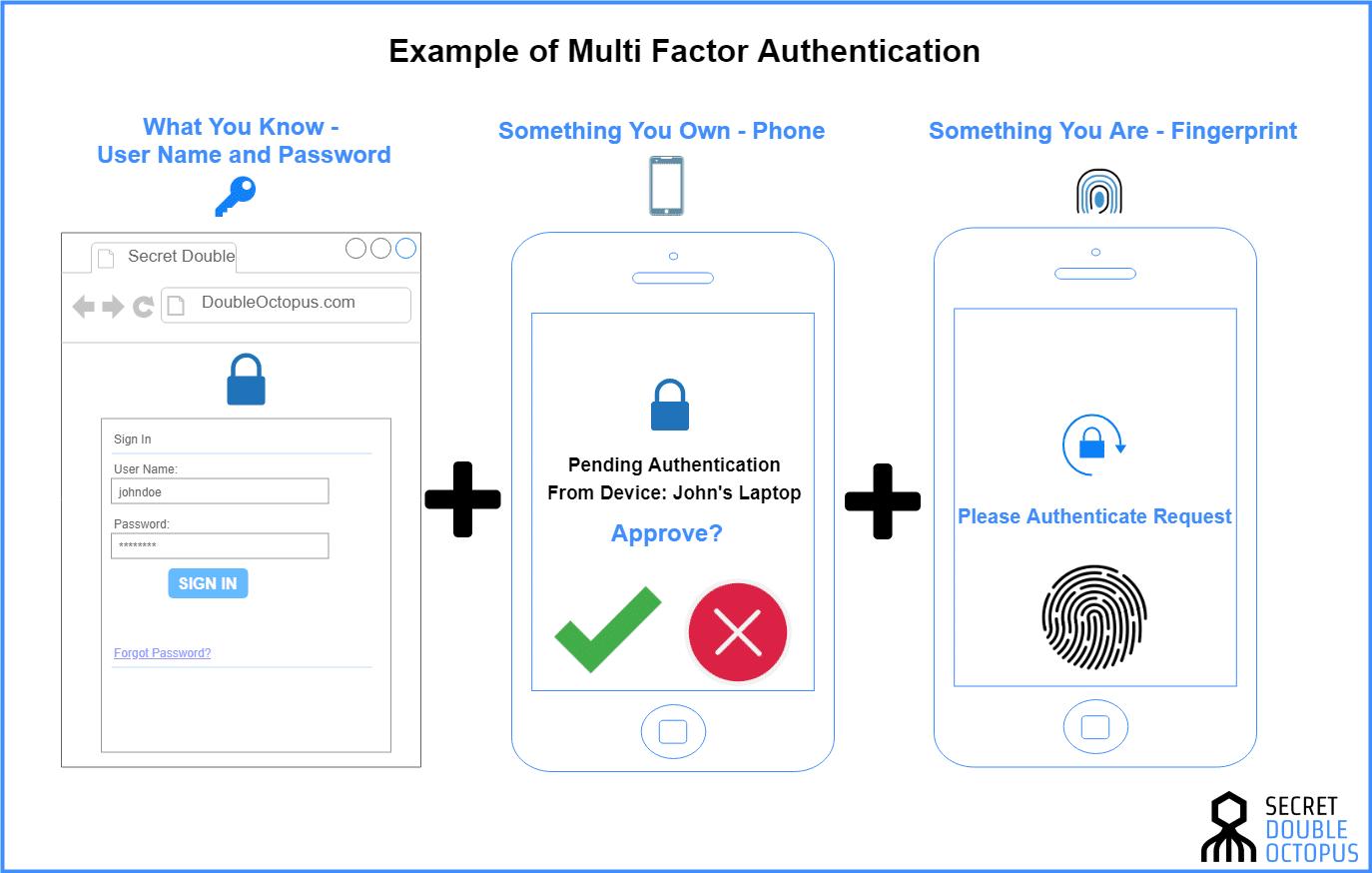
Multi-Factor Authentication (MFA) is a security mechanism that requires users to prove their identity with two or more different types of credentials (e.g., password + device + biometric) before accessing a system, app, or account.
[47q2su]
[z4sut7]
[564itd]
In innovation and startup contexts, MFA applies anywhere you’re gating valuable digital assets—customer data, cloud infrastructure, admin consoles, banking, or internal tools—with more than just a password.
[47q2su]
[z4sut7]
It does not refer to generic “strong passwords” or security awareness training; it is specifically about combining distinct factor types such as “something you know, have, and are.”
[47q2su]
[z4sut7]
[564itd]
An innovation consultant cares because MFA implementation materially changes a startup’s risk profile, compliance posture, user onboarding friction, and even the perceived trustworthiness of the product in enterprise and regulated markets.
[s2j7jo]
[564itd]
Decisions about how you do MFA (SMS codes vs. hardware keys vs. biometric or passkey-based flows) can shape conversion rates, support loads, and enterprise sales cycles.
[47q2su]
[s2j7jo]
[achx6q]
Disambiguation
Primary sense — the innovation-consulting sense
Definition:Multi-Factor Authentication (MFA) is a login security method that requires two or more different types of authentication factors—typically from the categories “something you know,” “something you have,” and “something you are”—before granting access to an account, device, or system.
[47q2su]
[z4sut7]
[564itd]
[bq244e]
Other senses
- Also used in consumer security marketing to loosely mean “extra login steps,” sometimes including weak forms like email links or same-device push approvals; this is essentially a fuzzy marketing usage of the same technical concept and is relevant mainly as a source of confusion for product and UX decisions. [47q2su] [achx6q]
Etymology and Origin
- In technical security literature, “multi-factor authentication” grows out of the long-standing classification of authentication into knowledge, possession, and inherence factors in computer security and cryptography; this taxonomy is widely documented in security texts and standards and underpins modern MFA definitions. [z4sut7] [564itd] [bq244e]
- Big cloud providers and enterprise identity vendors (e.g., Microsoft with Entra/Microsoft 365 sign-in, Okta, and others) acted as popularizers, baking MFA into default login flows and admin policies, which in turn pulled the term into startup, SaaS, and enterprise-sales vocabulary. [s2j7jo] [564itd] [bq244e]
Adjacent Vocabulary
- Synonyms
- Antonyms
- Adjacent terms
- Identity and Access Management (IAM) – MFA is a core control within IAM strategies and products. [s2j7jo] [bq244e]
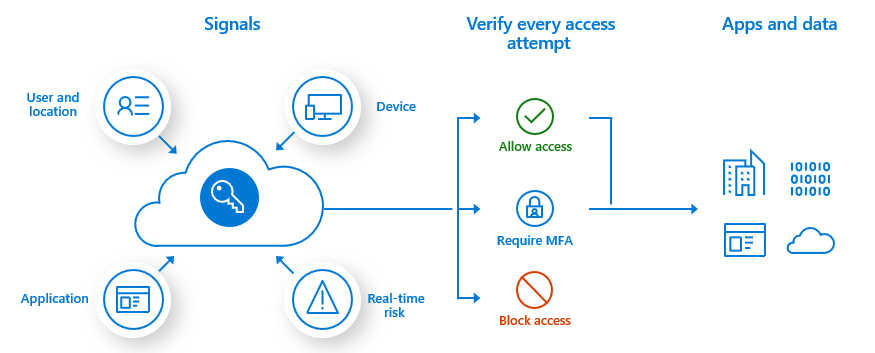
- Zero Trust Security – MFA is a foundational enforcement point in zero-trust architectures, where every access is continuously verified. [s2j7jo] [z4sut7]
- Single Sign On (SSO) – SSO providers often centralize and enforce MFA across many apps. [s2j7jo] [bq244e]
- Passwordless Authentication – Often implemented via WebAuthn/passkeys and hardware keys, technically a form of MFA or strong authentication that reduces visible passwords. [s2j7jo] [bq244e]
- Risk based Authentication – Uses context (device, IP, behavior) to decide when to trigger MFA (“step-up”). [s2j7jo] [z4sut7]
Usage in Practice
- The National Cybersecurity Alliance explains the basic value proposition in everyday terms: “Multifactor authentication (MFA) is a login security method that requires two or more forms of identity verification to access an account… They all refer to the same idea: protect yourself with more than just a password.” [achx6q]
- A security guide notes that “multi-factor authentication is an essential security measure in today’s digital landscape, offering robust protection against unauthorized access and data breaches.” [s2j7jo]
- A practical MFA overview describes its role as “a security process that requires users to provide two or more authentication factors to access an account, device or system… By requiring users to confirm their identity through two or more verification methods, MFA makes it much harder for unauthorized users to gain access, even if passwords are compromised.” [564itd]
- A step-by-step description from a security blog frames the user experience: “The user starts by providing their first factor, usually a username and password… After the system successfully verifies the password, it doesn’t give immediate access. Instead, it presents a challenge, requesting the second factor.” [47q2su]
- A university IT service, speaking to non-technical users, highlights the risk angle: “Using MFA will decrease the probability that a hacker can impersonate you to gain access to computers, accounts, and other online resources.” [oldyc4]
- A consumer-oriented explainer connects MFA to common channels: “When you enable MFA, your login process adds one extra step… That second factor might be: a one-time code sent to your phone… an authenticator app… a fingerprint or facial scan… a physical security key.” [achx6q]
Common Misuses
- Labeling weak email link or SMS-only flows as “enterprise-grade MFA” in marketing.These are better described as basic 2FA or out-of-band verification, acknowledging that SMS and email codes are more vulnerable to phishing and SIM swap attacks than hardware tokens or modern app-based methods. [47q2su] [s2j7jo] [achx6q]