


Language Server Protocol
Defining and Describing Language Server Protocol
- The Language Server Protocol is the “common language” that lets one editor speak to many programming languages without each editor reimplementing every language feature.[1][4]
- The Language Server Protocol (LSP) is an open, JSON-RPC-based standard for communication between a development tool and a separate language server process.[1][4]
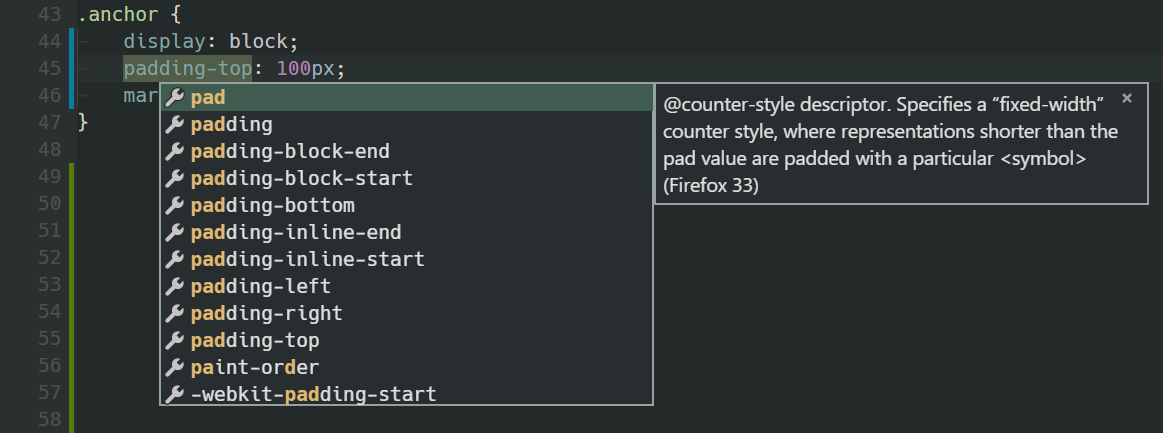
- It matters because it standardizes features like completion, diagnostics, symbol lookup, and other language intelligence so editors can reuse one backend implementation across many tools.[2][3][4]
- The architecture reduces duplication by separating the editor’s user interface from the language-specific “smarts,” which are handled by the language server in its own process.[1][4]
Uses in Context
- LSP is used to describe the protocol that lets an editor and language server exchange requests, responses, and notifications for code intelligence features.[2][4]
- It is invoked when tools advertise support for “code completion,” “syntax highlighting,” and “precise diagnostics” through a shared message format.[3][4]
- It is used to explain a client/server split in which the editor acts as the client and the language service runs separately in the background.[2][4]
- It is used in developer tooling discussions to emphasize that the editor can stay language-agnostic while the server handles parsing, AST construction, symbol resolution, and type checking.[2]
- It is also used in implementation guidance for server authors, where the protocol is described as a standardized mechanism that can operate over stdio or other transport channels.[5]
History of Use
Origins
- The protocol was developed in 2016 by Microsoft for Visual Studio Code as a way to eliminate the need to build separate language services for each editor-language combination.[3]
- Microsoft describes LSP as “the product of standardizing the messages exchanged between a development tool and a language server process,” framing it as a general integration layer rather than a single-editor feature.[4]
- A video overview credits the protocol’s development to a collaboration between Microsoft, Red Hat, and Codenvy, reinforcing that its early formation was collaborative rather than the work of a single vendor.[1]
Evolution
- 2016: LSP emerged as a way to decouple language intelligence from editor implementations and reduce the maintenance burden of supporting many editors and many languages.[1][3][4]
- Later adoption: The protocol became a community-driven standard used by editors such as VS Code, Neovim, and Emacs, and by languages ranging from Rust and Go to COBOL.[1]
- Ongoing expansion: Documentation and tutorials increasingly treat LSP as a general-purpose interface for custom language tooling, including specialized servers and integrated development environments outside Microsoft’s original ecosystem.[2][5][6]
Best Real-World Examples
- Visual Studio Code — a major adopter that uses LSP-style integrations to provide language features through external servers.[3][4]
- Emacs — another long-running editor that supports LSP-based tooling.[1]
- gopls — a Go language server that exemplifies the separate-server model described by LSP documentation.[2]
- dbt LSP — a domain-specific server showing how the protocol extends beyond general-purpose programming languages.[3]
- OpenCode LSP integration — OpenCode-- an example of modern tooling wiring LSP into AI-assisted development workflows.[6]
- Warp code editor LSP support — Warp -- an example of terminal-based editor software using LSP for IDE-like features.[7]
Case Studies
A core case study for LSP is Visual Studio Code, where Microsoft introduced the protocol in 2016 to avoid writing editor-specific language integrations for every language and every tool.[3][4] The idea was to standardize communication so a language backend could be written once and reused across multiple clients, with the editor sending file and cursor events while the server returned diagnostics and feature results.[3][4] This shows the main value proposition of LSP: it turns a combinatorial integration problem into a shared interface problem.[1][4]
A second case study is the Go language ecosystem, where tooling such as gopls illustrates how LSP shifts language intelligence out of the editor and into a dedicated server process.[2] In the LSP model, the editor remains focused on UI, while the server parses code, builds an internal model, resolves symbols, and serves completions or diagnostics on demand.[2][4] This demonstrates how LSP supports high-quality language tooling without requiring editors to embed deep language-specific logic.[2][4]
A third case study is dbt Labs’ dbt LSP, which shows LSP being adapted for a domain-specific workflow rather than a mainstream programming language.[3] dbt’s documentation describes LSP as an open protocol that standardizes communication between code editors and language tooling, using JSON RPC messages and file-change notifications to provide completions and diagnostics.[3] This example shows that LSP is not just for general-purpose IDEs; it is also a reusable pattern for specialized developer experiences.[3][6]
Sources
[1]:
[2]: How VS Code Understands Your Code: Inside the Language Server ...
[3]: Understanding LSP: What it is, and what you can use it for - dbt Labs
[4]: Language Server Protocol - Visual Studio (Windows) - Microsoft Learn
[5]: Coding Challenge #99 - Language Server (LSP)
[6]: LSP Servers - OpenCode
[7]: Language Server Protocol (LSP) - Warp docs
[8]: Code Less to Code More: Streamlining Language Server Protocol ...