


IT Service Management
Defining and Describing IT Service Management
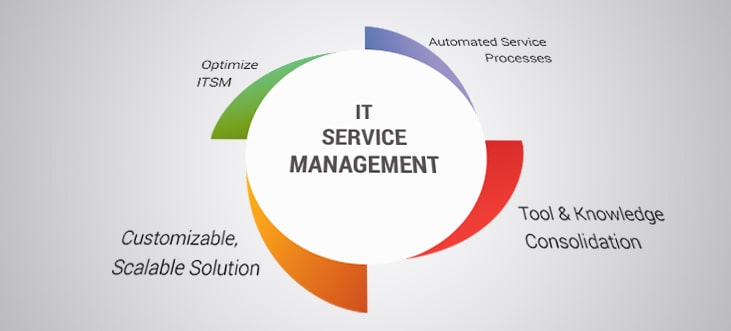
- IT Service Management (ITSM) refers to the activities an organization performs to design, build, operate, and maintain information technology services for internal and external customers. [3kgqnz]
flowchart TD
A["IT Service Management"]
A --> B["Service design"]
A --> C["Service delivery"]
A --> D["Service operation"]
A --> E["Service support"]
B --> F["Business needs"]
C --> G["End users"]
D --> H["Incidents and changes"]
E --> I["Requests and problems"]
Uses in Context
- ITSM is used to describe a framework for delivering IT services to customers and employees. [qana30]
- Vendors use the term to describe managing access and availability of services and streamlining core IT processes. [m6z9qc]
- In operational settings, ITSM refers to handling employee service requests through ticketing systems, resolving unplanned service disruptions, and distributing new hardware or software. [qana30]
- ITSM is also used as a broader description of structured, repeatable processes that create consistency and accountability across IT support. [2wphxj]
History of Use
Origins
ITSM emerged as an industry discipline and management approach rather than a single invention by one company, and modern descriptions consistently frame it as the strategy underlying how organizations deliver IT services.
[a0r6ln]
[3kgqnz]
Public-facing explainers now define it in terms of the shift to delivering IT “as a service,” with processes, people, and technology working together.
[a0r6ln]
[3kgqnz]
Evolution
- 1980s–1990s: ITSM was shaped by ITIL, which later descriptions characterize as a set of methods, practices, and processes for managing IT operations and services. [pk1c4q]
- 2000s–2010s: Vendor platforms popularized ITSM as software-supported service desks and workflow systems, with ServiceNow explicitly tying ITSM to ITIL-aligned management of incidents, problems, changes, requests, and availability. [m6z9qc]
Best Real-World Examples
- ServiceNow ITSM — an ITSM platform that aligns with ITIL standards and manages incidents, problems, changes, requests, and availability. [m6z9qc]
- Zendesk for employee service — a service-management approach positioned around IT service delivery for customers and employees. [qana30]
- Red Hat IT service management — an explanation of ITSM as design, build, operation, and maintenance of IT services. [3kgqnz]
- Intel IT service management overview — a business-oriented framing of ITSM as a strategy for streamlining IT service delivery. [a0r6ln]
- USU IT Service Management — an AI-powered ITSM suite spanning service design, delivery, operations, and support. [aurgt4]
- Automation Anywhere on AI in ITSM — an example of ITSM being discussed through the lens of automation and AI modernization. [781dtu]
- Coursera ITSM Foundations — a learning example showing ITSM as a structured professional discipline. [s4m2b2]
Case Studies
ServiceNow is a clear example of how ITSM became a software category, not just a management idea. Its product page says ITSM “aligns with ITIL standards” and is used to manage access and availability, fulfill service requests, and “automate core IT processes” around incidents, problems, and changes.
[m6z9qc]
That shows how the concept moved from process theory into workflow platforms that standardize service delivery across enterprise IT.
[m6z9qc]
Zendesk’s ITSM guide shows the concept in employee-service operations rather than only traditional help desks. It defines ITSM as a framework for delivering services to customers and employees, then gives examples such as ticket-based service requests, outage handling, and hardware or software distribution.
[qana30]
This illustrates a broader evolution: ITSM is no longer limited to internal IT support, but is used to coordinate service delivery across the employee experience.
[qana30]
Automation Anywhere’s ITSM material shows a newer layer of change: AI and agentic automation. The company frames these tools as modernizing the service desk to reduce costs and boost efficiency, which reflects how ITSM is increasingly paired with automation rather than relying only on manual ticket handling.
[781dtu]
In concept terms, this shows ITSM adapting from process discipline into a platform for continuous optimization and machine-assisted operations.
[781dtu]