


Ideal Customer Profile
Defining and Describing Ideal Customer Profile
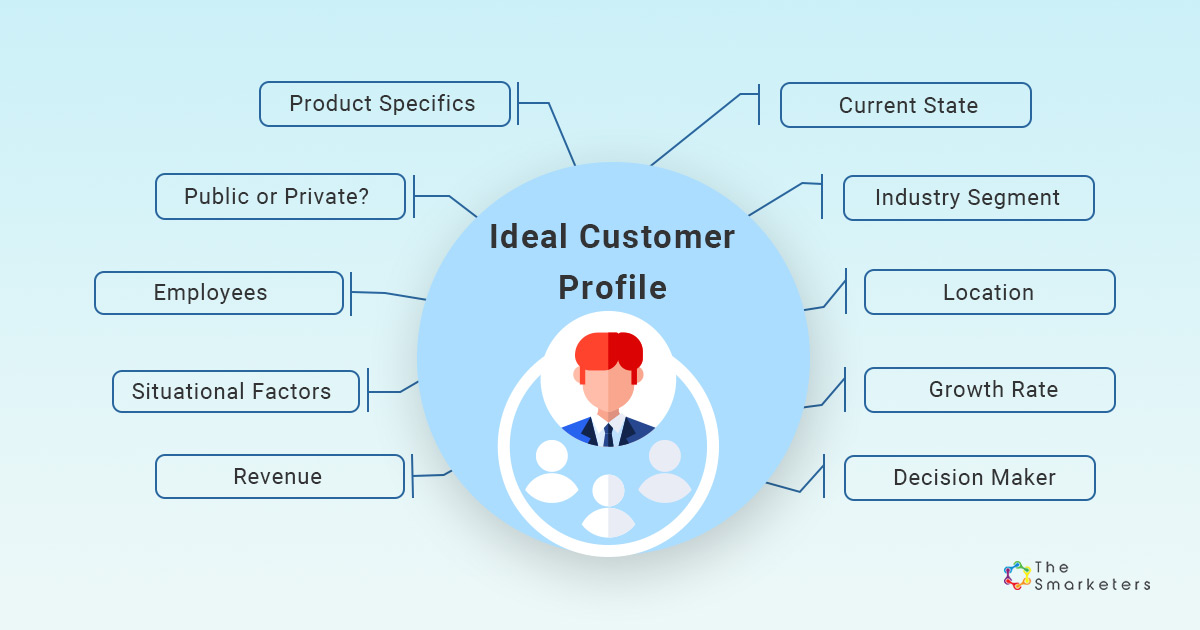
An ideal customer profile (ICP) is a definition of the best-fit customer for a product or service, most often used in B2B sales and marketing to focus targeting, messaging, and product decisions.
[jco3cc]
[xq1ng7]
[k6d7su]
Sources describe it as the customer or company that benefits most, is most likely to buy, and is most likely to continue using the offering.
[jco3cc]
[xq1ng7]
[p3hntl]
In practice, ICPs are built from observed patterns in your best customers rather than from a generic audience description, and they often include firmographics, behavior, needs, motivations, and constraints.
[jco3cc]
[xq1ng7]
[mskg7b]
Uses in Context
- In sales and marketing, ICP is used to define “the type of organization that would most benefit” from a product and “is most likely to become a loyal customer.” [jco3cc]
- In B2B lead generation, it is used as “an imaginary business representing the type of company that benefits the most from purchasing your product or service.” [40d14b]
- In customer analytics and CRM work, a customer profile document is used as “a strategy guide to create personalized experiences.” [g50sge]
- In product planning, ICPs help teams decide “which customers will benefit from them the most” and what features to build next. [mskg7b]
- In account selection, teams use ICPs to identify customers with shared traits such as industry, employee size, headquarters location, funding status, and valuation. [xq1ng7]
- In practical sales coaching, ICPs are used to clarify “what pain are you solving” and “whose pain is it,” especially for B2B businesses. [mskg7b]
History of Use
Origins
The phrase ideal customer profile emerged in modern sales and marketing practice as a way to define the most valuable customer type, rather than merely cataloging existing customers.
[jco3cc]
[xq1ng7]
[40d14b]
Current guides from Listen360, Crunchbase, and Close treat the concept as a practical business framework for identifying the companies most likely to buy, get value, and remain customers.
[jco3cc]
[xq1ng7]
[40d14b]
The sources provided here do not establish a single earliest publication or a definitive inventor, so the safest historical reading is that ICP evolved from sales qualification and segmentation practices into a named framework for B2B targeting.
[jco3cc]
[xq1ng7]
[k6d7su]
[40d14b]
Evolution
- 2020s: Product and strategy discussions expanded ICP beyond pure acquisition, linking it to feature prioritization and sales-funnel analysis. [mskg7b]
- 2020s: Some practitioners began using AI tools and call transcripts to synthesize ICPs from customer conversations and qualitative feedback. [2elo36]
Best Real-World Examples
- Crunchbase — frames ICP around analyzing current customers to find shared traits such as industry, employee size, and funding stage. [xq1ng7]
- HSBC Innovation Banking — ties ICP work to product planning, asking what pain is being solved and who the product is being built for. [mskg7b]
Case Studies
One common ICP workflow is the data-first approach described by Crunchbase: teams start with current customers, identify the largest deals or most active users, and then look for shared patterns in industry, employee size, headquarters, founding date, and funding background.
[xq1ng7]
That process matters because it converts a vague audience idea into a repeatable target definition based on observed success rather than guesswork.
[xq1ng7]
The same source recommends validating those patterns with direct customer conversations before writing the final ICP.
[xq1ng7]
Listen360’s framework shows a more qualitative version of the same idea: after gathering customer data, teams identify common traits, segment the base into top performers, and then map pain points, needs, and triggers.
[jco3cc]
That matters because it explicitly links ICP to why customers buy, not just who they are, which makes the profile useful for messaging and retention as well as acquisition.
[jco3cc]
Listen360 also frames ICP as a way to focus on “long-term loyalty and high customer lifetime value,” which shows that the concept is often used as a growth-and-retention lens rather than a purely demographic one.
[jco3cc]
HSBC Innovation Banking highlights how ICP can shape product strategy, not just sales outreach.
[mskg7b]
Its guidance centers on questions like “What pain are you solving” and “Whose pain is it,” then moves into assessing how different customer groups progress through the sales funnel.
[mskg7b]
This shows that ICP can function as a bridge between customer research and product-market alignment, especially in B2B settings where buyer needs and buying authority are distributed across different roles.
[mskg7b]