Memory Layer


ℹ️(2026-05-02T22:21.970Z)
Perplexity Query
(2026-05-02T22:21
.970Z)
Question:
ℹ️
What is a memory layer for agents and AI / LLM model work?
Who are innovators working on this?
Why do agents need a memory layer?
Model: sonar-pro
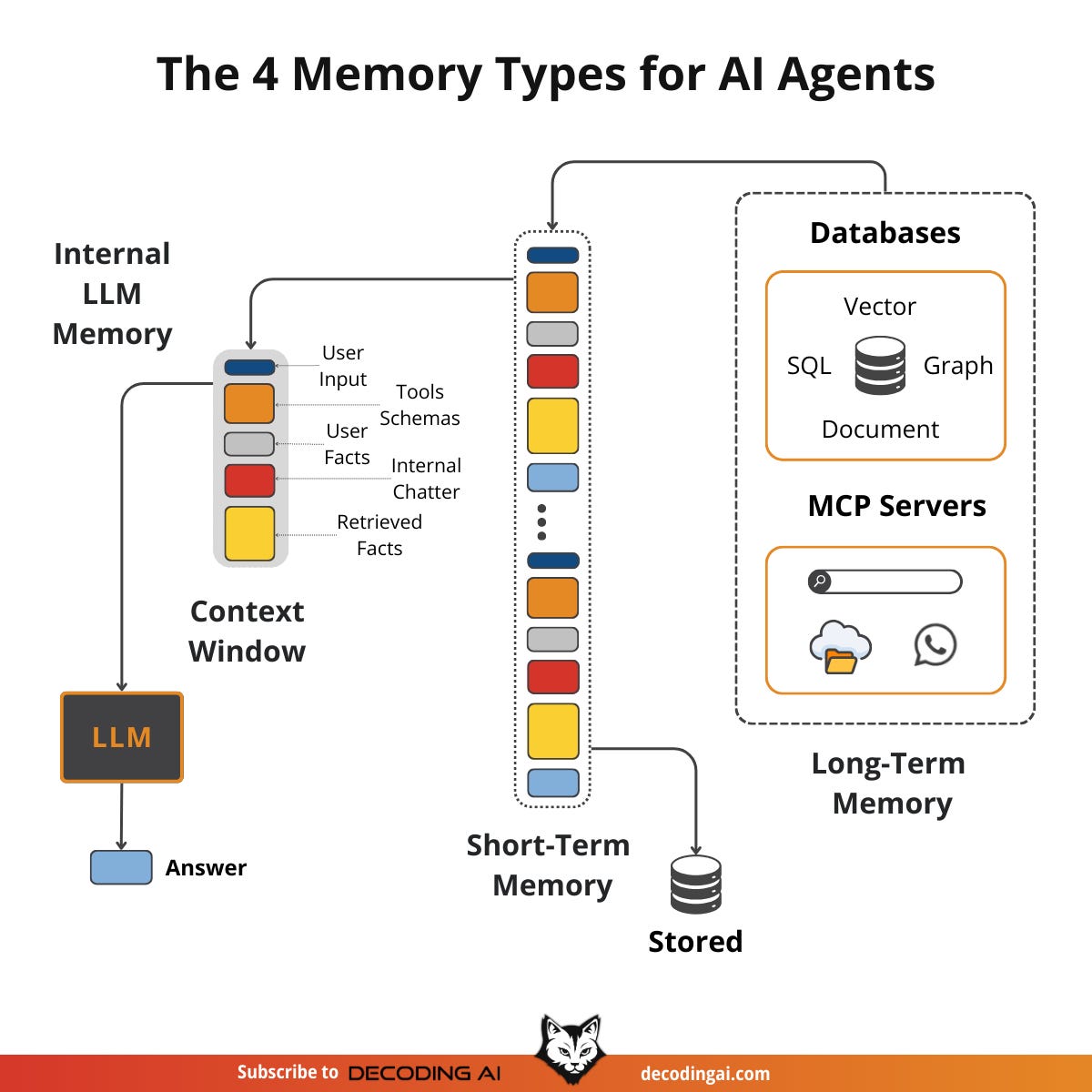
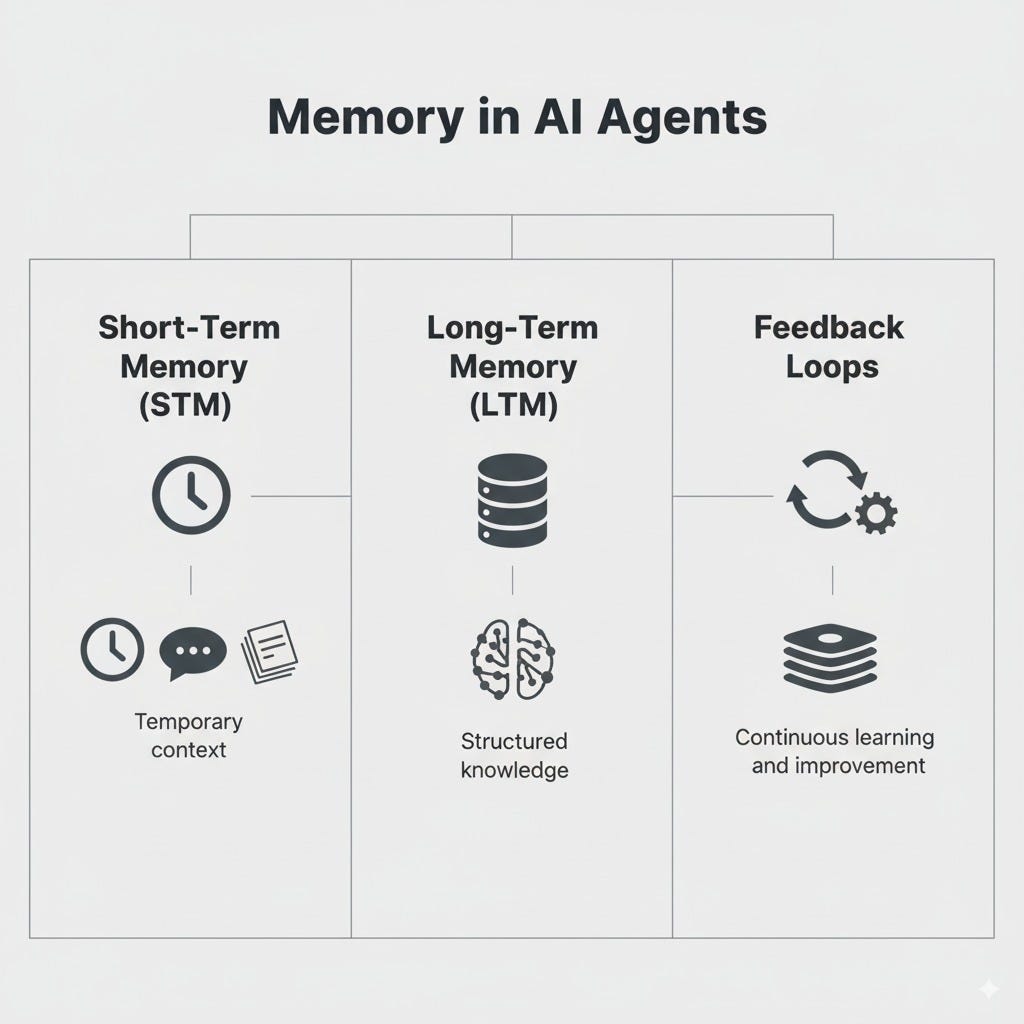
A memory layer for AI agents and LLM models is a dedicated infrastructure component that enables persistent storage, retrieval, and adaptation of information across sessions, overcoming LLMs' inherent statelessness by adding long term memory (LTM) capabilities like vector embeddings, knowledge graphs, or hybrid stores. [ussb0b] [x20p8s] [y8kgfk] [vedwh1]

Key Innovators and Platforms

Leading innovators focus on scalable, production-ready memory systems, often open-source or platform-based:
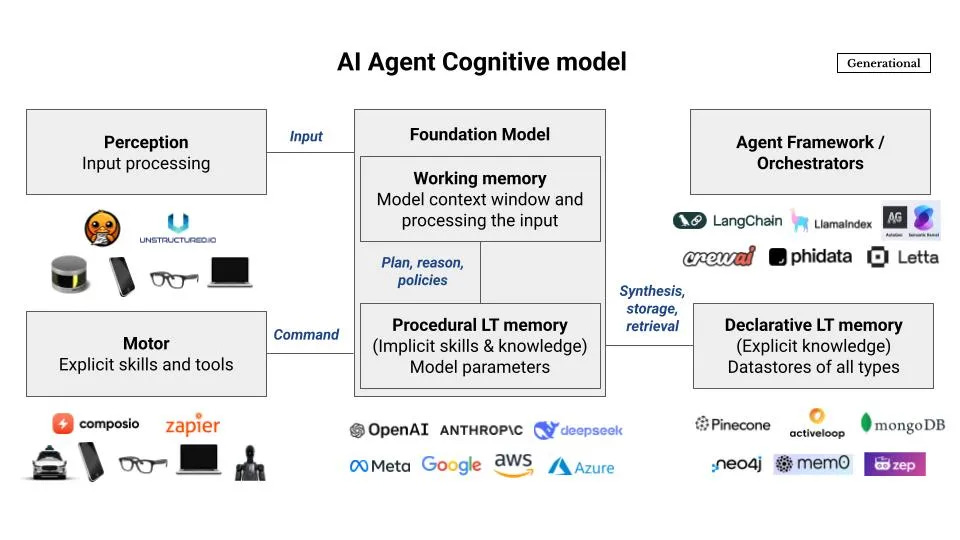
  • Mem0 (from Mem0.ai): Pioneers a composable hybrid architecture (vector + graph + KV store) with adaptive updates, achieving +26% accuracy over OpenAI memory and 91% faster responses; excels in multi-level recall (user/session/agent scopes). [ussb0b] [x20p8s] [agacs4] [y8kgfk] [j1n39w]
  • Zep: Builds temporal knowledge graphs for session memory, integrating with LangChain/LangGraph; delivers +18.5% accuracy and 90% latency reduction for production pipelines. [ussb0b]
  • Letta: Offers an open-source local server with self-editing memory (inspired by MemGPT), enabling stateful agents that persist user preferences and avoid conversation resets. [ussb0b] [ro18hm]
  • Other notables:
    • LangMem (summarization for context limits),
    • Memary (knowledge graph-centric),
    • Cognee (pipelines for RAG), and frameworks like LangChain (modular buffers/summaries), LlamaIndex (document-integrated), plus enterprise efforts like Cloudflare Agent Memory (ingestion pipelines). Beads [ussb0b] [x20p8s] [vedwh1] [4xxm5z]
PlatformCore ArchitectureKey StrengthIdeal Use Case
Mem0Vector + Graph + KVAdaptive, personalized recallLong-term agent personalization
ZepTemporal Knowledge GraphLow-latency scalingProduction LLM apps
LettaSelf-editing external storeStateful local agentsDeveloper-deployed persistent bots
LangChain MemoryBuffer/summary/vector modulesFlexible integrationMulti-agent workflows

Why Agents Need a Memory Layer

Agents require a standalone memory layer for strategic persistence—accumulating knowledge, semantic recall, and personalization over time—beyond tactical short-term context in frameworks like LangChain or AutoGen, which lack long-term depth. [ussb0b] [vedwh1] [ro18hm] LLMs alone forget across sessions, leading to redundant context, high token costs, and poor coherence; memory layers optimize retrieval (e.g., via tiered hierarchies mimicking OS RAM/disk), reduce latency by 90%+, and enable advanced reasoning in multi-hop/temporal tasks. [x20p8s] [agacs4] [vedwh1] Without it, agents remain reactive tools rather than adaptive partners. [ro18hm]
https://youtube.com/shorts/V_575LB__6k?si=4vUMHqtFSOSJK2hi

Citations

[ussb0b] 2026, May 01. AI Memory Layer: Top Platforms and Approaches - Arize AI. Published: 2025-10-15 | Updated: 2026-05-02

[x20p8s] 2026, Apr 26. Mem0: Building Production-Ready AI Agents with Scalable Long .... Published: 2025-04-28 | Updated: 2026-04-27

[agacs4] 2026, Apr 25. Mem0 - The Memory Layer for your AI Apps. Published: 2026-04-21 | Updated: 2026-04-26

[y8kgfk] 2026, Mar 30. What Is AI Agent Memory? | IBM. Published: 2025-03-18 | Updated: 2026-03-31

[vedwh1] 2026, May 01. Memory in AI Agents - by Kenn So - Generational. Published: 2025-02-21 | Updated: 2026-05-02

[ro18hm] 2026, May 01. A Unified Memory Core for Enterprise AI Systems - Oracle Blogs. Published: 2026-03-23 | Updated: 2026-05-02

[4xxm5z] 2026, May 01. Agents that remember: introducing Agent Memory. Published: 2026-04-17 | Updated: 2026-05-02