Write a comprehensive one-page article about "Enterprise Resource Planning".
Model: sonar-pro
Enterprise Resource Planning: Transforming Business Operations
Introduction
Enterprise Resource Planning (ERP) is a comprehensive software system that integrates all of a company's key business processes—including finance, manufacturing, supply chain management, human resources, and customer relations—into a single unified platform.
[1ocbvr]
[h57o14]
ERP serves as the digital backbone of modern organizations, consolidating critical functions and enabling seamless communication across departments.
[1ocbvr]
In today's competitive business environment, ERP systems have become essential tools for companies seeking to optimize operations, enhance decision-making, and maintain competitive advantage through data-driven insights.
[rpq3sm]
Main Content
At its core, ERP operates as a centralized database that connects disparate systems and provides permission-based access to real-time information across the entire organization.
[rpq3sm]
Rather than relying on isolated departmental systems that create information silos, ERP consolidates data into one authoritative source of truth. This integration eliminates duplicate data entry, reduces manual errors, and ensures that all stakeholders are working with accurate, up-to-date information.
[1ocbvr]
[npk1ao]
By automating complex processes with unprecedented accuracy, ERP systems significantly enhance productivity while reducing the likelihood of costly mistakes that plague traditional fragmented systems.
[1ocbvr]
The practical applications of ERP extend across virtually every industry. For construction and manufacturing companies, ERP systems provide robust project management capabilities to coordinate complex operations.
[2gxkai]
Service businesses leverage field service management and scheduling optimization features to streamline customer delivery.
[2gxkai]
Asset-intensive industries—such as offshore drilling or hydroelectric power plants—benefit from advanced maintenance and asset management capabilities embedded within ERP platforms.
[2gxkai]
This flexibility demonstrates how ERP solutions adapt to meet the unique operational needs of different business sectors.
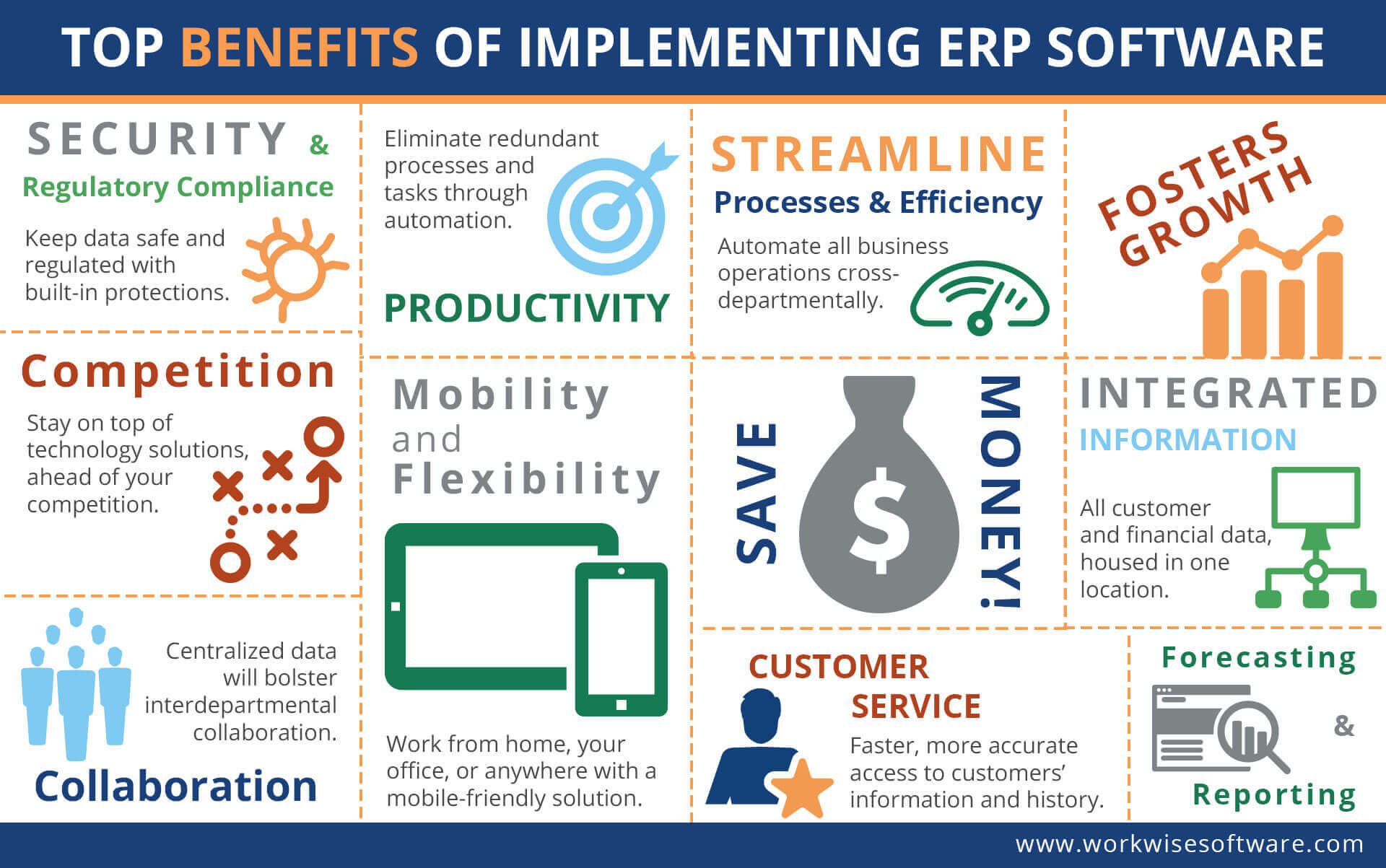
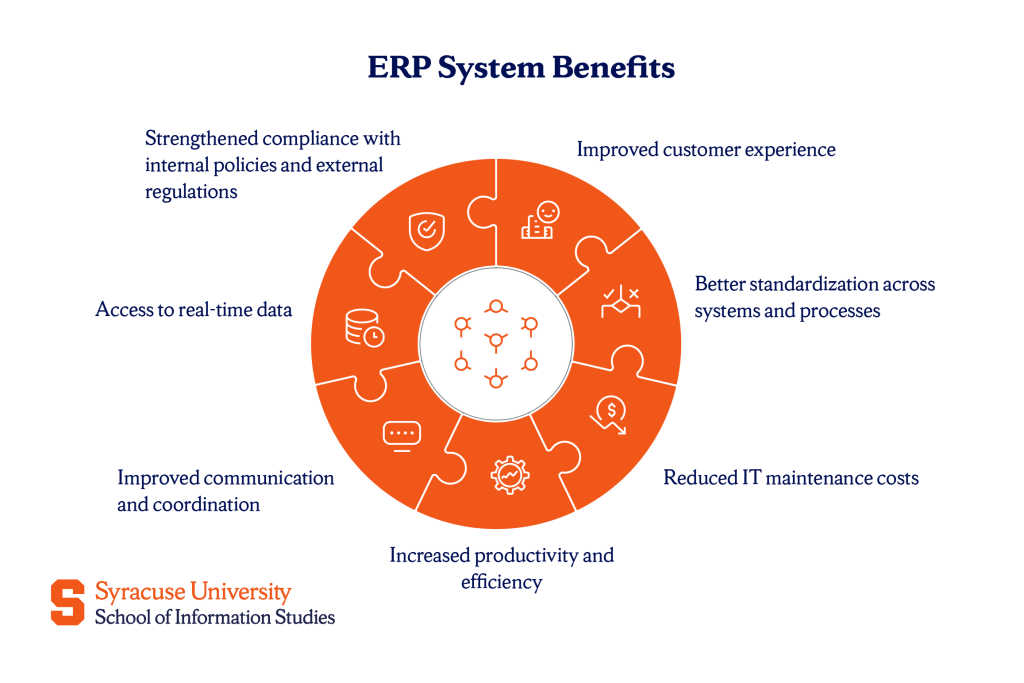
The financial and operational benefits of implementing ERP are substantial and multifaceted. Organizations experience improved cost management through the elimination of redundant tasks, reduced paperwork, and decreased labor expenses.
[1ocbvr]
Enhanced financial transparency and better forecasting capabilities enable leaders to make more informed decisions regarding resource allocation and budgeting.
[1ocbvr]
Additionally, ERP systems can increase productivity by as much as 18 percent according to industry research, while simultaneously improving customer service through faster response times and better coordination.
[2gxkai]
[npk1ao]
By streamlining workflows and automating manual processes, companies can accomplish significantly more with their existing resources.
[1ocbvr]
Collaboration and communication represent another transformative dimension of ERP implementation. By integrating various departments onto a centralized platform, ERP breaks down traditional communication barriers that often hinder organizational efficiency.
[1ocbvr]
Real-time data accessibility enables teams to respond quickly to changing business needs, share information seamlessly, and coordinate efforts across geographically dispersed locations.
[1ocbvr]
This enhanced collaboration extends to improved cross-departmental coordination, ensuring smoother operations and faster decision-making throughout the enterprise.
[npk1ao]
Current State and Trends
Enterprise Resource Planning has evolved from a niche technology into a mainstream business necessity, with organizations across industries recognizing the strategic importance of digital integration. Leading technology companies including SAP, Oracle, NetSuite, and Acumatica have established themselves as major players in the ERP market, continuously innovating to meet evolving business demands.
[h57o14]
[grko0t]
[br1smi]
Modern ERP solutions increasingly incorporate advanced technologies such as artificial intelligence, IoT-connected equipment, and cloud-based deployment models, enabling companies to choose deployment strategies that align with their specific infrastructure needs and operational preferences.
[2gxkai]
Current ERP implementations emphasize standardization, scalability, and mobility—allowing employees to access critical business information from anywhere while maintaining data security and regulatory compliance.
[grko0t]
Organizations are moving toward cloud-based ERP systems that offer greater flexibility and reduce the burden on internal IT departments, while simultaneously enhancing data security across both on-premises and cloud environments.
[npk1ao]
The trend toward integration of complementary platforms, such as customer relationship management (CRM) systems, demonstrates how ERP continues to expand its functionality to provide comprehensive business management solutions.
[npk1ao]
Future Outlook
The future of Enterprise Resource Planning will be shaped by increasingly sophisticated automation, artificial intelligence capabilities, and predictive analytics that enable organizations to anticipate market changes and optimize operations proactively. As businesses navigate digital transformation and expanding regulatory requirements, ERP systems will become even more critical for maintaining compliance, managing risk, and leveraging data-driven insights for competitive advantage. The convergence of ERP with emerging technologies promises to unlock new possibilities for operational excellence and strategic innovation.
Conclusion
Enterprise Resource Planning represents a fundamental shift in how organizations manage their operations, transforming disconnected systems into integrated, intelligent platforms that drive efficiency, collaboration, and growth. As businesses continue to navigate complexity and change, ERP systems will remain indispensable tools for companies committed to operational excellence and sustained competitive success.