


DNS
Defining and Describing DNS
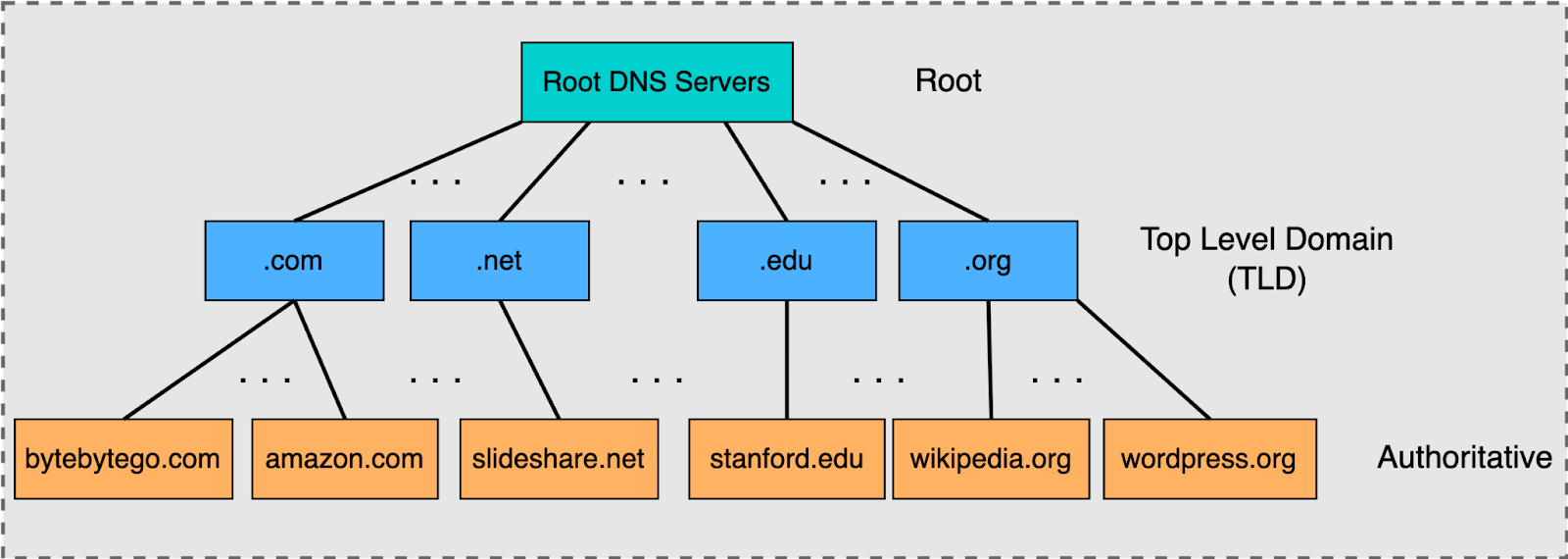
DNS (Domain Name System) is the distributed, hierarchical infrastructure that translates human-readable domain names into machine-readable IP addresses, enabling browser and application clients to locate and connect to internet resources.
For startup founders and innovation consultants, DNS matters in two contexts: as operational infrastructure (you must choose a DNS provider and configure records correctly, or your service is unreachable) and as a case study in resilient, decentralized design (DNS architecture influenced how modern distributed systems are built). An innovation consultant encounters DNS when advising on: infrastructure decisions and vendor lock-in, domain strategy and brand positioning in product launches, security posture and supply-chain risk (DNS hijacking, provider outages), and internationalization (geographic DNS routing). Unlike many infrastructure abstractions, DNS failures are immediately visible to end users—a misconfigured DNS record renders a product inaccessible—making it a founder responsibility, not just an ops problem.
Disambiguation
Primary sense — the innovation-consulting sense
DNS is a distributed, hierarchical system for translating domain names to IP addresses, enabling clients (browsers, applications, services) to discover and connect to internet-hosted resources [1][4].
- Scope: DNS applies to any internet-connected service that needs to be reached by a human-memorable name rather than a numeric IP address. This includes websites, APIs, email servers, and service-to-service communication within infrastructure.
- Common usage in startups: "We need to set up DNS records for our domain," "Our DNS provider was down," "DNS propagation is taking time," "We're using GeoDNS for geographic routing." [1][3]
- What DNS is NOT: DNS is not a hosting service (it doesn't store your website files), not a CDN (though CDN providers often run DNS services), and not an authentication system on its own—though it can carry security data like TLSA records or CAA records. [1][2]
Other senses
1. DNS as security infrastructure (DNSSEC, DANE)
[DNS-based Authentication of Named Entities (DANE)][2] is a security protocol that uses DNSSEC to publish and validate TLS/SSL certificate information within DNS records, allowing domain owners to declare which certificates are valid for their domain through cryptographically signed DNS entries [2][5]. DANE is relevant to founders securing email infrastructure or APIs against man-in-the-middle attacks; it represents a shift from relying solely on centralized Certificate Authorities to giving domain owners direct cryptographic control over certificate validation.
- DNSSEC (DNS Security Extensions) digitally signs DNS records to ensure they haven't been tampered with, and forms the foundation for DANE deployments [5].
- Adoption in practice: DANE is still early-stage; most enterprises rely on traditional PKI, but DANE adoption is growing for email security (SMTP DANE) [5]. A founder hardening email infrastructure or API security should evaluate whether DANE is appropriate for their threat model.
- Not for all startups: DANE requires DNSSEC to be enabled on your domain and adds operational complexity; most early-stage startups defer this until security maturity increases.
2. DNS record types as configuration language
[DNS records are domain-related mapping information stored on DNS servers][1]; different record types (A, AAAA, CNAME, MX, NS, CAA, TXT) encode different kinds of configuration—IP address bindings, mail routing, name servers, certificate authorities, and free-form text data [1].
- Founder relevance: Understanding DNS record types is essential for configuring domain services, email routing, SSL certificate validation, and service discovery. "We need to add an MX record to accept email" or "The CAA record is preventing issuance" are common infrastructure conversations [1].
- Not a database: DNS records are NOT a general-purpose database; they are a specialized, globally distributed key-value store optimized for low-latency lookup. Treating DNS as persistent application state storage is a common mistake.
Etymology and Origin
DNS was not coined by a single founder or entrepreneur; it evolved from academic research and early internet protocol development. [Paul Mockapetris authored the foundational DNS specification RFC 1035, published in 1987][6], which formalized the hierarchical, decentralized system that had been prototyped earlier. [The concept emerged from the need to replace early, centralized hostname registries (the HOSTS file) with a scalable, distributed lookup service][6]. DNS was adopted by the early internet community, standardized through IETF RFCs, and is now maintained as a critical open standard rather than proprietary innovation.
From an innovation-consulting lens, DNS is instructive not because it was "invented" by a startup (it wasn't), but because its architecture—hierarchical, decentralized, caching, resilient to single points of failure—became a foundational pattern that influenced later distributed systems design. The design principles behind DNS (consensus on standards, geographic distribution, recursive delegation) are studied in infrastructure and platform engineering courses, and startups building resilient services often reference DNS as a reference architecture.
Adjacent Vocabulary
Synonyms:
- Name Resolution: the process of translating a name to an address; DNS is the system, name resolution is the operation. [3][4]
- Domain Registry: the centralized database of domain ownership (e.g., ICANN-accredited registrars); DNS points to the registry but is not the registry itself.
Antonyms:
- IP address: the numeric address that DNS translates to; in contexts where numeric addressing suffices (internal infrastructure, API gateways), DNS is bypassed entirely.
Adjacent terms:
- CDN (Content Delivery Network) — often deployed in front of DNS to geographically route traffic; some CDN providers (Cloudflare, Akamai) offer DNS services as well.
- Service Discovery — the broader category of which DNS is one implementation; Kubernetes uses DNS-like service discovery internally.
- DNSSEC — cryptographic extension to DNS for tamper-proof record validation.
- Certificate Authority (CA) — validates SSL/TLS certificates; DNS can carry CA policy (CAA records) but is not itself a CA.
- Load Balancer — often sits behind DNS to distribute traffic; DNS points to the load balancer's IP.
Usage in Practice
- Infrastructure decision point: "We're evaluating DNS providers—Cloudflare, Route 53, or a self-hosted setup. The tradeoff is managed convenience vs. control. For our launch, Cloudflare handles DNS, DDOS protection, and global caching in one platform." (Paraphrased from typical founder infrastructure review conversations; see [3] on DNS server role in network performance.)
- Domain strategy in launches: "We bought the domain six months ago but didn't point DNS records until launch day. DNS propagation took 24 hours in some regions; we lost traffic during that window. Next time, we're doing a dry run of DNS cutover." (Common in post-mortem write-ups; see [1] on DNS lookup process.)
- Operational incident: "Our DNS provider had an outage. Every request to our API returned NXDOMAIN. We had no fallback. It took 30 minutes for us to detect, another 30 to switch providers. DNS is infrastructure we can't afford to get wrong." (Paraphrased from incident reports; see [1][3] on DNS as critical path.)
- Security posture: "We enabled CAA records to restrict which CAs can issue certificates for our domain. It's a small win but blocks a common attack vector." [1] (DNS as security baseline.)
- Geographic routing: "We configured GeoDNS to route users in Europe to our EU datacenter and US users to US infrastructure, reducing latency and compliance risk." (Common in enterprise and scaling startups; enabled by DNS [3].)
Common Misuses
- "DNS is slow" — Often a misdiagnosis. DNS queries are cached aggressively at multiple layers (browser, OS, ISP resolver); perceived slowness usually stems from misconfigured TTLs (Time To Live), a CDN miss, or application-layer latency. Better term: "DNS TTL misconfiguration" or "application latency."
- "We need to change our DNS provider to improve performance" — DNS latency is rarely the bottleneck in user-facing performance. Swapping providers without addressing root causes (slow backend, unoptimized assets, poor CDN coverage) is cargo-cult optimization. Better term: "performance profiling" or "latency analysis."
- "DNS records are immutable" — Treating DNS as a source of truth for application state that should never change. DNS records are configuration, not data persistence. Better term: "configuration management" or "infrastructure as code."
- "We'll store our SSL certificate in a TXT record" — DNS record size and query limits make this impractical; it violates the separation of concerns. Better term: "secret management" (use a vault, not DNS).
Additional Context for Innovation Consultants
When advising founders on DNS:
- Provider choice is a critical decision, not a commodity swap. Managed DNS providers (Route 53, Cloudflare, DNSimple) offer redundancy, geographic distribution, and integrated tooling. Self-hosting DNS requires operational maturity; most early-stage startups should outsource.
- DNS is a supply-chain risk. A DNS provider outage or compromise exposes your entire service to downtime or redirect attacks. Diversifying DNS providers (e.g., using two independent providers with failover) is a defense strategy employed by mature teams.
- DNS is a founder responsibility early on. It touches domain strategy, product launch timing, infrastructure security, and incident response. "Someone will handle DNS" is a red flag in technical due diligence.
Sources
[1]: Overview of Domain Name System (DNS) - Servers.com
[2]: What Is DANE (DNS-based Authentication of Named Entities)?
[3]: What is a DNS Server? - CDNetworks
[4]: DNS - Glossary - MDN Web Docs - Mozilla
[5]: How SMTP DNS-based Authentication of Named Entities (DANE ...
[6]: How DNS Works: A Guide to Understanding the Internet's Address ...
[7]: [PDF] Secure Domain Name System (DNS) Deployment Guide
[8]: The Role of DNS Servers in Cybersecurity and Internet Performance
[9]: Understanding DNS – The European TLD ISAC