


Design Thinking
(2025-12-03T22:26.329Z)
Perplexity Query
(2025-12-03T22:26
.329Z)
Question:
Write a comprehensive one-page article about "Design Thinking".
Model: sonar-pro
Design Thinking: A Human-Centered Approach to Innovation
Introduction
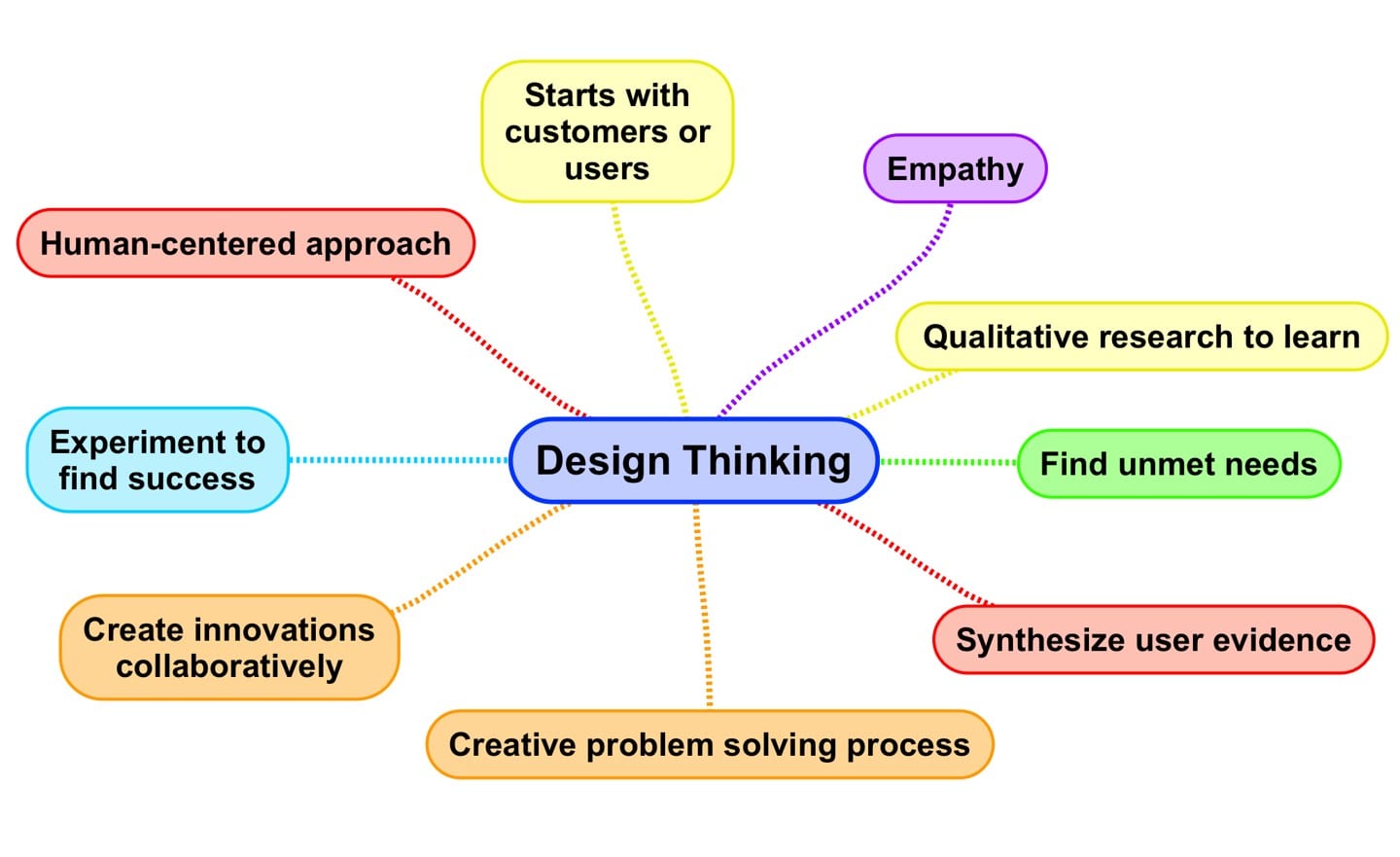
Design thinking is an ideology supported by an accompanying process that asserts a hands-on, user-centric approach to problem-solving can lead to innovation and competitive advantage.
[ofcmu0]
Rather than starting with predetermined solutions, design thinking reverses traditional business logic by beginning with desirability and focusing on real human needs.
[g6w4c9]
In today's rapidly changing business environment, this methodology has become essential for organizations seeking to develop innovative solutions that genuinely address user problems.
Main Content
Design thinking operates as a non-linear, iterative process that teams use to understand users, challenge assumptions, and redefine problems.
[g6w4c9]
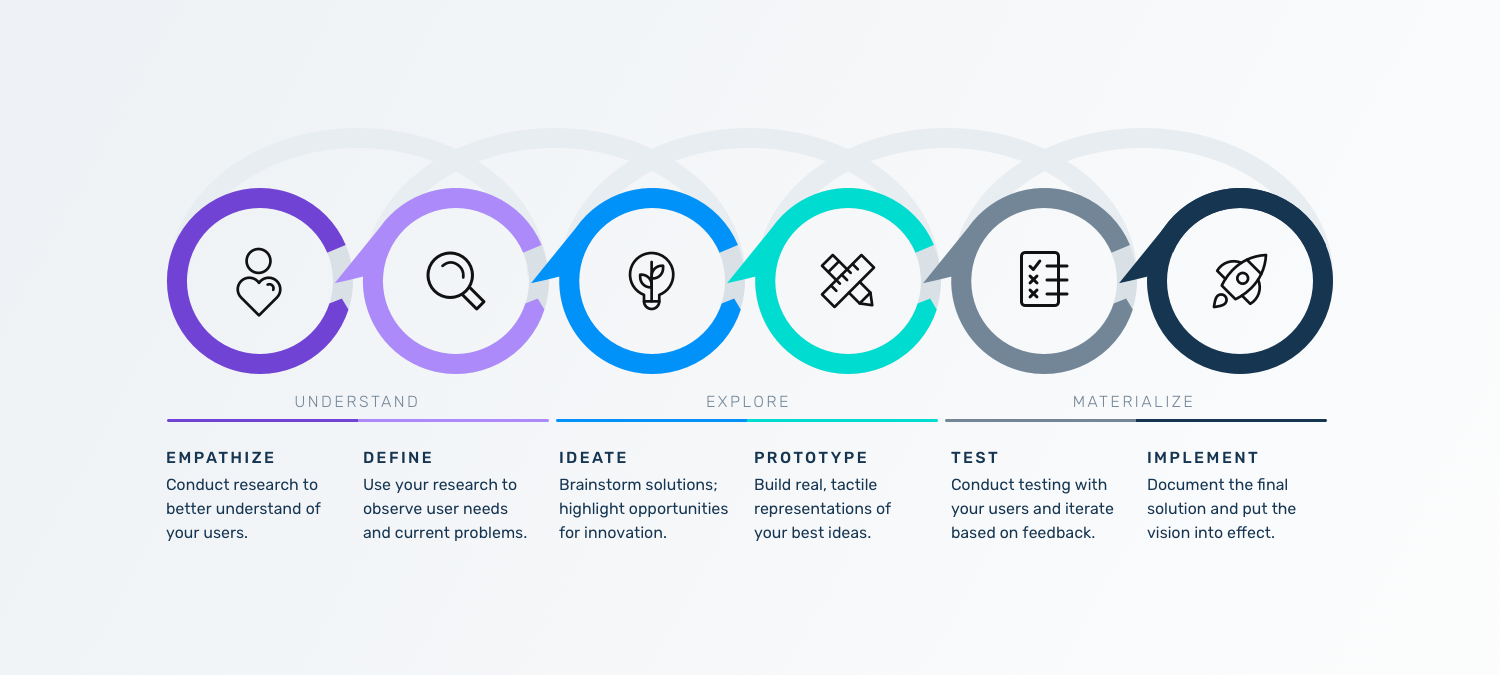
The framework follows an overall flow of three major buckets: understand, explore, and materialize, within which fall six distinct phases.
[ofcmu0]
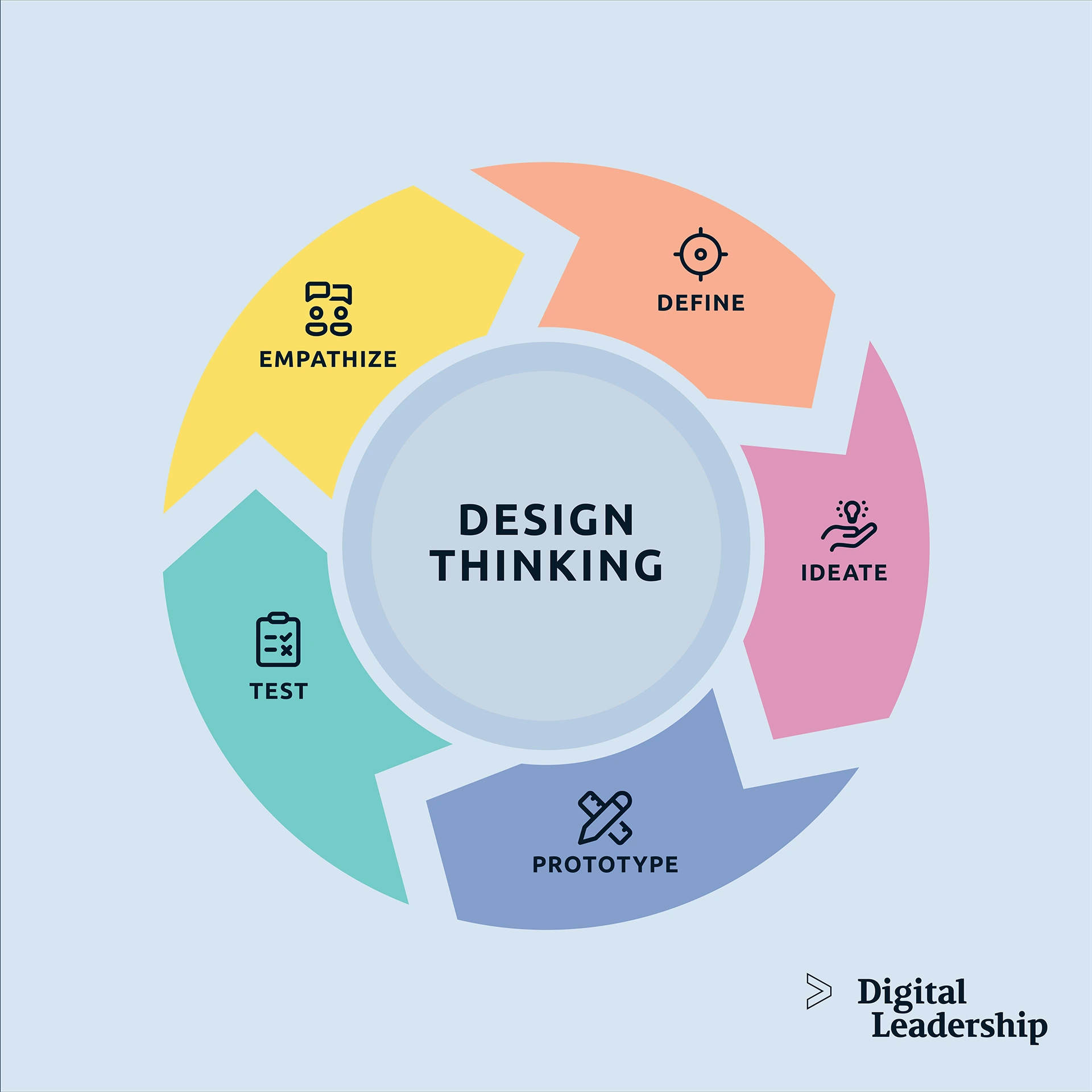
These phases—empathize, define, ideate, prototype, test, and implement—guide teams through a structured yet flexible approach to innovation.
[ofcmu0]
[6b0283]
The process begins with empathize, where teams conduct research to understand user needs and behaviors through observation and interviews.
[ofcmu0]
[6b0283]
This transitions into the define phase, where teams combine research findings to identify common pain points and unmet user needs.
[ofcmu0]
The methodology then moves into ideate, where teams challenge assumptions and brainstorm innovative solutions using techniques like brainstorming, brainwriting, and SCAMPER.
[6b0283]
What distinguishes design thinking from traditional problem-solving is its emphasis on generating numerous ideas without immediate judgment, allowing for creative exploration of possibilities.
The prototype and test phases bring concepts to life through experimental development.
[6b0283]
[g6w4c9]
Teams create inexpensive, scaled-down versions—sometimes as simple as paper prototypes—to investigate ideas and gather user feedback.
[g6w4c9]
This experimental approach identifies the best possible solutions while revealing product limitations and user behaviors.
[6b0283]
Finally, the implement phase translates refined concepts into tangible, viable products or services.
[g6w4c9]
Design thinking proves particularly valuable for tackling ill-defined and 'wicked' problems—those lacking clear definitions or straightforward solutions.
[p3eyc0]
For example, rather than focusing on decreasing productivity when transitioning to remote work, design thinking encourages teams to consider how to increase employee engagement instead.
[m53or0]
This solution-focused orientation fundamentally shifts organizational perspective from problem-centric to opportunity-centric thinking.
Current State and Trends
Design thinking has evolved from a niche design methodology into a widely adopted organizational practice, championed by leading institutions like Stanford University's Hasso Plattner Institute of Design (d.school).
[g6w4c9]
The methodology is now implemented across diverse sectors—from technology and healthcare to education and business strategy—as organizations recognize its capacity to generate truly innovative solutions.
[ofcmu0]
Contemporary applications extend beyond product design to encompass service design, organizational transformation, and strategic problem-solving.
The methodology continues to evolve with frameworks like the Double Diamond model, which graphically represents divergent and convergent thinking styles across four phases: Discover, Define, Develop, and Deliver.
[g6w4c9]
This visual framework helps teams understand when to expand thinking broadly and when to narrow focus strategically, making the process more accessible to multidisciplinary teams.
Future Outlook
As organizations face increasingly complex and ambiguous challenges, design thinking's importance is likely to grow substantially. The methodology's emphasis on collaboration, human-centered perspectives, and iterative problem-solving aligns perfectly with emerging workplace dynamics and technological advancement. Future developments will likely integrate design thinking more deeply with emerging technologies like artificial intelligence and data analytics, creating hybrid approaches that combine human insight with computational power.
Conclusion
Design thinking represents a fundamental shift in how organizations approach innovation and problem-solving by prioritizing genuine user needs over assumed solutions. As markets become more competitive and consumer expectations evolve, the ability to empathize with users, prototype rapidly, and iterate based on feedback will remain a critical competitive advantage for forward-thinking organizations.
Citations
[ofcmu0] 2025, Dec 03. Design Thinking 101 - NN/G. Published: 2016-07-31 | Updated: 2025-12-03
[p3eyc0] 2025, Dec 02. Design thinking - Wikipedia. Published: 2006-03-24 | Updated: 2025-12-02
[6b0283] 2025, Dec 01. The 5 Stages in the Design Thinking Process | IxDF. Published: 2025-07-18 | Updated: 2025-12-01
[g6w4c9] 2025, Dec 02. What is Design Thinking? — updated 2025 | IxDF. Published: 2025-11-26 | Updated: 2025-12-02
[m53or0] 2025, Jun 16. What Is Design Thinking & Why Is It Important? - HBS Online. Published: 2022-01-18 | Updated: 2025-06-16
[6]: 2025, Dec 02. Design thinking, explained | MIT Sloan. Published: 2017-09-14 | Updated: 2025-12-02
[9]: 2025, Dec 02. . Published: 2020-02-04 | Updated: 2025-12-02