Write a comprehensive one-page article about "Decentralized Finance".
Model: sonar-pro
Decentralized Finance: Transforming the Financial Landscape
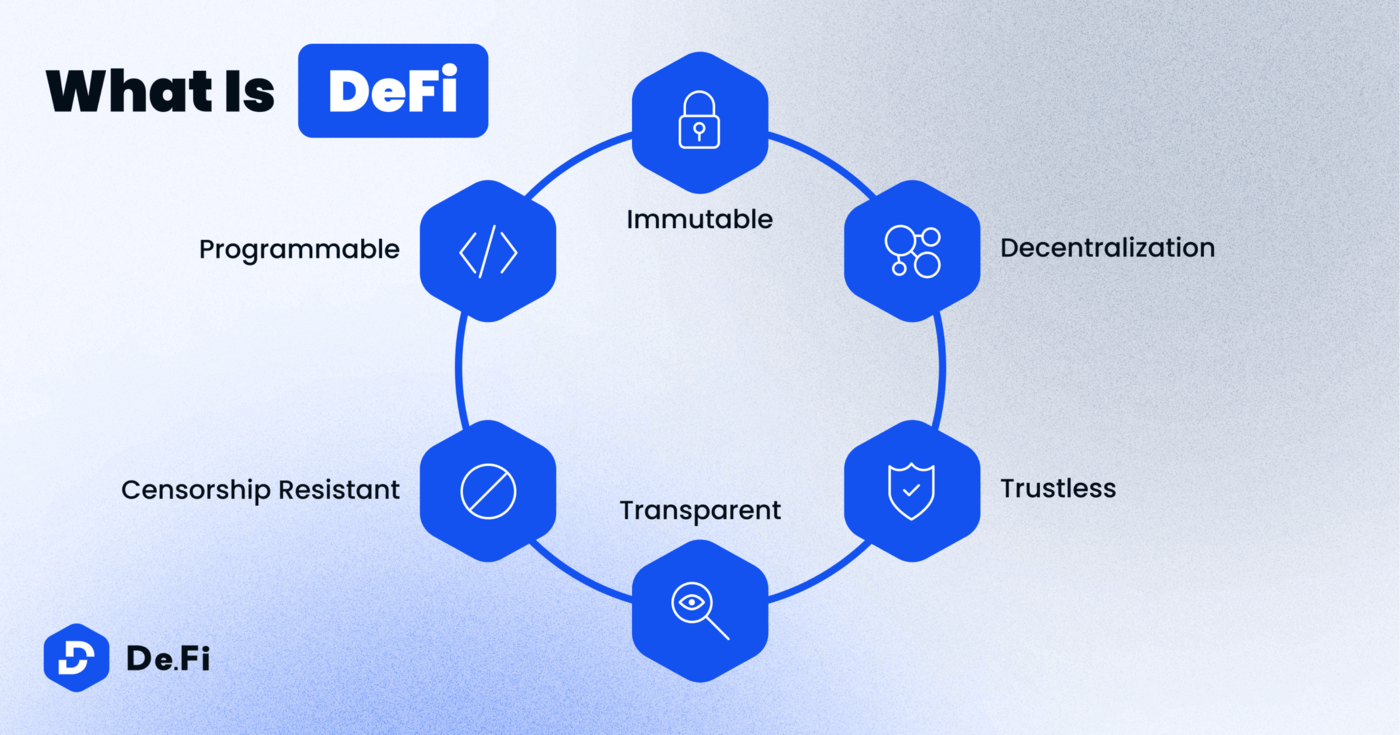
Decentralized finance (DeFi) refers to a blockchain-powered ecosystem enabling users to conduct financial activities—such as lending, borrowing, trading, and investing—without relying on traditional intermediaries like banks or brokerages.
[acjf7b]
[3ikv3a]
[l1kdb5]
[frf67o]
This innovation reshapes how value moves by making financial services open, direct, and programmable, potentially boosting efficiency, transparency, and global access.
[acjf7b]
[frf67o]
Understanding Decentralized Finance
DeFi leverages distributed ledger technology (primarily blockchain) to create a digitally native, immutable system of record for assets and transactions.
[acjf7b]
[3kx0n0]
Instead of central authorities, transactions occur on peer-to-peer networks where smart contracts—self-executing code—automate processes such as loans, asset swaps, and investment agreements.
[3ikv3a]
[674s7p]
This fundamentally shifts the model from trust in institutions to trust in transparent algorithms and community governance.
For example, decentralized exchanges (DEXs) like Uniswap let users swap cryptocurrencies directly with others instead of depending on a centralized platform.
[3ikv3a]
[3kx0n0]
On platforms like Aave or Compound, anyone can lend their crypto assets to a pool and earn interest, or borrow assets by providing collateral—entirely managed by code rather than a bank clerk.
[acjf7b]
[3ikv3a]
Other notable applications include synthetic assets (tokenized representations of real-world or virtual assets), decentralized insurance, and programmable asset management tools.
[3ikv3a]
Practical Use Cases
Lending and borrowing: Obtain loans or earn interest without banks.
[acjf7b]
[3kx0n0]
Yield farming and staking: Generate passive income by contributing liquidity or helping validate blockchain transactions.
[acjf7b]
Synthetic assets: Gain exposure to real-world commodities or equities without directly owning them.
[3ikv3a]
Decentralized governance: Many DeFi protocols let token holders propose and vote on changes, making the ecosystem more participatory.
[3ikv3a]
[wtsl17]
Benefits and Applications
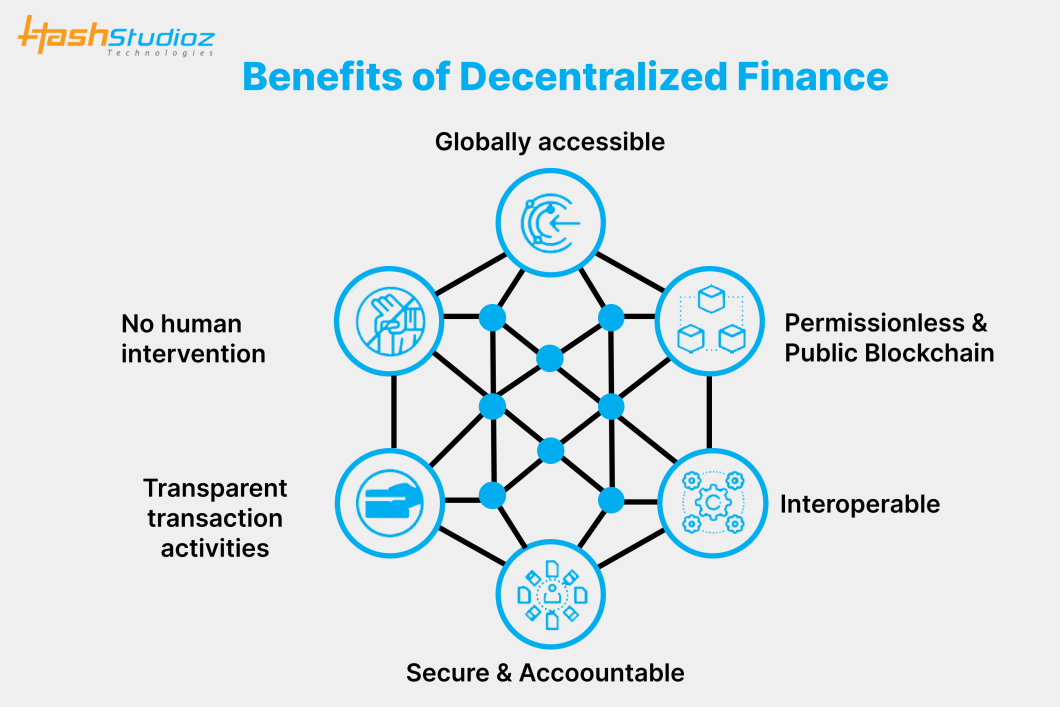
DeFi offers lower fees, faster settlement, and 24/7 global accessibility compared to traditional finance.
[acjf7b]
[frf67o]
Since users can directly custody their digital assets in self-hosted wallets, they retain enhanced control, privacy, and flexibility.
[acjf7b]
DeFi platforms are often open-source, encouraging innovation and composability, where new applications build upon existing protocols.
[acjf7b]
[5h24ry]
Challenges and Considerations
Key challenges include:
Regulatory ambiguity: No clear central authority complicates oversight, consumer protections, and dispute resolution.
[3ikv3a]
[674s7p]
Security vulnerabilities: Errors in smart contracts or hacking can result in loss of funds—these risks are sometimes higher than in regulated banking.
[674s7p]
Market volatility and liquidity: Crypto-based collateral can suffer from significant price swings, risking systemic instability.
[674s7p]
Current State and Trends
DeFi adoption has expanded rapidly, with billions of dollars in value locked across major platforms as of 2025.
[acjf7b]
[3kx0n0]
Ethereum remains the foundation for most DeFi applications, but other blockchains (e.g., Solana, Avalanche) are emerging, aiming to offer faster, cheaper, or more scalable solutions.
[acjf7b]
Protocols like Uniswap (DEX), Aave (lending), and MakerDAO (stablecoins) serve millions worldwide.
[3ikv3a]
[3kx0n0]
Decentralized autonomous organizations (DAOs) play a crucial role in project governance.
[wtsl17]
Recent trends include:
Cross-chain interoperability to enhance liquidity and unify markets.
[acjf7b]
Innovations in decentralized identity and risk management.
Efforts toward global regulatory frameworks to improve safety and trust.
[acjf7b]
Future Outlook
DeFi is likely to further blur the lines between traditional and digital finance, potentially integrating with mainstream payment systems and attracting institutional investors. Programmable money and composable financial agreements may yield entirely new financial products. Successful global standards and improved security could make DeFi widely accessible, shaping the future architecture of finance for both individuals and businesses.
[acjf7b]
[5h24ry]
Decentralized finance is fundamentally altering how people interact with money, offering new opportunities and challenges in the financial sector. As the ecosystem evolves, it may pave the way for a more inclusive, efficient, and innovative financial system worldwide.