Write a comprehensive one-page article about "Customer Service Bots".
Model: sonar-pro
Customer Service Bots: Empowering Modern Support
Customer service bots are software programs powered by Artificial Intelligence (AI) that simulate conversations with users to resolve inquiries, provide information, and assist with various customer needs. Customer Experience or Customer Experience Platforms. These bots have become crucial in today’s digital-first world, where customers expect rapid, convenient, and seamless support across multiple channels. Their growing significance stems from businesses’ need to deliver around-the-clock service, improve efficiency, and meet ever-rising customer expectations for instant responses.
What Are Customer Service Bots?
Customer service bots (commonly referred to as “chatbots”) are digital Agents that interact with customers through text or voice, delivering support via websites, mobile apps, messaging platforms, or social channels.
[94hbe5]
Leveraging AI, natural language processing, and sometimes machine learning, these bots can interpret questions, retrieve information, and deliver personalized answers. Unlike traditional FAQ widgets, customer service bots can understand complex queries, handle follow-up questions, and guide users through multi-step processes.
For example, a customer might interact with a bot on an airline’s website to check flight status, change seats, or request a refund—all without involving a human agent. In e-commerce, bots often help track orders, process returns, or recommend products based on shopping history.
[es3ps1]
Practical Use Cases and Examples
Order tracking: Many retailers enable customers to receive real-time order updates from a bot simply by providing an order number.
Product information: Bots can quickly answer questions about product availability, features, or pricing at any time.
[a6rtec]
[es3ps1]
Banking queries: Financial institutions use bots to help users check balances, transfer funds, or report lost cards, providing secure, immediate services.
[u2xyrd]
Travel and hospitality: Airlines, like LATAM, employ bots to manage booking changes and travel disruptions, achieving significant improvements in response times and resolution rates.
[es3ps1]
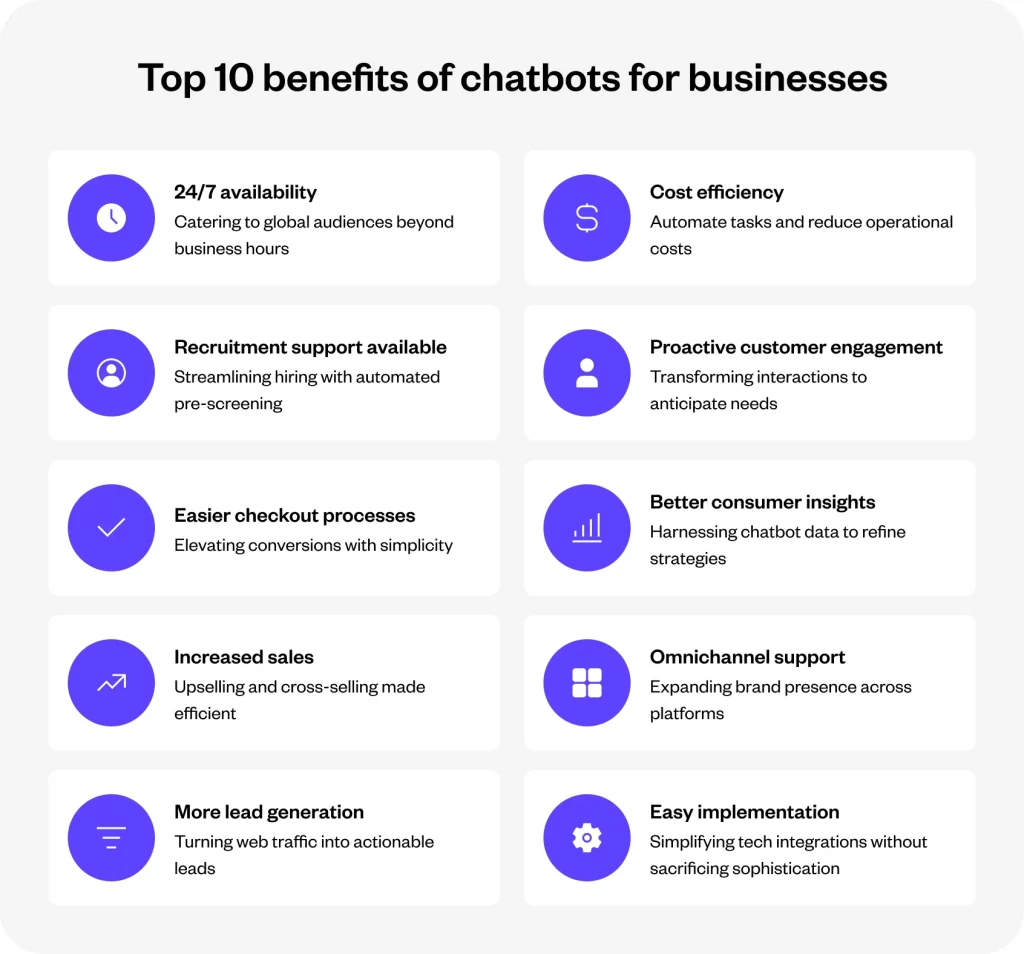
Lead generation: Beyond support, bots can qualify incoming leads, collect contact information, and route potential customers to the appropriate sales channels.
[a6rtec]
Benefits and Advantages
Key benefits of customer service bots include:
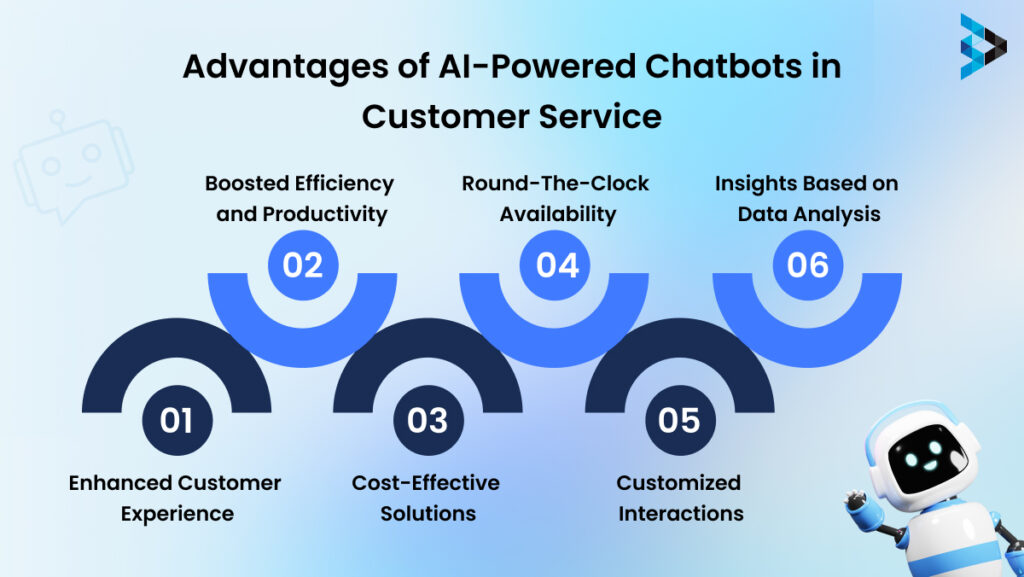
24/7 availability: Bots never sleep, ensuring customers get instant answers anytime.
[es3ps1]
[a6rtec]
Scalability: They can handle thousands of interactions simultaneously, maintaining consistent service even during peak times.
[69vpbb]
[849aco]
Cost efficiency: By automating routine tasks and reducing staffing needs, bots cut operational costs for businesses.
[a6rtec]
[mre2gu]
Personalization: Modern bots use data to provide tailored responses, product recommendations, or multilingual support for global customers.
[es3ps1]
[a6rtec]
Higher satisfaction: Faster, always-on responses lead to higher customer satisfaction and brand loyalty.
[849aco]
[a6rtec]
Alleviates agent workload: Bots handle repetitive queries, freeing human agents to tackle more complex or emotionally nuanced cases.
[es3ps1]
[9v5xj0]
Challenges and Considerations
Despite their advantages, there are challenges:
Limited understanding: Bots may struggle with ambiguous, highly complex, or emotional inquiries, sometimes requiring escalation to human agents.
[9v5xj0]
Impersonal interactions: Over-automation can diminish the “human touch” that some customers value.
Implementation complexity: Designing, integrating, and maintaining intelligent bots—especially those offering deep personalization—can require significant upfront investment.
[a6rtec]
Security: Handling sensitive information demands robust privacy and data protection measures.
[a6rtec]
Current State and Trends
Adoption of customer service bots has surged across industries, with leading platforms like Zendesk, Yellow.ai, Salesforce, and RingCentral offering sophisticated solutions accessible to both enterprises and growing businesses.
[a6rtec]
[94hbe5]
[69vpbb]
Current bots now integrate seamlessly with CRMs, e-commerce systems, and Omnichannel Marketing platforms, allowing businesses to offer unified support experiences wherever their customers are.
Recent advances focus on “no-code” platforms (enabling non-technical staff to build bots), AI-driven adaptive learning (bots that continuously improve through interactions), and deeper personalization via integration with business data.
[a6rtec]
Many are now voice-enabled, work across messaging apps, and support proactive engagement—reaching out to users before they ask for help.
Future Outlook
Looking ahead, customer service bots are set to become more sophisticated, blending advanced AI with emotional intelligence to better understand context, tone, and intent. The integration of generative AI may soon allow bots to craft increasingly human-like responses. As adoption grows and customer expectations evolve, bots are expected to handle a broader range of tasks, deliver more proactive service, and help bridge the gap between digital convenience and human empathy.
Customer service bots have redefined how organizations interact with and serve their customers, offering fast, scalable, and cost-effective support. As technology advances, these bots will continue to shape the future of customer experience, enabling businesses to deliver smarter, more personal, and more efficient service than ever before.



.jpg)