Write a comprehensive one-page article about "Citizen Developers".
Model: sonar-pro
Citizen Developers: Empowering Innovation Beyond IT
Introduction
Citizen developers are non-IT employees who create business applications or automate workflows using Low-Code or no-code platforms like App Builders , Database Apps , Advanced Spreadsheets often with limited or no formal programming training.
[p47yp0]
[k8f6re]
[8zhkgb]
Their significance lies in democratizing technological innovation, enabling organizations to respond rapidly to change by leveraging the practical expertise of employees closest to the business's day-to-day needs.
[p47yp0]
[l6l9qb]
As organizations strive for digital transformation amidst IT skill shortages, the role of citizen developers has become increasingly vital.
Main Content
The concept of a citizen developer revolves around empowering business users—such as those in HR, finance, or marketing—to build software tools without the need for specialized coding knowledge.
[p47yp0]
[l6l9qb]
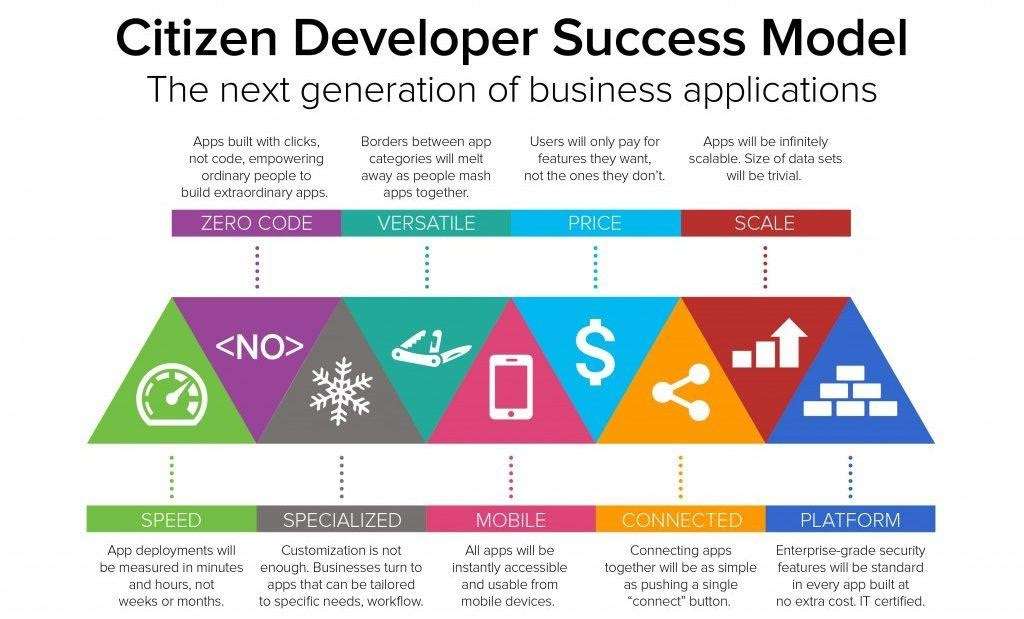
Low-code and no-code platforms (e.g., Microsoft Power Apps, Salesforce Lightning, ServiceNow Creator Workflows) provide intuitive drag-and-drop interfaces, enabling employees to automate repetitive tasks, streamline approval processes, or generate custom reports without IT intervention.
[8zhkgb]
[e44mpf]
This capability helps bridge the gap between complex IT demands and limited professional development resources within organizations.
Practical examples abound:
In healthcare, non-IT staff may create an app to manage patient intake or track medical supply inventory more efficiently.
[p47yp0]
In government, an agency might automate the process of permit issuance or case management to reduce paperwork and improve service delivery times.
[p47yp0]
Marketing teams frequently design dashboards to visualize campaign performance without waiting for analytics teams.
[p47yp0]
Benefits of citizen development are substantial:
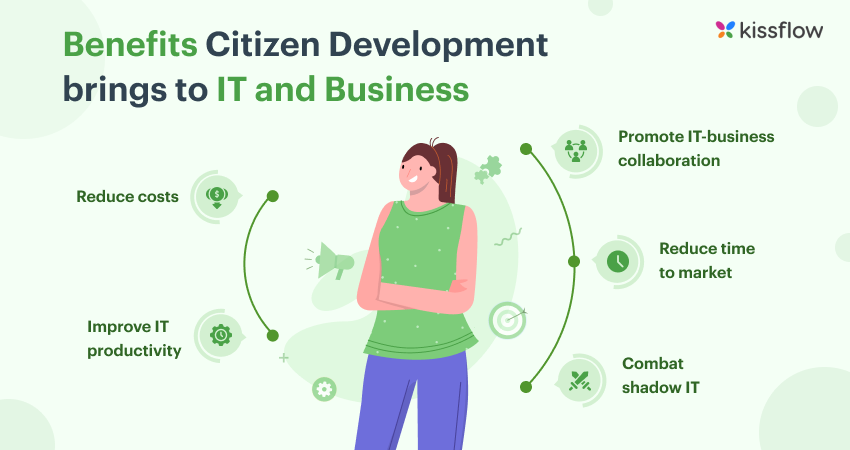
Faster application development: Projects that once took months, waiting for IT backlogs to clear, can be completed in days by those who understand their own workflow requirements.
[p47yp0]
[tc34xt]
Cost savings: Reducing reliance on costly external developers and consultants, organizations find internal teams can deploy and update critical tools quickly and cheaply.
[8zhkgb]
[l6l9qb]
Greater flexibility and agility: As business needs shift—such as in response to regulatory changes—citizen developers can iterate solutions on the fly, avoiding lengthy IT cycles.
[p47yp0]
Enhanced employee engagement and innovation: Empowered staff are often more invested in success, contributing creative and practical solutions that IT teams might overlook.
[p47yp0]
[2u5w9e]
However, there are challenges and risks to address:
Security and governance: Without proper IT oversight, there is a danger of “shadow IT”—solutions that bypass established standards and introduce vulnerabilities or data governance issues.
[2u5w9e]
[8zhkgb]
Scalability and quality control: Applications built by non-professionals can struggle to scale or integrate with core business systems, and may have higher rates of errors compared to those developed by IT teams.
[2u5w9e]
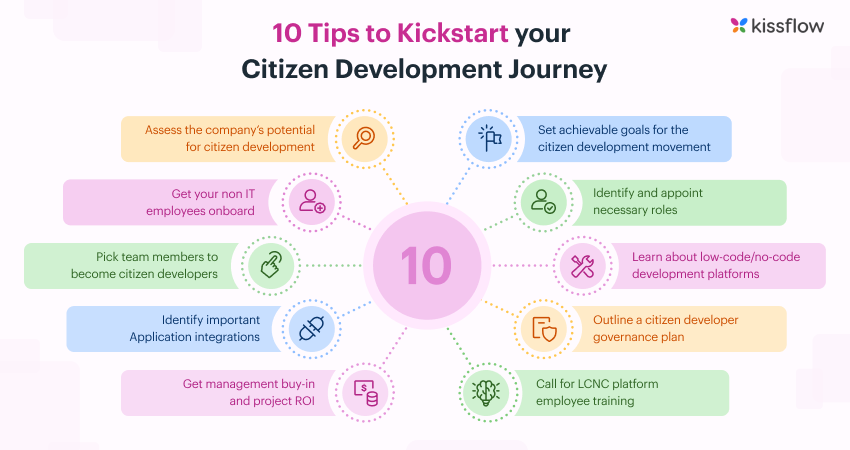
Training requirements: Ongoing learning and clear guidelines are essential to ensure quality and compliance, especially when handling sensitive or mission-critical processes.
[8zhkgb]
Current State and Trends
Citizen development is rapidly gaining traction across industries. According to Gartner estimates, a significant portion of new applications in large enterprises is now developed by non-IT professionals using no-code or low-code tools.
[e44mpf]
Major enterprise platforms—such as Microsoft Power Platform, Salesforce, Appian, Pega, and ServiceNow—are investing heavily in governance features, enabling IT departments to manage and oversee citizen development initiatives without stifling innovation.
[k8f6re]
[0snftw]
Organizations increasingly adopt a Center of Excellence (COE) model, where best practices, security standards, and support are centralized to maximize both autonomy and compliance among citizen developers.
[l6l9qb]
Recent advancements include:
Enhanced collaboration tools allowing fusion teams, composed of IT and citizen developers, to jointly build, review, and deploy solutions.
[k8f6re]
AI-driven recommendations within low-code platforms, enabling even more intuitive solution building for business users.
Broader training initiatives to upskill non-IT staff in digital literacy, automation, and data governance.
[2u5w9e]
[l6l9qb]
Future Outlook
The future of citizen development is poised for continued expansion. With AI and automation integrated into no-code platforms, the barrier to entry will drop even further, enabling a wider range of employees to participate in digital transformation efforts. As governance tools mature, organizations can capitalize on the creativity and agility of citizen developers while minimizing operational risks. This trend may fundamentally reshape the boundaries between IT and business roles, driving organizational innovation and resilience in increasingly dynamic markets.
Conclusion
Citizen developers are redefining how organizations approach innovation and problem-solving by enabling non-technical staff to build and iterate digital solutions. As tools and governance improve, their impact will likely grow, unlocking new potential for rapid, inclusive, and business-driven digital transformation.