

Block Cipher
Defining and Describing Block Cipher

_In an innovation and startup context, a block cipher is the core cryptography “engine” that turns chunks of data into encrypted blocks using a secret key, underpinning products like secure messaging apps, encrypted databases, and privacy‑preserving infrastructure.
[e981fu]
[j94dwk]
[tquc4o]
A block cipher is a symmetric‑key encryption algorithm that operates on fixed‑size blocks of data (for example, 128 bits), using the same secret key to both encrypt plaintext blocks and decrypt ciphertext blocks.
[e981fu]
[j94dwk]
[tquc4o]
It is used whenever a product needs to protect data at rest or in transit in a way that can be efficiently implemented in software or hardware (e.g., AES in TLS, VPNs, and full‑disk encryption).
[e981fu]
[tquc4o]
[m421z2]
The term does not cover public‑key algorithms like RSA or ECC, nor does it refer to “encryption in general”; it is one specific family of symmetric ciphers distinct from stream ciphers, which encrypt data bit‑by‑bit or byte‑by‑byte rather than in fixed blocks.
[tquc4o]
[m421z2]
[sx05kg]
Innovation consultants care because choosing, implementing, or integrating a modern, audited block cipher (and its mode of operation) is a key design decision affecting security, regulatory compliance, performance, and user trust in data‑sensitive products.
[vg4udv]
[zrdi6d]
[tquc4o]
Disambiguation
Primary sense — the innovation-consulting sense
A block cipher is a symmetric cryptographic algorithm that transforms fixed‑size blocks of plaintext into equally sized blocks of ciphertext using a shared secret key, and can reverse the process with the same key.
[e981fu]
[j94dwk]
[tquc4o]
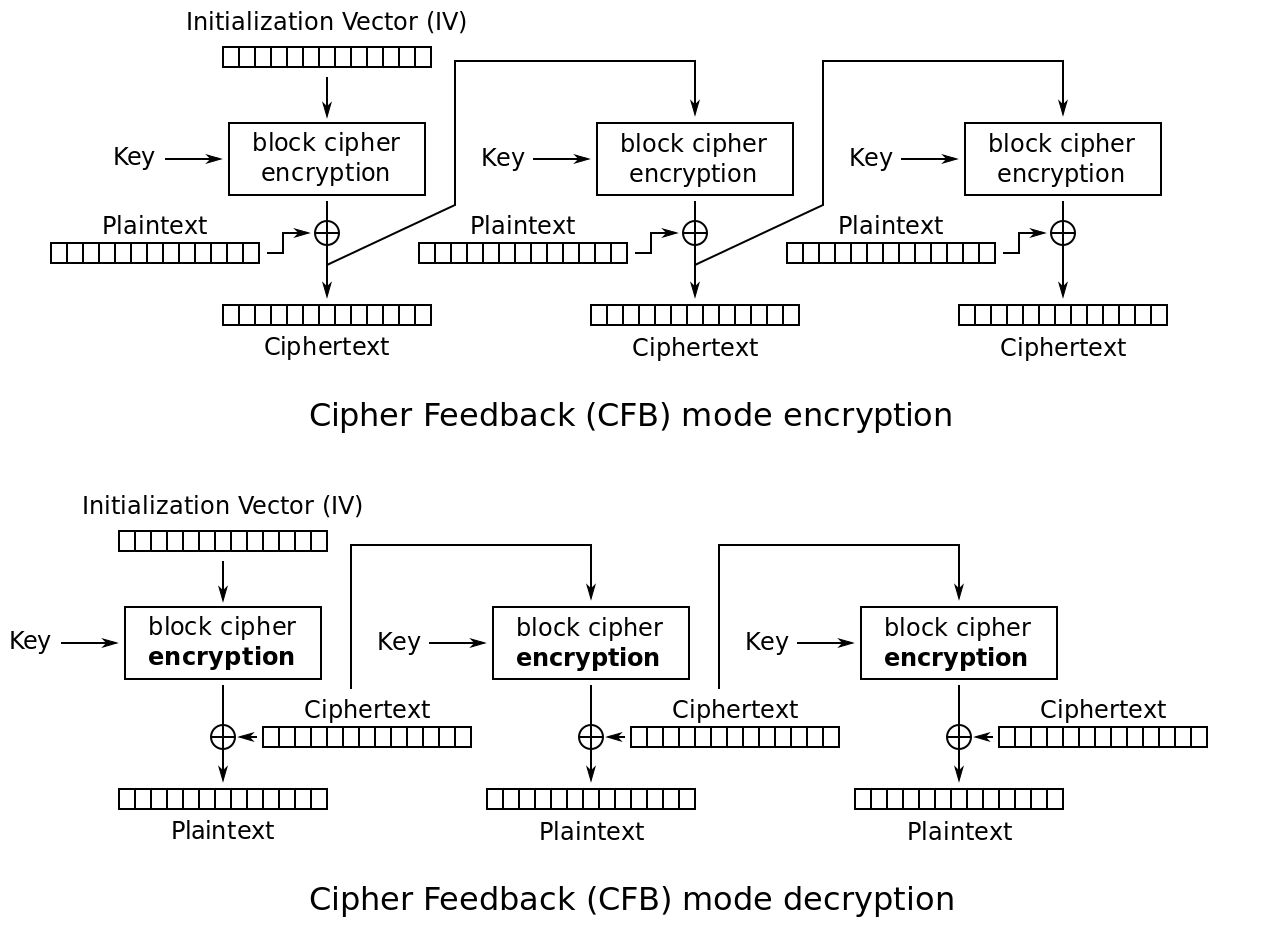
- Modern block ciphers (e.g., AES) are core building blocks for encryption schemes and protocols; by themselves they only securely transform one fixed‑length block, so separate modes of operation (CBC, CTR, GCM, etc.) are used to handle data larger than a single block and add properties like randomness and authentication. [vg4udv] [zrdi6d] [m25z03] [25z0yk]
Other senses
- Also used informally in some developer and marketing copy to mean “any encryption algorithm” or “the crypto that protects our data,” but in technical and innovation contexts this is imprecise; the correct umbrella term there is cipher or encryption algorithm. [m421z2]
Etymology and Origin
- In modern cryptography, the formal notion of a block cipher as a keyed permutation on fixed‑length bit strings crystallized in the 1970s with early designs like the Data Encryption Standard (DES), standardized by NIST in 1977 as a 64‑bit block cipher for federal use. [vg4udv] [m25z03] (DES is a block cipher, even though the search results here focus more on modes built on top of such ciphers.)
- The phrase “block cipher mode of operation” appears in NIST standards that specify how to “apply a block cipher to a sequence of data blocks or a data stream,” highlighting that the core primitive (the block cipher) and its modes were treated as distinct concepts from the outset in standards work. [vg4udv] [m25z03]
- As web, mobile, and cloud products began relying on TLS, VPNs, and full‑disk encryption, the term “block cipher” entered broader engineering and product vocabulary as teams had to select between AES and alternatives, choose modes like CBC vs. GCM, and justify these choices in security reviews and compliance documents. [vg4udv] [zrdi6d] [tquc4o] [m421z2]
Adjacent Vocabulary
- Synonyms
- Antonyms
- Adjacent terms
- Block cipher mode of operation – algorithms like CBC, CTR, GCM that describe how to repeatedly apply a block cipher to larger messages and add properties like confidentiality and authenticity. [vg4udv] [zrdi6d] [m25z03] [25z0yk]
- Stream cipher – alternative symmetric design that some products use instead of block‑cipher‑based schemes, especially in constrained environments. [tquc4o] [m421z2] [sx05kg]
- Advanced Encryption Standard (AES) – today’s dominant 128‑bit‑block cipher used in government, enterprise, and consumer products. [tquc4o] [m421z2]
- Symmetric key cryptography – the broader category of cryptographic schemes using the same secret key for encryption and decryption, of which block ciphers are a central primitive. [e981fu] [j94dwk] [tquc4o]
- Transport Layer Security (TLS) – protocol for securing web and API connections that uses block ciphers (e.g., AES‑GCM) or AEAD constructions built on them as record ciphers. [vg4udv] [zrdi6d] [m421z2] [25z0yk]
- Virtual private network (VPN) – network tunneling technology that commonly uses block ciphers inside protocols like IPsec to provide confidentiality. [e981fu] [tquc4o] [m421z2]
Usage in Practice
- ExpressVPN’s glossary defines it in operational terms: “A block cipher is a symmetric‑key cryptographic algorithm that encrypts data in fixed-size blocks using a cryptographic key… Each block of plaintext is transformed into a ciphertext block of the same length.” [e981fu]
- Identity‑security vendor 1Kosmos emphasizes its role in secure systems: “Block ciphers… form the foundation of many encryption schemes and protocols, ensuring data confidentiality and integrity.” [j94dwk]
- A Meegle overview aimed at practitioners notes that “block ciphers, a cornerstone of cryptographic systems, play a pivotal role in ensuring data confidentiality and integrity… making them indispensable for secure communication, data storage, and financial transactions.” [tquc4o]
- A university cryptography lecture describes the primitive engineers build on: “A block cipher takes a fixed-length block of text of length b bits and a key as input and produces a b-bit block of ciphertext.” [m25z03]
- In a technical video introduction, the lecturer explains operational differences: “Block ciphers divide the plain text into B‑bit blocks and perform a fixed transformation… block ciphers use a fixed transformation,” contrasting them with stream ciphers that rely on a time‑varying internal state. [sx05kg]
Common Misuses
- Calling any encryption “a block cipher.”Many product pitches or non‑specialist docs use “block cipher” to label encryption generically, even when the system uses stream ciphers or high‑level authenticated encryption (AEAD) constructions; the precise umbrella term should be cipher or encryption algorithm. [m421z2]
- Equating a block cipher with a mode of operation (e.g., “we use GCM as our block cipher”).In reality, GCM, CBC, CTR, etc. are modes of operation that rely on an underlying block cipher like AES; a more accurate statement would specify “we use AES as our block cipher in GCM mode.” [vg4udv] [zrdi6d] [m25z03] [25z0yk]
- Treating a block cipher as if it provided key exchange or identity by itself.A block cipher only provides confidential transformation of blocks under a key; key exchange and authentication are responsibilities of protocols and asymmetric cryptography or higher‑level schemes, not the block cipher primitive. [vg4udv] [zrdi6d] [m421z2]
- Marketing “military‑grade block cipher” without specifying algorithm or parameters.This phrase often obscures whether a modern, standardized cipher (like AES‑256) and robust mode (like GCM) are being used; the more precise and useful description for due diligence is “AES‑256 in GCM mode with well‑managed keys,” referencing concrete, vetted standards. [vg4udv] [zrdi6d] [tquc4o]