


Batch Processing
Defining and Describing Batch Processing
Uses in Context
- Payroll and finance: Organizations use batch processing for payroll, end-of-day reconciliation, and other operations where results can be produced on a schedule rather than interactively. [0vr4uf]
- Reporting: A nightly report can aggregate a day’s transactions into summaries after the input period has closed. [nv2m9p]
- ETL pipelines: Batch jobs extract, transform, and load accumulated data into analytical systems. [0vr4uf]
- Mainframe computing: In classic mainframe environments, users submitted jobs to a queue and waited for output instead of interacting continuously with the machine. [s8vp4u]
History of Use
Origins
Evolution
- 1970s: Batch processing was a common mode of interaction with mainframes; punched cards were widely used to submit programs and data, while job-control statements specified execution requirements. [s8vp4u]
- 2000s: Distributed batch computation expanded through MapReduce-style systems, which divided work across data partitions and later aggregated the results. [4bwi7o]
Best Real-World Examples
- Apache Hadoop MapReduce — distributes batch computation through Map and Reduce phases operating over partitioned data. [4bwi7o]
- Apache Spark — supports large-scale batch processing and is described as improving performance through in-memory computation. [4e9btm]
- Apache Hive — provides a data-warehouse layer commonly associated with distributed batch analytics. [4e9btm]
- IBM mainframe job processing — exemplifies the historical queued-job model associated with mainframe batch operation. [s8vp4u]
Case Studies
Images

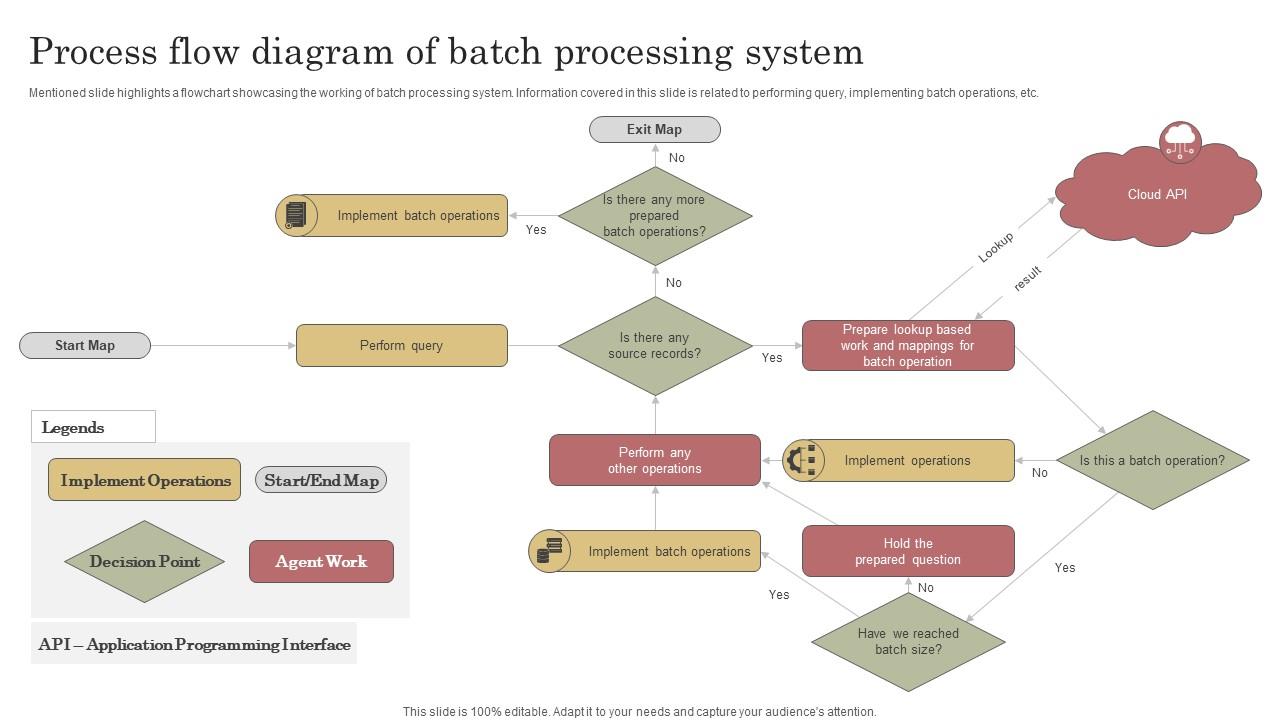

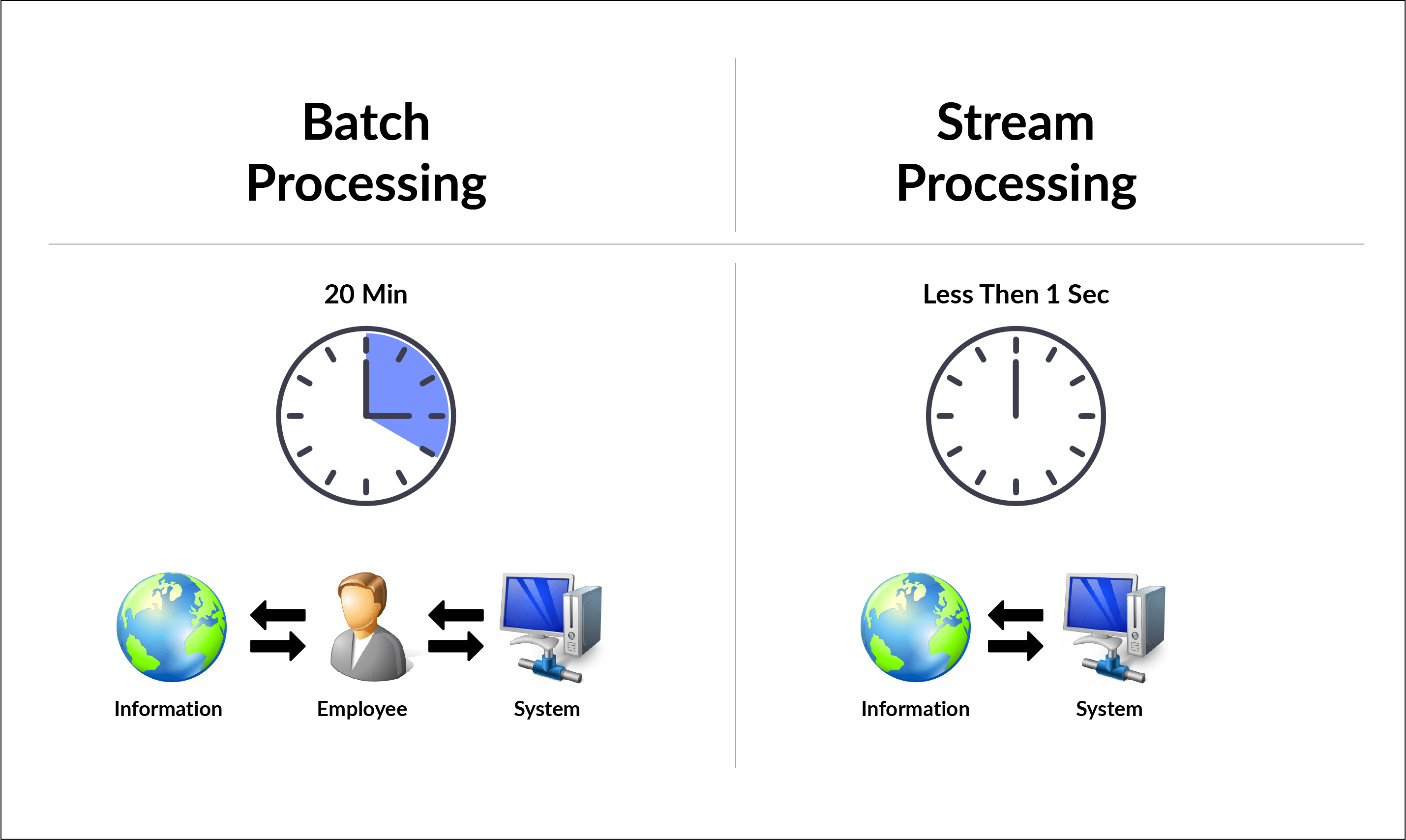
 Source: https://docs.oracle.com/cd/E76310_01/pdf/141/html/operations_guide/reim-og-batch_processes.htm

Sources
[27z5e2] 2026, Sep 14. equa.cloud.xwiki.com . Batch processings . Updated: 2026, Oct 16. Generated: 2026, Nov 06. Perplexity API response.
[4e9btm] 2026, Jun 03. vetoralabs.com . Batch Processing -- Data Engineering | Vetora . Updated: 2026, Oct 31. Generated: 2026, Nov 06. Perplexity API response.
[0vr4uf] 2026, Mar 11. appssemble.com . Batch Processing | appssemble Glossary . Updated: 2026, Oct 24. Generated: 2026, Nov 06. Perplexity API response. [4]: 2026, Mar 02. studocu.com . Big Data Analytics (Week 7) - Batch Analysis Overview and Insights . Updated: 2026, Apr 03. Generated: 2026, Nov 06. Perplexity API response.
[s8vp4u] 2026, Sep 04. gistbok-ltb.ucgis.org . [CP-02-016] On the Origins of Computing and GIS&T: Part I, A ... . Updated: 2026, Oct 04. Generated: 2026, Nov 06. Perplexity API response.
[nv2m9p] 2026, Oct 31. scribd.com . Designing Data-Intensive Applications 3 | PDF | Data | Stream - Scribd . Generated: 2026, Nov 06. Perplexity API response.
[7u07kn] 2026, Apr 14. dataforest.ai . Data Pipelines & Processing | Glossary by DATAFOREST . Updated: 2026, Sep 15. Generated: 2026, Nov 06. Perplexity API response.
[4bwi7o] 2026, Mar 24. computerscienceauthority.com . Big Data Technologies: Hadoop, Spark, and Scalable Pipelines | Computer Science Authority . Updated: 2026, Oct 21. Generated: 2026, Nov 06. Perplexity API response. [9]: 2026, Jul 06. datacadamia.com . Data Processing - Batch . Updated: 2026, Oct 26. Generated: 2026, Nov 06. Perplexity API response.
[fr2uer] 2026, Mar 10. distributedsystemauthority.com . Distributed Computing Paradigms: MapReduce, Stream Processing ... . Updated: 2026, Apr 01. Generated: 2026, Nov 06. Perplexity API response.