


AI Workslop
[hbg7v2] "Why AI ‘workslop’ is a leadership problem | World Economic Forum". World Economic Forum. World Economic Forum
Defining and Describing AI Workslop

AI workslop is low‑effort, AI‑generated work that looks polished on the surface but lacks the substance, accuracy, or context to move a task, project, or decision meaningfully forward.[2][3][4]
In innovation and startup settings, the term applies when founders, teams, or vendors use generative AI to create decks, memos, specs, or analyses that “masquerade as good work” yet shift real thinking and problem‑solving onto whoever has to consume them.[2][3] It does not apply to rough AI drafts that are explicitly labeled as such and then thoughtfully edited by a domain expert; that’s assisted work, not workslop.[1][2] Innovation consultants care about AI workslop because it silently taxes productivity, degrades decision quality, and can distort market, product, or customer insights when uncritically passed around as if it were expert work.[2][3][4]
Disambiguation
Primary sense — the innovation-consulting sense
Tight definition.AI workslop is AI‑generated work product that appears professional but lacks the rigor, depth, or correctness to advance the underlying business task, thereby offloading cognitive work onto others.[2][3][4]
Scope and usage
- Surface polish vs. real value. Research from BetterUp Labs and Stanford Social Media Lab defines workslop as “AI generated work content that masquerades as good work, but lacks the substance to meaningfully advance a given task.”[2][3] In practice this includes slide decks, reports, emails, or product docs that look finished but are wrong, generic, or context‑free.[1][2][3]
- Downstream productivity drain. Workslop “shifts the burden of the work downstream, requiring the receiver to interpret, correct, or redo the work,” effectively transferring effort from creator to receiver.[2][3] A survey of 1,150 U.S. employees found that 40% had received workslop in the last month, and estimated that 15.4% of content they receive qualifies as workslop, with an “invisible tax” of roughly $186 per employee per month.[3]
- Organizational and innovation impact. In innovation contexts, workslop can contaminate strategy, customer understanding, or technical roadmaps—e.g., AI‑generated market analysis that misreads competitors, or persona decks built from generic web text rather than real discovery.[1][2] Harvard Business Review notes that workslop is a new “collaborative dynamic” introduced by AI that can “drain productivity” and undermine collaborative work.[3][4]
- What this sense is not.
- It is not any AI‑assisted draft that a subject‑matter expert rigorously reviews, corrects, and contextualizes; teams that “use a hybrid approach, leveraging AI for speed … but with a human expert steering the output to maintain quality” are explicitly described as avoiding workslop.[1]
- It is not intentionally low‑fidelity artifacts (sketches, napkin math, quick idea dumps) that are transparently labeled as such within a team; the core issue is the masquerade of low‑effort output as finished professional work.[2][3]
Other senses
1. “AI slop” / “content slop” in social media and consumer internet
Definition.In broader online discourse, “AI slop” refers to the flood of low‑quality, generic AI‑generated content that clogs social media feeds, blogs, and recommendation systems, with “workslop” adapting the idea to workplace content.[2][3]
- BetterUp Labs explicitly links the terms: “On social media, which is increasingly clogged with low-quality AI-generated posts, this content is often referred to as ‘AI slop.’ In the context of work, we refer to this phenomenon as ‘workslop.’”[2][3]
- For innovation consultants, AI slop matters as a background signal problem: founders relying on web search or social listening may be misled by synthetic, low‑signal content that distorts perceived customer needs, competitive landscapes, or expert consensus.[2]
- The workslop variant is specifically concerned with internal organizational deliverables (docs, decks, emails), but inherits the same worry that generative AI can massively scale low‑value outputs that crowd out genuine insight.[2][3][4]
2. Generic “bad AI output” in everyday speech
- Some commentators and practitioners use “AI workslop” informally to describe any bad or obviously wrong AI output, regardless of context. This is a looser, conversational sense and less relevant to innovation consulting, which typically focuses on organizational dynamics and productivity impacts rather than individual annoyance.[1][2][4]
Etymology and Origin
- The term “workslop” in the AI context appears to have been coined and defined by researchers at BetterUp Labs in collaboration with the Stanford Social Media Lab, who introduced it in research and subsequent articles on AI’s impact on workplace productivity.[2][3]
- In their Harvard Business Review article, the authors state: “On social media … this content is often referred to as ‘AI slop.’ In the context of work, we refer to this phenomenon as ‘workslop.’ We define workslop as AI generated work content that masquerades as good work, but lacks the substance to meaningfully advance a given task.”[3]
- The concept migrated into broader management and innovation discourse via HBR and derivative coverage, which highlighted workslop as a contributor to “destroying productivity” and as a risk to organizations adopting generative AI without corresponding process and capability changes.[3][4]
- Independent operators and AI‑product companies (e.g., Mindset.ai’s “In the Loop” series) subsequently picked up the term, using it to frame the practical challenges of integrating AI into real work and emphasizing that “Workslop isn’t an AI problem—it’s a symptom of underprepared people and processes.”[1]
Adjacent Vocabulary
- Synonyms
- AI Slop – Broad, internet‑wide low‑quality AI content; workslop is its workplace‑specific variant focused on deliverables inside organizations.[2][3]
- Garbage in, garbage out (GIGO) – Classic computing phrase about poor input leading to poor output; overlaps conceptually, but workslop emphasizes presentation (polish) plus organizational impact rather than just bad data.[2][3]
- Busywork – Tasks that create the appearance of productivity without impact; workslop is essentially AI‑mediated busywork in artifact form, often passed between collaborators.[2][4]
- Paperwork theater / slideware theater – Colloquial terms for overly polished but low‑substance documents or slides; workslop is the AI‑generated, low‑effort flavor of the same pattern.[1][2]
- Antonyms
- High‑leverage work – Activities that significantly move key metrics or learning; workslop is its opposite by consuming time without advancing outcomes.[3][4]
- Deep work – Focused, cognitively demanding work that creates new value; workslop offloads thinking and dilutes deep work with shallow review and rework.[2][3]
- Adjacent terms
- Generative AI – How organizations roll out and govern AI tools, directly shaping risk of workslop.
- Knowledge work automation – The domain where workslop emerges as AI automates document creation.
- AI governance – Policies and guardrails that can prevent or mitigate workslop.[2][3]
- Minimum viable process – Lightweight processes to ensure enough review and rigor that AI outputs don’t degrade quality.
- Collaboration Cost – Workslop adds hidden overhead in interpreting and fixing low‑quality AI artifacts.[2][3]
- Change management – How leaders reset expectations around AI’s role and train teams to avoid workslop.[1][2][4]
Usage in Practice
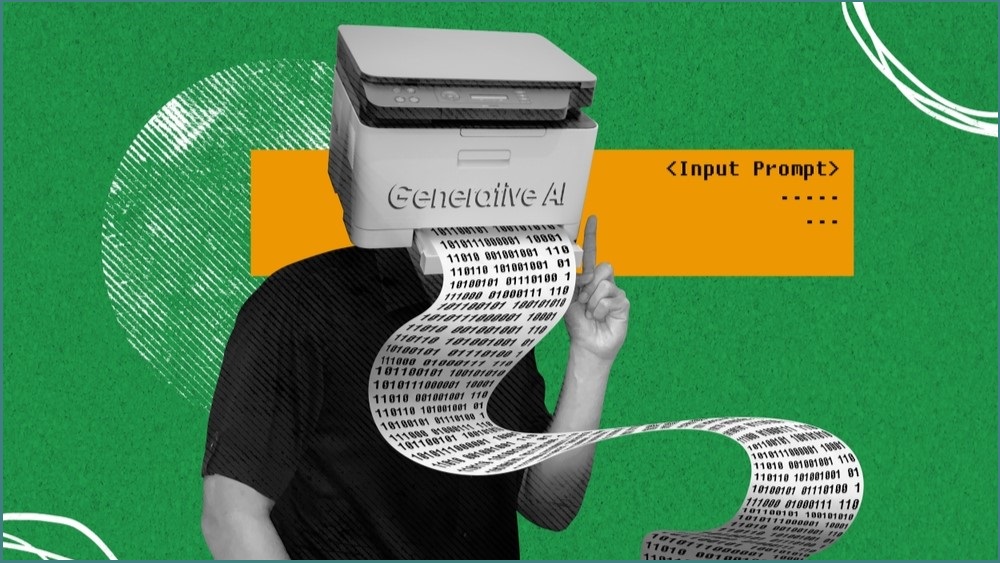
- BetterUp Labs’ HBR authors write: “We define workslop as AI generated work content that masquerades as good work, but lacks the substance to meaningfully advance a given task.”[3]
- In the same research, they highlight the downstream burden: “The insidious effect of workslop is that it shifts the burden of the work downstream, requiring the receiver to interpret, correct, or redo the work. In other words, it transfers the effort from creator to receiver.”[2][3]
- A Charter/BetterUp piece notes the quiet drag on organizations: “AI-generated ‘workslop’ quietly drains productivity… some employees are using AI tools to create low-effort, passable looking work that ends up creating more work for their coworkers.”[2]
- Harvard Business Review frames it as a new collaboration problem: “The complexity of collaboration has only deepened. Workslop is an excellent example of new collaborative dynamics introduced by AI that can drain productivity…”[3]
- Mindset.ai’s “In the Loop” commentary applies the idea to everyday deliverables: “Workslop refers to AI-generated work—content that looks polished at first glance but is ultimately rubbish. This might be a slide deck or report that looks impressive when you skim through it, but as soon as you dig deeper or try to use it for something practical, you find wrong numbers, repeated text… or weak and repetitive arguments.”[1]
- The same piece emphasizes the human‑process root cause: “Workslop isn’t an AI problem—it’s a symptom of underprepared people and processes… The most effective teams use a hybrid approach, leveraging AI for speed… but with a human expert steering the output to maintain quality.”[1]
- An HBR follow‑up on behavior and incentives observes: “With the rise of gen AI tools, offices have had to contend with a new scourge: ‘workslop’ or low-effort, AI-generated work that looks plausibly polished, but ends up wasting time and effort as it offloads cognitive work onto the recipient.”[4]
Common Misuses
- Calling any rough AI draft “workslop.”Many teams label early AI drafts as workslop even when they are clearly marked as preliminary and are heavily revised by experts; the more precise term here is AI‑assisted drafting or first‑pass ideation, not workslop, which implies the creator is offloading genuine cognitive effort onto others.[1][2][3]
- Using “workslop” to describe low‑quality human‑only work.While the underlying pattern (polished but hollow) is similar, the coined term explicitly refers to AI‑generated work content; for purely human work the better terms are busywork, performative documentation, or slideware theater.[2][3]
- Equating any AI use with workslop risk.Some critiques conflate all AI adoption with inevitable workslop; research and practice both show that “the most effective teams use a hybrid approach… with a human expert steering the output,” which can reduce low‑value work when done well.[1][2][3] A more accurate label for poorly governed AI use is undisciplined AI adoption or unstructured AI experimentation.
- Using “workslop” as a purely aesthetic or stylistic critique.Dismissing AI‑generated content as workslop solely because it “sounds AI‑y” misses the core issue: the definition hinges on whether the content “meaningfully advance[s] a given task.”[2][3] If it is correct, context‑aware, and useful, the better terms are AI‑authored deliverable or AI‑augmented work, not workslop.
Sources
[1]: What Is AI Workslop & How To Fix It | In The Loop Episode 34
[2]: How AI-generated “workslop” quietly drains productivity—and how ...
[3]: AI-Generated “Workslop” Is Destroying Productivity
[4]: Why People Create AI “Workslop”—and How to Stop It
[5]:
AI-Generated “Workslop” Is Destroying Productivity - YouTube